
Storage
Storing Safety
Storing Machine
IMPORTANT: Avoid damage! Follow storage procedure anytime machine will not be used for several months to minimize corrosion and deterioration. |
2. Change engine oil and filter if needed.
3. Repair worn or damaged parts. Install new parts if necessary. Tighten loose hardware.
4. Wash machine. Clean engine and engine area.
5. Drain fuel and add back 4 L (1 gal.) of fuel. Then add 0.4 L (12 oz) of stabilizer/corrosion inhibitor.
6. Add 0.25 L (9 oz) of corrosion inhibitor to transmission-hydraulic system.
7. Start engine and run until it reaches operating temperature.
8. Add 0.5 L (16 oz) more storage inhibitor to the fuel tank.
9. Add 0.5 L (16 oz) storage inhibitor to the engine crankcase at the air filter/breather.
10. Loosen alternator/fan belt after it has cooled.
11. Remove and clean battery. Store in a cool dry place. Do not allow battery to freeze. Keep it charged.
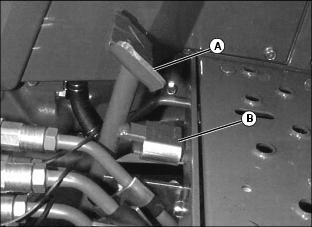
12. Lock clutch pedal (A) in the disengaged position with the clip (B) provided.
14. Apply multi-purpose grease on exposed hydraulic cylinder rods.
15. Move hydraulic levers back and forth to release pressure.
16. Put blocks or stands under machine to take weight off tires. Let 1/3 of air out of tires.
17. Apply paint to areas that need it to prevent rust.
18. Store the machine in a dry, protected place. If machine is stored outside, put a waterproof cover over it.
Removing Machine From Storage
1. Check tire pressure and fill tires with air.
2. Remove grease from cylinder rods.
3. Install alternator/fan belt if removed before storage.
4. Remove blocks and supports from under machine.
5. Fill fuel tank. Open fuel shut-off valve.
6. Check battery electrolyte level. Charge battery if necessary. Install battery.
7. Lubricate all grease points.
8. Check transmission and engine oil levels.
9. Depress clutch pedal to release locking clip and engage the clutch.
 c CAUTION: Avoid injury! Start engine only in a well-ventilated area.
|
10. Run the engine 5 minutes with no engine load.
11. Be sure all shields and guards are in place.
Preparing Fuel For Storage
If you have been using Stabilized Fuel, add stabilized fuel to tank until the tank is full.
NOTE: Filling the fuel tank reduces the amount of air in the fuel tank and helps reduce deterioration of fuel.
If you are not using Stabilized Fuel:
1. Park machine safely in a well-ventilated area.
NOTE: Try to anticipate the last time the machine will be used for the season so very little fuel is left in the fuel tank.
2. Turn on engine and allow to run until it runs out of fuel.
IMPORTANT: Avoid damage! Stale fuel can produce varnish and plug fuel injectors and affect engine performance. · Add fuel conditioner or stabilizer to fresh fuel before filling tank. |
4. Mix fresh fuel and fuel stabilizer in separate container. Follow stabilizer instructions for mixing.
5. Fill fuel tank with stabilized fuel.
6. Run engine for a few minutes to allow fuel mixture to circulate through fuel system.
Fuel Storage
It is recommended that diesel fuel be stored only in a clean, approved polyethylene plastic container without any metal screen or filter. This will help prevent any accidental sparks from occurring. Store fuel in an area that is well ventilated to prevent possible igniting of fumes by an open flame or spark. This includes any appliance with a pilot light.
Keep fuel in a safe, protected area and in a clean, properly marked (Diesel Fuel) container. Do not use de-icers to attempt to remove water from fuel. Do not use de-icers to attempt to remove water from fuel. Do not depend on fuel filters to remove water from fuel. It is recommended that a water separator be installed in the storage tank outlet. Be sure to properly discard unstable or contaminated diesel fuel and/or their containers when necessary.