
Service Engine - Diesel
Engine Warranty Maintenance Statement
Maintenance, repair, or replacement of the emission control devices and systems on this engine, which are being done at the customers expense, may be performed by any nonroad engine repair establishment or individual. Warranty repairs must be performed by an authorized John Deere dealer.
Avoid Fumes
Engine Oil
Use oil viscosity based on the expected air temperature range during the period between oil changes.
The following John Deere oils are preferred:
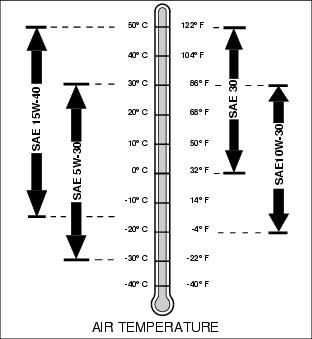
· TORQ-GARD SUPREME® (SAE 5W-30)
The following John Deere oils are also recommended, based on their specified temperature range:
Other oils may be used if above John Deere oils are not available, provided they meet one of the following specifications:
· SAE 15W-40-API Service Classification CF-4 or higher.
· SAE 5W-30-API Service Classification CC or higher.
· SAE 10W-30-API Service Classification CF or higher.
· SAE 30-API Service Classification CF or higher.
If diesel fuel exceeding 0.5% sulfur content is used, reduce the service interval for engine oil and filter by 50%.
Checking Engine Oil Level
NOTE: Check oil twice a day if you run engine over 4 hours in a day.
Make sure engine is cold when checking engine oil level.
1. Park the machine safely. (See Parking Safely in the SAFETY section.)
4. Remove right side engine shield.
IMPORTANT: Avoid damage! Dirt and contamination can enter engine when checking oil level. Clean area around dipstick before removing. |
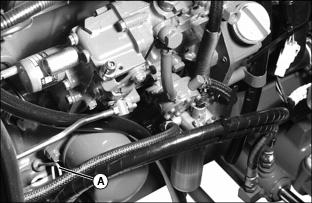
5. Remove dipstick (A). Wipe it clean with a rag.
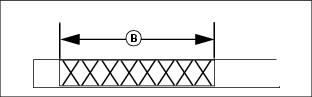
7. Remove dipstick. Verify oil on dipstick is within operating range (B).
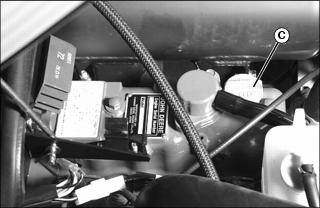
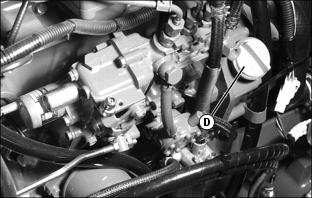
· Remove oil filler cap (C) on valve cover, or remove right side engine panel and remove oil fill cap (D).
· Add proper engine oil until oil level is within operating range on dipstick. Do not overfill.
10. Install and tighten oil fill cap.
11. Install right engine side shield, if removed.
Changing Engine Oil and Filter
IMPORTANT: Avoid damage! Change the oil more often if the machine is used in extreme conditions: |
1. Run engine to warm the oil.
2. Park machine safely. (See Parking Safely in the SAFETY section.)
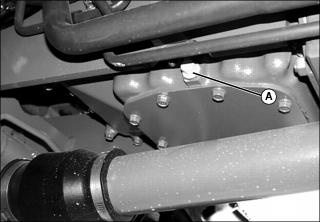
4. Place container under oil drain located under engine.
5. Loosen and remove oil drain plug (A). Allow engine oil to drain into a drain pan.
6. Remove side panel on right side of engine.
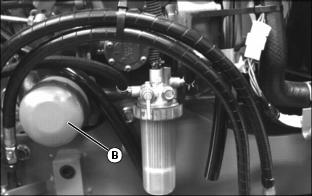
7. Wipe dirt from around oil filter (B).
8. Turn filter counterclockwise to remove.
9. Apply a film of clean engine oil on gasket of new filter.
10. Install filter. Turn filter clockwise until gasket makes contact with filter base. Tighten additional one-half turn.
11. Install drain plug. Do not overtighten.
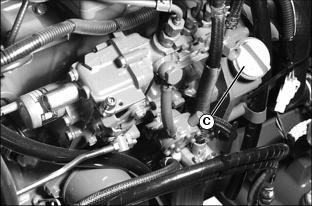
12. Remove oil filler cap (C).
13. Add 4.1 L (4.3 qt) of oil into filler opening.
14. Install and tighten oil fill cap.
15. Start and run engine at idle to check for leaks.
16. Stop engine. Fix any leaks before operating.
17. Check engine oil level, add oil if necessary.
18. Install right side engine shield.
Cleaning Air Filter Dust Unloading Valve
IMPORTANT: Avoid damage! Prevent damage to the engine. Never operate engine without air cleaner elements and rubber dust unloading valve installed. |
NOTE: Rubber dust unloading valve is self-cleaning. Check rubber dust unloading valve every 10 hours of operation or on a daily basis for particles too large to pass through bottom slot of valve.
1. Park machine safely. (See Parking Safely in the SAFETY section.)
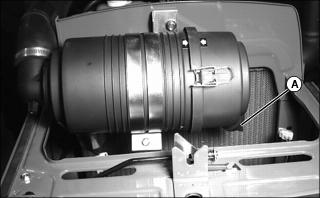
3. Remove and clean rubber dust unloading valve (A). Replace if damaged.
Replacing Air Filter Elements
Primary Air Filter Element
 c CAUTION: Avoid injury! Touching hot surfaces can burn skin. The engine and components will be hot if the engine has been running. Allow the engine to cool before servicing.
|
1. Park the machine safely. (See Parking Safely in the SAFETY section.)
NOTE: Air intake tube might be pulled out of position when air cleaner is serviced. Return tube to recessed area (A) of panel in front of radiator when service is completed.
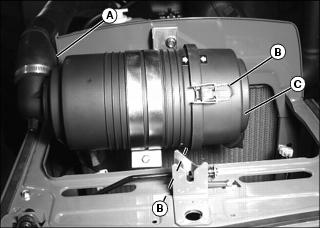
3. Release latches (B) and remove air cleaner canister cover (C).
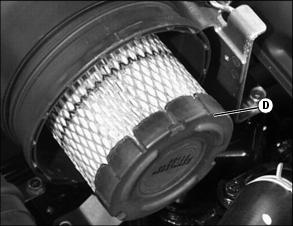
4. Remove and discard primary element (D). Replace with a new primary element.
5. Install air cleaner canister cover (C) with rubber dust unloading valve pointing downward.
6. Hook latches (B) onto cover.
7. If installed, push reset button on top of air restriction indicator.
8. Start engine. Allow engine to run approximately one minute at high idle.
10. Check air restriction indicator. If red plunger inside air restriction is visible, replace secondary air filter element.
Secondary Air Filter Element
1. Remove air cleaner canister cover.
2. Remove primary air filter element.
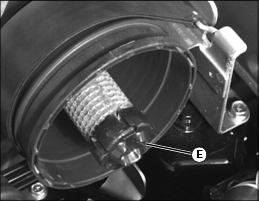
3. Remove and discard secondary air filter element (E). Replace with a new secondary air filter element.
4. Install primary air filter element.

5. Install air cleaner canister cover (C) with rubber dust unloading valve (G) pointing downward, and arrows (F) on cannister and cover pointing at each other. Secure latches (B).
6. If installed, push reset button on top of air restriction indicator.
7. Start engine. Allow engine to run approximately one minute at high idle.
9. Check air restriction indicator. If red plunger inside air restriction is visible, replace secondary air filter element.
Checking Air Filter Intake Hoses and Clamps
1. Park machine safely. (See Parking Safely in the SAFETY section.)
3. Remove right engine side shield.
NOTE: Air intake tube slides into recessed area (A) of panel in front of radiator.
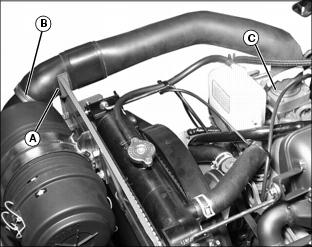
· Tighten upper air intake hose clamp (B).
· Tighten lower intake hose clamp (C).
5. Install right side engine shield.
Checking Optional Air Restriction Indicator
1. Park machine safely. (See Parking Safely in the SAFETY section.)
NOTE: Indicator will not function correctly if plastic indicator housing is damaged.
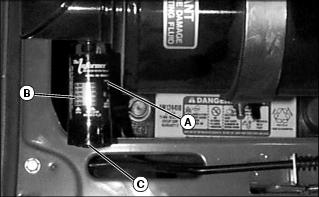
3. Locate and check air restriction indicator (A).
· If air restriction indicator window (B) is fully red, air cleaner requires immediate service.
4. Service air cleaner elements if needed.
5. Push reset button (C) on air restriction indicator.
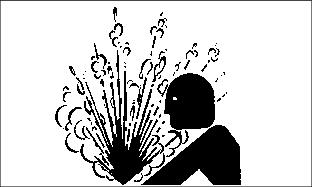
Service Cooling System Safely
Recommended Engine Coolant
The following John Deere coolants are preferred:
· COOL-GARD® PRE-DILUTED SUMMER COOLANT (TY16036).
· COOL-GARD® CONCENTRATED SUMMER COOLANT (TY16034).
If neither of the recommended coolants is available, use a glycol base coolant that meets the following specification:
Check container label before using to be sure it has the appropriate specifications for your machine. Use coolant with conditioner or add conditioner to coolant before using.
If using concentrate, mix approximately 50 percent antifreeze with 50 percent distilled or deionized water before adding to cooling system. This mixture will provide freeze protection to -37 degrees C (-34 degrees F).
Certain geographical areas may require lower temperature protection. See the label on your antifreeze container or consult your John Deere dealer to obtain the latest information and recommendations.
Engine Coolant Drain Interval
When using John Deere Pre-Diluted (TY16036) Automobile and Light Duty Engine Service coolants, drain and flush the cooling system and refill with fresh coolant mixture every 36 months or 3,000 hours of operation, whichever comes first.
When using John Deere Concentrate (TY16034) Automobile and Light Duty Engine Service coolants, drain and flush the cooling system and refill with fresh coolant mixture every 24 months or 2,000 hours of operation, whichever comes first.
If above John Deere Automobile and Light Duty Engine Service coolants are not being used; drain, flush, and refill the cooling system according to instructions found on product container or in equipment Operator's Manual or Technical Manual.
Replacing Thermostat
Replace thermostat every 2 years or 2000 hours.
See your John Deere dealer for this service.
Servicing Cooling System
Checking Cooling System
1. Park machine safely. (See Parking Safely in the SAFETY section.)
4. Remove right side engine service shield.
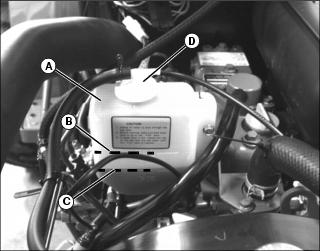
5. Check recovery tank (A) coolant level:
· If engine is warm, coolant level should be between the full line (B) and the low line (C).
· If engine is cold, coolant level should be at the low line (C) on the recovery tank.
6. Remove recovery tank cap (D) if necessary to add coolant.
7. Add pre-diluted coolant or specified ratio of antifreeze and water.
9. Install right side engine service shield.
Draining Cooling System
1. Park machine safely. (See Parking Safely in the SAFETY section.)
4. Remove left side engine service shield.
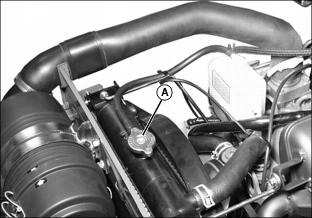
5. Slowly open radiator cap (A) to the first stop to release all pressure.
6. Close radiator cap tightly.
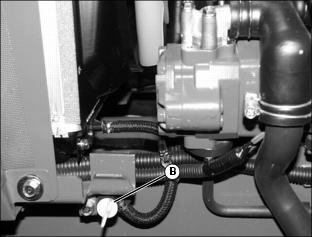
7. Open radiator petcock (B). Drain coolant into a pan.
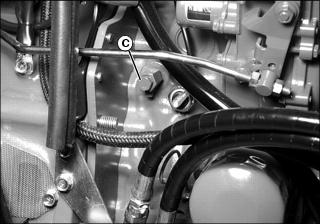
8. Position drain pan under engine block drain plug (C) at right side of engine. Loosen drain plug and allow all coolant to drain.
9. When coolant drains from the recovery tank, remove radiator cap.
10. Close radiator petcock and install engine block drain plug.
Flushing Cooling System
1. Fill cooling system with clean water and John Deere Cooling System Cleaner, or John Deere Cooling System Quick Flush or an equivalent. Follow directions on the can.
2. Install and tighten radiator cap.
3. Start and run engine until it reaches operating temperature.
|
c CAUTION: Avoid injury! Engine and coolant will be hot. Avoid contact with skin to prevent serious burns.
|
5. Open radiator petcock and remove engine block drain plug.
6. Drain cooling system immediately before rust and dirt settle.
7. Close radiator petcock and install engine block drain plug.
Filling Cooling System
NOTE: John Deere COOL-GARD coolant is recommended when adding coolant to the cooling system.
Follow the directions on the container for correct mixture ratio.
· Cooling system capacity is 4.8 L (1.25 gal).
3. Install and tighten radiator cap.
4. Run engine until it reaches operating temperature.
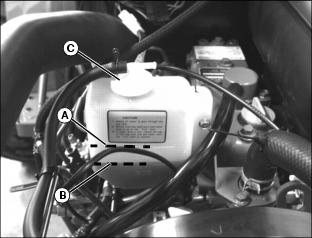
6. Check recovery tank coolant level:
· If engine is warm, coolant level should be between the full line (A) and the low line (B).
· If engine is cold, coolant level should be at the low line (B) on the recovery tank.
7. Remove cap (C) from recovery tank to add coolant if necessary.
Checking Radiator Hoses and Clamps
1. Park machine safely. (See Parking Safely in the SAFETY section.)
3. Remove both engine service shields.
NOTE: Visually inspect hoses for cracks and wear. Squeeze hoses to check for deterioration. Hoses should not be hard and brittle, nor soft or swollen.
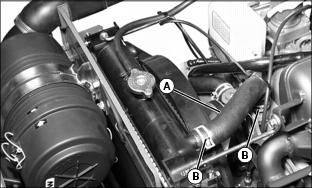
4. Check upper radiator hose (A) for damage or cracking. Replace if necessary.
5. Check hose clamps (B) for looseness. If loose, replace clamps.
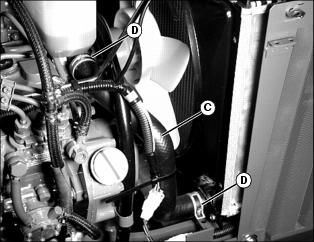
6. Check lower radiator hose (C) for damage or cracking. Replace if necessary.
7. Check hose clamps (D) for looseness. If loose, replace clamps.
8. Install engine service shields.
Checking and Cleaning Fuel Filter Sediment Bowl and Replacing Filter
NOTE: Change filter when fuel is low.
Checking Sediment Bowl
1. Park machine safely. (See Parking Safely in the SAFETY section.) Allow engine to cool.
3. Remove right side engine shield.
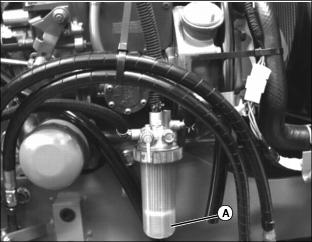
4. Check for visible water and sediment deposits in the sediment bowl (A).
· There is a red ring in the bottom of the sediment bowl which will float on top of any water that is present in the bowl. If the red ring is floating up in the bowl, it is an indication to clean the sediment bowl.
5. If necessary, remove and clean sediment bowl and replace fuel filter.
Cleaning Sediment Bowl and Replacing Fuel Filter
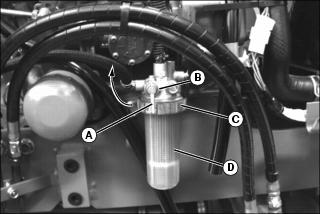
1. Move the fuel shut-off valve (A) to the "C" (closed) position (B).
2. Position drain pan under fuel filter sediment bowl to catch fuel spillage.
3. Turn locking collar (C) counterclockwise to remove bowl (D).
4. Remove and discard the fuel filter.
6. Install new filter to filter head.
7. Install sediment bowl and locking collar.
NOTE: Fuel system is self bleeding.
11. Crank engine to bleed fuel system.
Servicing Alternator Belt
|
c CAUTION: Avoid injury! Fingers or loose clothing can get caught in rotating parts. Stop engine and wait for all moving parts to stop before servicing.
|
Checking Belt Tension
1. Park machine safely. (See Parking Safely in the SAFETY section.) Allow engine to cool.
3. Remove both engine service shields.
4. Apply moderate thumb pressure to the belt halfway between the pulleys. Belt should deflect inward approximately 9.5 mm (3/8 in.).
5. Adjust belt tension if deflection is more or less than specified.
Adjusting Belt Tension
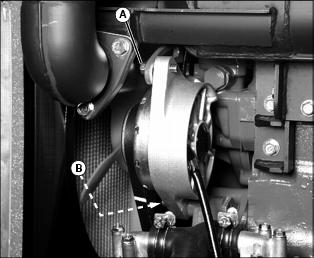
Picture Note: Alternator located on left side of engine.
2. Loosen alternator mounting nut (B).
3. Apply outward pressure to the alternator housing until tension is correct.
4. Tighten bolt (A) and nut (B).
6. Replace alternator belt if worn or damaged.
7. Install engine service shields.
Replacing Belt
NOTE: Replace alternator belt if excessive wear, damage or stretching is detected.
1. Park machine safely. (See Parking Safely in the SAFETY section.) Allow engine to cool.
4. Disconnect black negative (-) cable from battery.
5. Remove both engine service shields.
8. Apply inward pressure to alternator housing.
9. Remove belt from alternator sheave, fan sheave and crankshaft sheave.
10. Route defective belt over fan and remove.
11. Install new belt over fan and onto sheaves.
12. Apply outward pressure to alternator housing until tension is correct.
13. Tighten bolt (A) and nut (B).
14. Check belt tension. Adjust as necessary.
15. Connect black negative (-) cable to battery.
17. Install engine service shields.
Cleaning Grille and Side Screens
IMPORTANT: Avoid damage! Grille and side screens must be clean to prevent engine from overheating and to allow adequate air intake. |
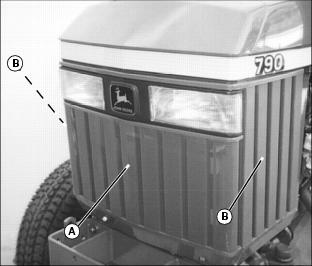
1. Check grille (A) and both side screens (B) for dirt, grass clippings and debris.
2. If grille and side screens are dirty, clean with a brush or cloth.
Cleaning Radiator Cooling Screen
|
c CAUTION: Avoid injury! Compressed air can cause debris to fly a long distance.
· Clear work area of bystanders. · Wear eye protection when using compressed air for cleaning purposes. |
IMPORTANT: Avoid damage! The radiator cooling screen must be clean to prevent engine from overheating and to allow adequate air intake. |
1. Park machine safely. (See Parking Safely in the SAFETY section.) Allow engine to cool.
3. Remove both side engine shields.
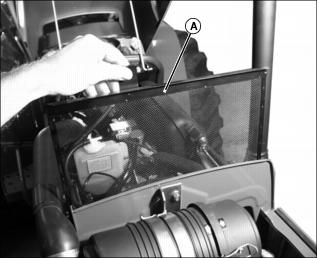
4. Lift and remove radiator screen (A).
5. Clean screen with compressed air, brush or cloth.
7. Install both engine service panels.
Cleaning Radiator Cooling Fins
|
c CAUTION: Avoid injury! Help prevent personal injury. Wear personal eye protection when using compressed air for cleaning purposes.
|
1. Park machine safely. (See Parking Safely in the SAFETY section.) Allow engine to cool.
3. Remove both engine service shields.
4. Remove radiator cooling screen.
IMPORTANT: Avoid damage! Be careful not to damage the cooling fins when using compressed air or water. |
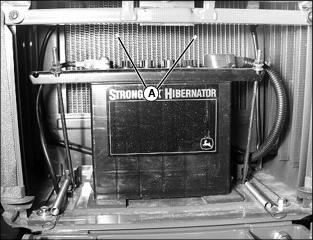
6. Remove dirt and debris from radiator fins (A) using low pressure compressed air or water. Check for damage.
7. Install radiator cooling screen.
8. Install grille and both engine service shields.
Adjusting Throttle
1. Park machine safely. (See Parking Safely in the SAFETY section.).
4. Remove right side service shield.
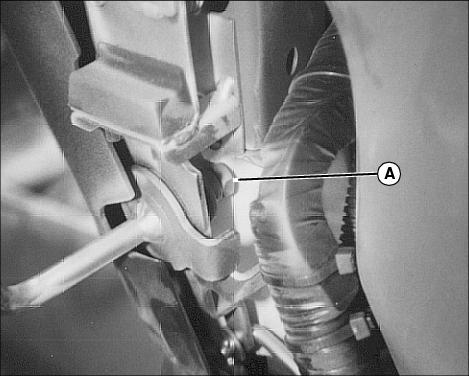
5. Locate locknut (A) on end of throttle lever.
6. Adjust throttle lever friction drag:
· Loosen nut (A) to decrease drag.
· Tighten nut (A) to increase drag.
Checking Engine Speeds
Check engine speeds when engine is warmed up and not under load.
· Fast idle (no load) - 2810 rpm
· Slow idle (no load) - 1000 rpm
If above engine speeds are not to specifications, see your John Deere dealer.
Fuel Injection Pump
IMPORTANT: Avoid damage! Do not clean a warm or hot fuel injection pump with steam or water. Clean with compressed air if pump is not cooled. |
Changing the fuel injection pump in any way is not approved by the manufacturer and would void the warranty.
NOTE: The fuel injection pump is calibrated by the engine manufacturer and should not require any adjustments.
If engine is hard to start, lacks power, or runs rough, see Troubleshooting Section of this manual.
After performing the check in the troubleshooting section and your engine is still not performing correctly, contact your John Deere dealer.
Fuel Injection Nozzles
If injection nozzles are not working correctly or are dirty, engine will run poorly. See your John Deere dealer for service.