
Safety
Operator Training Required
· The owner of the machine is responsible for training the users and mechanics of the machine.
· The owner/user can prevent and is responsible for accidents or injuries occurring to themselves, other people, or property.
· Do not allow operation or service of the machine by untrained adults.
· Do not let children operate the machine. Local regulations may restrict the age of the operator.
· Read the operator's manual and study the safety and operation sections before operating the machine.
· If the operator of the machine cannot read or understand this manual, it is the machine owner's responsibility to explain this material to the operator. This publication is available in other languages.
· Operate the machine in an open, unobstructed area under the direction of an experienced operator.
· Learn the use of all controls.
· Operator experience is required to learn the moving, stopping, turning and other operating characteristics of the machine.
Operating Safely
· Only allow responsible adults, who are familiar with the instructions, to operate the machine. Local regulations may restrict the age of the operator.
· Inspect machine before you operate. Be sure hardware is tight. Repair or replace damaged, badly worn, or missing parts. Be sure guards and shields are in good condition and fastened in place. Make any necessary adjustments before you operate.
· Be sure all drives are in neutral and parking brake is locked before starting engine. Only start engine from the operator's position.
· Do not change the engine governor settings or overspeed the engine. Operating the engine at excessive speed can increase the hazard of personal injury.
· Check brakes before you operate. Adjust or service brakes as necessary.
· Stop machine if anyone enters the area.
· If you hit an object or if abnormal vibration occurs, stop the machine and inspect it. Make repairs before you operate. Keep machine and attachments properly maintained and in good working order.
· Do not leave machine unattended when it is running.
· Only operate during daylight or with good artificial light.
· Use only accessories and attachments approved by the manufacturer of the machine. Keep safety labels visible when installing accessories and attachments.
· Do not operate machine if you are under the influence of drugs or alcohol.
· Check before each use that operator presence controls are functioning correctly. Test safety systems. Do not operate unless they are functioning correctly.
· Slow down and be careful of traffic when operating near or crossing roadways. Use care when approaching blind corners, shrubs, trees, or other objects that may obscure vision.
· Do not wear radio or music headphones. Safe service and operation require your full attention.
· Use care when loading or unloading the machine into or off of a trailer or truck.
· Disengage drive to attachments when transporting or not in use.
· Reduce the throttle setting during engine run-out and, if the engine is provided with a fuel shut-off valve, turn the fuel off at the conclusion of mowing.
· When machine is left unattended, stored, or parked, lower the mower deck unless a positive mechanical lock is used.
Parking Safely
1. Stop machine on a level surface, not on a slope.
2. Disengage PTO and stop attachments.
3. Lower attachments to the ground.
7. Wait for engine and all moving parts to stop before you leave the operator's station.
8. Close fuel shut-off valve, if your machine is equipped.
9. Disconnect the negative (-) battery cable before servicing the machine.
Use Seat Belt Properly
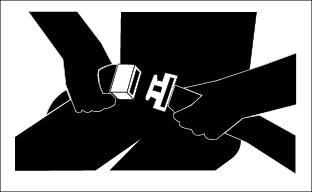
Use a seat belt when operating with the folding Roll-Over Protective Structure (ROPS) in the upright position to minimize chance of injury from an accident, such as an overturn.
Do not use a seat belt when operating with the folding ROPS in the folded position. Return the folding ROPS to the upright position as soon as possible.
Avoid Tipping
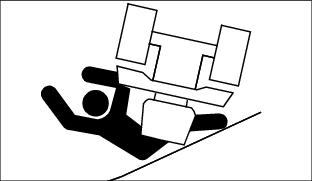
· Slopes are a major factor related to loss-of-control and tip-over accidents, which can result in severe injury or death. All slopes require extra caution. If you cannot back up the slope or if you feel uneasy on it, do not mow it.
· Drive up and down a hill - not across.
· Do not operate on slopes you cannot back up.
· Keep all movement on slopes slow and gradual. Do not make sudden changes in speed or direction.
· Use a slow speed when operating on a slope. Choose a low gear or speed so that you will not have to stop or shift while on the slope.
· Tires may lose traction on slopes even though the brakes are functioning properly.
· Do not turn on slopes unless necessary. Turn slowly and turn downhill. Do not shift to neutral and coast downhill.
· Stay alert for holes and other hidden hazards in the terrain. Uneven terrain could overturn the machine. Tall grass can hide obstacles.
· Keep away from drop-offs, ditches, embankments, as well as ponds and other bodies of water. The machine could suddenly turn over if a wheel is over the edge of a cliff or ditch, or if an edge caves in.
· Follow the manufacturer's recommendations for wheel weights or counterweights for added stability when operating on slopes or using front or rear mounted attachments. Remove weights when not required.
· Slow down before you make a sharp turn or operate on a slope. On gear models, choose a low gear so that shifting and stopping will not be necessary while on the slope.
· Do not stop when going up hill or down hill. If machine stops going up hill, back down slowly.
· Operating machine when grass is wet can cause reduced traction and sliding.
Keep Riders Off
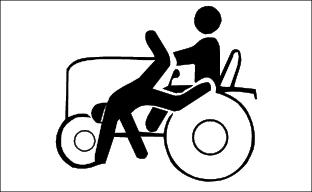
· Only allow the operator on the machine. Keep riders off.
· Riders on the machine or attachment may be struck by foreign objects or thrown off the machine causing serious injury.
· Riders obstruct the operator's view resulting in the machine being operated in an unsafe manner.
Towing Loads Safely
· Stopping distance increases with speed and weight of towed load. Travel slowly and allow extra time and distance to stop.
· Total towed weight must not exceed combined weight of pulling machine, ballast and operator. Use counterweights or wheel weights as described in the attachment or pulling machine operator's manual.
· Excessive towed load can cause loss of traction and loss of control on slopes. Reduce towed weight when operating on slopes.
· Never allow children or others in or on towed equipment.
· Use only approved hitches. Tow only with a machine that has a hitch designed for towing. Do not attach towed equipment except at the approved hitch point.
· Follow the manufacturer's recommendations for weight limits for towed equipment and towing on slopes.
· If you cannot back up a slope with a towed load, the slope is too steep to operate on with the towed load. Reduce the towed load or do not operate.
· Do not turn sharply. Use additional caution when turning or operating under adverse surface conditions. Use care when reversing.
· Do not shift to neutral and coast downhill.
Stay Clear of Rotating Drivelines
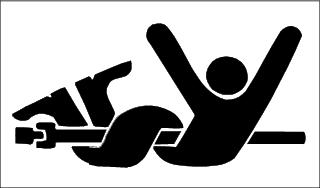
Entanglement in rotating driveline can cause serious injury or death.
· Wear close fitting clothing.
· Stop the engine and be sure PTO driveline is stopped before getting near it.
Checking Wheel Hardware
· A serious accident could occur causing serious injury if wheel hardware is not tight.
· Check wheel hardware tightness often during the first 100 hours of operation.
· Wheel hardware must be tightened to specified torque using the proper procedure anytime it is loosened.
Wear Appropriate Clothing
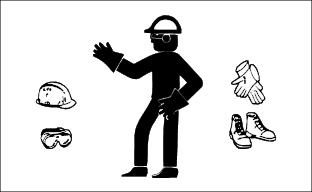
· Always wear safety goggles, or safety glasses with side shields, and a hard hat when operating the machine.
· Wear close fitting clothing and safety equipment appropriate for the job.
· While mowing, always wear substantial footwear and long trousers. Do not operate the equipment when barefoot or wearing open sandals.
· Wear a suitable protective device such as earplugs. Loud noise can cause impairment or loss of hearing.
Driving Safely on Public Roads
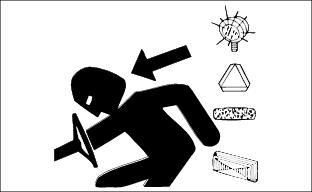
Avoid personal injury or death resulting from a collision with another vehicle on public roads:
· Use safety lights and devices. Slow moving machines when driven on public roads are hard to see, especially at night.
· Whenever driving on public roads, use flashing warning lights and turn signals according to local regulations. Extra flashing warning lights may need to be installed.
Practice Safe Maintenance
· Only qualified, trained adults should service this machine.
· Understand service procedure before doing work. Keep area clean and dry.
· Do not operate the engine in a confined space where dangerous carbon monoxide fumes can collect.
· Never lubricate, service, or adjust machine while it is moving. Wait for all movement to stop on machine before adjusting, cleaning or repairing.
· Keep safety devices in place and in working condition. Keep hardware tight.
· On multi-bladed machines, take care as rotating one blade can cause other blades to rotate.
· Keep hands, feet, clothing, jewelry, and long hair away from any moving parts, to prevent them from getting caught.
· Lower any attachments to the ground before cleaning or servicing machine. Disengage all power and stop the engine. Lock park brake and remove the key. Let machine cool.
· Disconnect battery or remove spark plug wire (for gasoline engines) before making any repairs. Disconnect negative terminal first and positive last. Install positive terminal first and negative last.
· Before servicing machine or attachment, carefully release pressure from any components with stored energy, such as hydraulic components and springs.
· Release hydraulic pressure by lowering attachment or cutting units to the ground or to a mechanical stop and move hydraulic control levers back and forth.
· Keep all nuts and bolts tightened, especially blade attachment bolts.
· Securely support any machine elements that must be raised for service work. Use jack stands or lock service latches to support components when needed.
· Never run engine unless park brake is locked.
· Use care when checking blades. Wrap blades or wear gloves and use caution when servicing them. Only replace blades. Never straighten or weld them.
· Keep all parts in good condition and properly installed. Fix damage immediately. Replace worn or broken parts. Replace all worn or damaged safety and instruction decals.
· Grass catcher components are subject to wear, damage, and deterioration which could expose moving parts or allow objects to be thrown. Check components frequently and replace with manufacturer's recommended parts when necessary.
· Charge batteries in an open, well-ventilated area, away from sparks. Unplug battery charger before connecting or disconnecting from the battery. Wear protective clothing and use insulated tools.
· Do not modify machine or safety devices. Unauthorized modifications may impair its function and safety.
· Check park brake operation frequently. Adjust and service as needed.
Avoid High Pressure Fluids
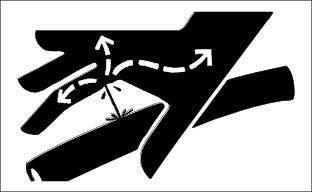
· Hydraulic hoses and lines can fail due to physical damage, kinks, age, and exposure. Check hoses and lines regularly. Replace damaged hoses and lines.
· Hydraulic fluid connections can loosen due to physical damage and vibration. Check connections regularly. Tighten loose connections.
· Escaping fluid under pressure can penetrate the skin causing serious injury. Avoid the hazard by relieving pressure before disconnecting hydraulic or other lines. Tighten all connections before applying pressure.
· Search for leaks with a piece of cardboard. Protect hands and body from high pressure fluids.
· If an accident occurs, see a doctor immediately. Any fluid injected into the skin must be surgically removed within a few hours or gangrene may result. Doctors unfamiliar with this type of injury should reference a knowledgeable medical source. Such information is available from Deere & Company Medical Department in Moline, Illinois, U.S.A. Information may be obtained in the United States and Canada only by calling 1-800-822-8262.
Prevent Fires
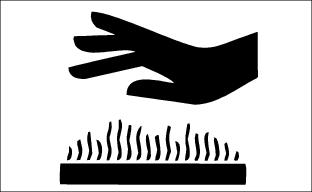
· Keep mower free of grass, leaves, or other debris build-up. To reduce fire hazard, keep engine, engine compartment, and area around battery free of grass, leaves, or excessive grease.
· Remove grass and debris from engine compartment and muffler area, before and after operating machine, especially after mowing or mulching in dry conditions.
· Clean up oil or fuel spillage.
· Allow engine to cool before storing in any enclosure.
· Never remove fuel cap, or add fuel with engine running or hot. Allow engine to cool for several minutes.
· Always shut off fuel when storing or transporting machine, if the machine has a fuel shutoff.
Tire Safety
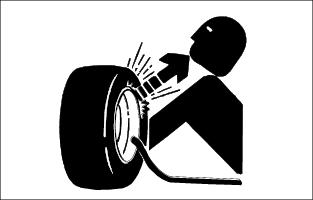
Explosive separation of a tire and rim parts can cause serious injury or death:
· Do not attempt to mount a tire without the proper equipment and experience to perform the job.
· Always maintain the correct tire pressure. Do not inflate the tires above the recommended pressure. Never weld or heat a wheel and tire assembly. The heat can cause an increase in air pressure resulting in a tire explosion. Welding can structurally weaken or deform the wheel.
· When inflating tires, use a clip-on chuck and extension hose long enough to allow you to stand to one side and NOT in front of or over the tire assembly.
· Check tires for low pressure, cuts, bubbles, damaged rims or missing lug bolts and nuts.
Handling Fuel Safely
Fuel and fuel vapors are highly flammable and explosive:
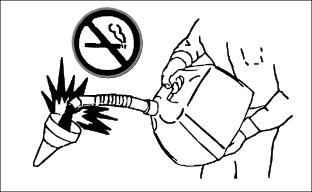
· Use extra care when handling gasoline and other fuels.
· Use only an approved container.
· Never remove fuel cap or add fuel with the engine running. Allow the engine to cool before refueling. Do not smoke.
· Never refuel or drain the machine indoors. Move machine outdoors and provide adequate ventilation.
· Never store the machine or fuel container inside where there is an open flame, such as a water heater.
· Replace all fuel tank and container caps securely.
· Prevent fires. Clean up spilled fuel immediately. If fuel is spilled on clothing, change clothing immediately. Do not attempt to start the engine but move the machine away from the area of spillage and avoid creating any source of ignition until fuel vapors have dissipated.
· Prevent fire and explosion caused by static electric discharge. Use only non-metal, portable fuel containers approved by the Underwriter's Laboratory (U.L.) or the American Society for Testing & Materials (ASTM). If using a funnel, make sure it is plastic and has no screen or filter.
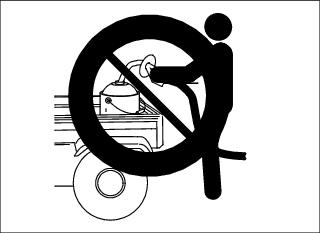
· Static electric discharge can ignite gasoline vapors in an ungrounded fuel container. Remove the fuel container from the bed of a machine or trailer or the trunk of a car and place on the ground away from the machine before filling. Keep nozzle in contact with container opening while filling. Do not use a nozzle lock-open device.
· When practical, remove equipment from trailers or truck beds and refuel them on the ground. If this is not possible, use a portable, plastic fuel container to refuel equipment on a truck bed or trailer.
· For gasoline engines, do not use gas with methanol. Methanol is harmful to your health and to the environment.
Handling Waste Product and Chemicals

Waste products, such as, used oil, fuel, coolant, brake fluid, and batteries, can harm the environment and people:
· Do not use beverage containers for waste fluids - someone may drink from them.
· See your local Recycling Center or authorized dealer to learn how to recycle or get rid of waste products.
· A Material Safety Data Sheet (MSDS) provides specific details on chemical products: physical and health hazards, safety procedures, and emergency response techniques. The seller of the chemical products used with your machine is responsible for providing the MSDS for that product.