
Read the general safety operating precautions in your machine operator’s manual for additional safety information.
Training
• Read the operating and service instruction manual carefully. Be thoroughly familiar with the controls and the proper use of the equipment. Know how to stop the unit and disengage the controls quickly.
• Never allow children to operate the equipment. Never allow adults to operate the equipment without proper instruction.
• Keep the area of operation clear of all persons, particularly small children, and pets.
Preparation
• Thoroughly inspect the area where the equipment is to be used and remove all doormats, sleds, boards, wires, and other foreign objects.
• Disengage all clutches and shift into neutral before starting the engine.
• Do not operate the equipment without wearing adequate winter outer garments. Wear footwear that will improve footing on slippery surfaces.
• Handle fuel with care; it is highly flammable.
a. Use an approved fuel container.
b. Never add fuel to a running engine or hot engine.
c. Fill fuel tank outdoors with extreme care. Never fill fuel tank indoors.
d. Replace gasoline cap securely and wipe up spilled fuel.
• Adjust the collector housing height to clear gravel or crushed rock surface.
• Never attempt to make any adjustments while the engine is running (except when specifically recommended by the manufacturer.)
• Let engine and machine adjust to outdoor temperatures before starting to clear snow.
• Always wear safety glasses or eye shields during operation or while performing and adjustment or repair to protect eyes from foreign objects that may be thrown from the machine.
Operation
• Do not put hands or feet near or under rotating parts. Keep clear of the discharge opening at all times.
• Exercise extreme caution when operating on or crossing gravel drives, walks, or roads. Stay alert for hidden hazards or traffic. Do not carry passengers.
• After striking a foreign object, stop the engine, remove the spark plug wire, thoroughly inspect the snow thrower for any damage, and repair the damage before restarting and operating the snow thrower.
• If the unit should start to vibrate abnormally, stop the engine and check immediately for the cause. Vibration is generally a warning of trouble.
• Stop the engine whenever you leave the operating position, before unclogging the collector or impeller housing, or discharge guide, and when making any repairs, adjustments or inspections.
• Take all possible precautions when leaving the machine unattended. Disengage the power take-off, lower the attachment, lock the park brake, stop the engine, and remove the key.
• When cleaning, repairing, or inspecting, make certain the collector or impeller and all moving parts have stopped. Disconnect the spark plug wire and keep the wire away from the plug to prevent accidental starting.
• Do not run the engine indoors, except when starting the engine and for transporting the snow thrower in or out of the building. Open the outside doors; exhaust fumes are dangerous.
• Do not clear snow across the face of slopes. Exercise extreme caution when changing direction on slopes. Do not attempt to clear steep slopes.
• Never operate the snow thrower without proper guards, plates, or other safety protective devices in place.
• Never operate the snow thrower near glass enclosures, automobiles, window wells, drop-off, and the like without proper adjustment of the snow discharge angle. Keep children and pets away.
• Do not overload the machine capacity by attempting to clear snow at too fast a rate.
• Never operate the machine at high transport speeds on slippery surfaces. Use care when backing.
• Never direct discharge at bystanders or allow anyone in front of the unit.
• Disengage power to the collector or impeller when the snow thrower is transported or not in use.
• Use only attachments and accessories approved by the manufacturer of the snow thrower (such as wheel weights, counterweights, and cabs).
• Never operate the snow thrower without good visibility or light.
Parking Safely
1. Stop machine on a level surface, not on a slope.
2. Disengage PTO and stop attachments.
3. Lower attachments to the ground.
7. Wait for engine and all moving parts to stop before you leave the operator’s station.
8. Close fuel shut-off valve, if your machine is equipped.
9. Disconnect the negative (-) battery cable before servicing the machine.
Maintenance and Storage
• Check shear bolts, engine mounting bolts, and other bolts at frequent intervals for proper tightness to be sure the equipment is in safe working condition.
• Never store the machine with fuel in the fuel tank inside a building where ignition sources are present such as hot water and space heaters, and clothes dryers. Allow the engine to cool before storing in any enclosure.
• Always refer to operator’s manual instructions for important details if the snow thrower is to be stored for a long period of time.
• Maintain or replace safety and instruction labels as necessary.
• Run the machine a few minutes after throwing snow to prevent freeze up of the collector or impeller.
Practice Safe Maintenance
• Only qualified, trained adults should service this machine.
• Understand service procedure before doing work. Keep area clean and dry.
• Do not operate the engine in a confined space where dangerous carbon monoxide fumes can collect.
• Never lubricate, service or adjust the machine or attachment while it is moving. Keep safety devices in place and in working condition. Keep hardware tight.
• Keep hands, feet, clothing, jewelry, and long hair away from any moving parts, to prevent them from getting caught.
• Lower any attachment completely to the ground or to an existing attachment mechanical stop before servicing the attachment. Disengage all power and stop the engine. Lock park brake and remove the key. Let machine cool.
• Disconnect battery or remove spark plug wire (for gasoline engines) before making any repairs.
• Before servicing machine or attachment, carefully release pressure from any components with stored energy, such as hydraulic components and springs.
• Release hydraulic pressure by lowering attachment or cutting units to the ground or to a mechanical stop and move hydraulic control levers.
• Securely support any machine or attachment elements that must be raised for service work. Use jack stands or lock service latches to support components when needed.
• Never run engine unless park brake is locked.
• Keep all parts in good condition and properly installed. Fix damage immediately. Replace worn or broken parts. Replace all worn or damaged safety and instruction decals.
• Check all hardware at frequent intervals to be sure the equipment is in safe working condition.
• Do not modify machine or safety devices. Unauthorized modifications to the machine or attachment may impair its function and safety.
Avoid Injury from Moving Parts
Before cleaning, repairing, or inspecting, make certain all moving parts have stopped. Disconnect the tractor spark plug wire or battery to prevent accidental starting.
Do not put hands or feet near or under rotating parts. Keep clear of any discharge area at all times.
Protect your hands when you inspect or unplug the attachment. Wear gloves and use proper tools.
Before you dismount to unplug or adjust attachment:
• Wait for all moving parts to stop.
• Keep hands, feet and clothing away from attachment when engine is running.
Avoid Injury from Hitting Obstructions
• Raise the attachment when driving between jobs.
• Drive at slow speeds when using the attachment. Be cautious of hidden obstacles.
Stay Clear of Rotating Drivelines 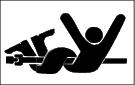
Entanglement in rotating driveline can cause serious injury or death.
• Wear close fitting clothing.
• Stop the engine and be sure PTO driveline is stopped before getting near it.
Avoid High Pressure Fluids
• Hydraulic hoses and lines can fail due to physical damage, kinks, age, and exposure. Check hoses and lines regularly. Replace damaged hoses and lines.
• Hydraulic fluid connections can loosen due to physical damage and vibration. Check connections regularly. Tighten loose connections.
• Escaping fluid under pressure can penetrate the skin causing serious injury. Avoid the hazard by relieving pressure before disconnecting hydraulic or other lines. Tighten all connections before applying pressure.
• Search for leaks with a piece of cardboard. Protect hands and body from high pressure fluids.
• If an accident occurs, see a doctor immediately. Any fluid injected into the skin must be surgically removed within a few hours or gangrene may result. Doctors unfamiliar with this type of injury should reference a knowledgeable medical source. Such information is available from Deere & Company Medical Department in Moline, Illinois, U.S.A. Information may be obtained in the United States and Canada only by calling 1-800-822-8262.