
Safety
Read Safety in Machine Operator’s Manual
Read the general safety operating precautions in your machine operator’s manual for additional safety information.
Training
• Read the instructions carefully. Be familiar with the controls and the proper use of the equipment.
• Never allow children or people unfamiliar with these instructions to use the lawnmower. Local regulations can restrict the age of the operator.
• Never mow while people, especially children, or pets are nearby.
• Keep in mind that the operator or user is responsible for accidents or hazards occurring to other people or their property.
Preparation
• While mowing, always wear substantial footwear and long trousers. Do not operate the equipment when barefoot or wearing open sandals.
• Thoroughly inspect the area where the equipment is to be used and remove all objects which can be thrown by the machine.
• Before using, always visually inspect to see that the blades, blade bolts and cutter assembly are not worn or damaged. Replace worn or damaged blades and bolts in sets to preserve balance.
• On multi-bladed machines, take care as rotating one blade can cause other blades to rotate.
Operation
• Do not operate the engine in a confined space where dangerous carbon monoxide fumes can collect.
• Mow only in daylight or in good artificial light.
• Before attempting to start the engine, disengage all blade attachment clutches and shift into neutral.
• Remember there is no such thing as a safe slope. Travel on grass slopes requires particular care. To guard against overturning:
• never mow across the face of a slope, unless the machine is designed for this purpose.
• Stop the blades from rotating before crossing surfaces other than grass.
• Never direct discharge of material toward bystanders nor allow anyone near the machine while in operation.
• Never operate the machine with defective guards, or without safety protective devices in place.
• Do not change the engine governor settings or overspeed the engine. Operating the engine at excessive speed can increase the hazard of personal injury.
• Before leaving the operator’s position:
• disengage the drive to any attachments and lower them;
• change into neutral and lock the parking brake;
• stop the engine and remove the key.
• Disengage drive to attachments, stop the engine, disconnect the spark plug wires and remove the ignition key:
• before clearing blockages or unclogging chute;
• before checking, cleaning, or working on the machine;
• after striking a foreign object. Inspect the machine for damage and make repairs before restarting and operating the equipment;
• if the machine starts to vibrate abnormally (check immediately).
• Disengage drive to attachments when transporting or not in use.
• Stop the engine and disengage drive to attachment:
• before removing the grass catcher;
• before making height adjustment unless adjustment can be made from the operator’s position.
• Reduce the throttle setting during run-out and, if the engine is provided with a shut-off valve, turn the fuel off at the conclusion of mowing.
• Inspect machine before you operate. Repair or replace damaged, badly worn, or missing parts. Make any necessary adjustments before you operate.
• Do not operate mower without discharge chute or entire grass catcher in place. Never operate with the discharge deflector raised, removed, or altered, unless using a grass catcher.
• Stop machine if anyone enters the area.
• Use only accessories and attachments approved by the manufacturer of the machine. Keep safety labels visible when installing accessories and attachments.
• Never raise mower decks when blades are running.
Maintenance and Storage
• Keep all nuts, bolts and screws tight to be sure the equipment is in safe working condition.
• Never store the equipment with fuel in the tank inside a building where fumes can reach an open flame or spark.
• Allow the engine to cool before storing in any enclosure.
• To reduce the fire hazard, keep the engine, silencer, battery compartment and fuel storage area free of grass, leaves, or excessive grease.
• Check the grass catcher frequently for wear or deterioration.
• Replace worn or damaged parts for safety.
• If the fuel tank has to be drained, this should be done outdoors.
• On multi-bladed machines, take care as rotating one blade can cause other blades to rotate.
• When machine is to be parked, stored or left unattended, lower the cutting means unless a positive mechanical lock in used.
• Use jack stands or lock service latches to support components when required. Securely support any machine elements that must be raised for service work.
• Before servicing machine or attachment, carefully release pressure from any components with stored energy, such as hydraulic components or springs.
• Release hydraulic pressure by lowering attachment or cutting units to the ground or to a mechanical stop and move hydraulic control levers back and forth.
• Disconnect battery or remove spark plug (for gas engines) before making any repairs. Disconnect the negative terminal first and the positive last. Reconnect positive first and negative last.
• Use care when checking blades. Wrap the blades or wear gloves, and use caution when servicing them. Only replace blades. Never straighten or weld them.
• Keep hands, feet, clothing, jewelry and long hair away from moving parts. If possible, do not make adjustments with the engine running.
• Charge batteries in an open well ventilated area, away from spark and flames. Unplug charger before connecting or disconnecting from battery. Wear protective clothing and use insulated tools.
Checking Mowing Area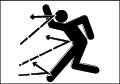
• Clear mowing area of objects that might be thrown. Keep people and pets out of mowing area.
• Low-hanging branches and similar obstacles can injure the operator or interfere with mowing operation. Before mowing, identify potential obstacles such as low-hanging branches, and trim or remove those obstacles.
• Study mowing area. Set up a safe mowing pattern. Do not mow where traction or stability is doubtful.
• Test drive area with mower lowered but not running. Slow down when you travel over rough ground.
Parking Safely
1. Stop machine on a level surface, not on a slope.
2. Disengage PTO and stop attachments.
3. Lower attachments to the ground.
7. Wait for engine and all moving parts to stop before you leave the operator’s station.
8. Close fuel shut off valve before servicing the fuel system, if your machine is equipped.
9. Disconnect the battery ground cable before making repairs to electrical system or doing any welding.
Rotating Blades are Dangerous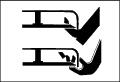
HELP PREVENT SERIOUS OR FATAL ACCIDENTS:
• Rotating blades can cut off arms and legs, and throw objects. Failure to observe safety instructions could result in serious injury or death.
• Keep hands, feet and clothing away from mower deck when engine is running.
• Be alert at all times, drive forward carefully. People, especially children can move quickly into the mowing area before you know it.
• Shut off blades when you are not mowing.
• Park machine safely before leaving the operator station for any reason including emptying the catchers or unplugging the chute.
Protect Children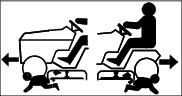
• Death or serious injury can occur when young children associate having fun with a lawn mowing machine simply because someone has given them a ride on a machine.
• Children are attracted to lawn mowing machines and mowing activities. They don’t understand the dangers of rotating blades or the fact that the operator is unaware of their presence.
• Children who have been given rides in the past may suddenly appear in the mowing area for another ride and be run over or backed over by the machine.
• Tragic accidents with children can occur if the operator is not alert to the presence of children, especially when a child approaches a machine from behind. Before and while backing up, stop mower blades and look down and behind the machine carefully, especially for children.
• Never carry children on a machine or attachment, even with the blades off. Do not tow children in a cart or trailer. They can fall off and be seriously injured or interfere with safe machine operation.
• Never use the machine as a recreational vehicle or to entertain children.
• Never allow children or an untrained person operate the machine. Instruct all operators not to give children a ride on the machine or in an attachment.
• Keep children indoors, out of the mowing area, and in the watchful eye of a responsible adult, other than the operator, when a mower is being operated.
• Stay alert to the presence of children. Never assume that children will remain where you last saw them. Turn the machine off if a child enters the work area.
• Use extreme care when approaching blind corners, shrubs, trees, or other objects that may block your view of a child.
Stay Clear of Rotating Drivelines 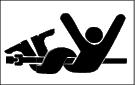
Entanglement in rotating driveline can cause serious injury or death.
• Wear close fitting clothing.
• Stop the engine and be sure PTO driveline is stopped before getting near it.
Avoid Tipping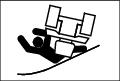
• Slopes are a major factor related to loss-of-control and tip-over accidents, which can result in severe injury or death. Operation on all slopes requires extra caution.
• Be aware that mechanical front wheel drive (MFWD) can improve access to dangerously sloped terrain, thereby increasing the possibility of a tipover.
• Drive up and down a hill - not across.
• Watch for holes, ruts, bumps, rocks, or other hidden objects. Uneven terrain could overturn the machine. Tall grass can hide obstacles.
• Do not operate machine on wet grass. Tires may lose traction. Tires may lose traction on slopes even though the brakes are functioning properly.
• Choose a low ground speed so you will not have to stop or shift while on a slope.
• Always keep the machine in gear when going down slopes. Do not shift to neutral and coast downhill.
• Avoid starting, stopping or turning on a slope. If the tires lose traction, disengage the blades and proceed slowly, straight down the slope.
• Keep all movement on slopes slow and gradual. Do not make sudden changes in speed or direction, which could cause the machine to roll over.
• Do not operate machine near drop-offs, ditches, embankments, or bodies of water. The machine could suddenly roll over if a wheel goes over the edge or the edge caves in. Leave a safety area between the machine and any hazard.
• Danger of tipping is increased greatly with tires in narrow tread setting and driving at high speed.
• Follow the manufacturer’s recommendations for wheel weights or counterweights for added stability when operating on slopes or using front or rear mounted attachments. Remove weights when not required.
Wear Appropriate Clothing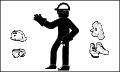
• Always wear safety goggles, or safety glasses with side shields, and a hard hat when operating the machine.
• Wear close fitting clothing and safety equipment appropriate for the job.
• While operating this machine, always wear substantial footwear and long trousers. Do not operate the equipment when barefoot or wearing open sandals.
• Wear a suitable protective device such as earplugs. Loud noise can cause impairment or loss of hearing.


