Hose Installation Guide
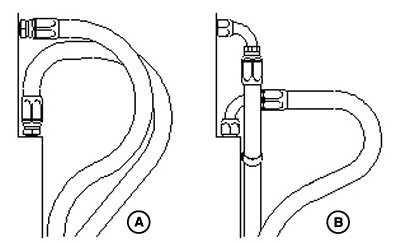
N97036-UN-27FEB12
A - Wrong
B - Right
Use elbows and adapters in the installation to relieve strain on the assembly, and to provide easier and neater installations that are accessible for inspection and maintenance. Remember that metal end fittings cannot be considered as part of the flexible portion of the assembly.
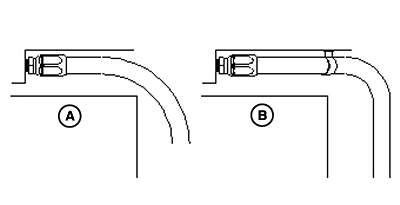
N97037-UN-27FEB12
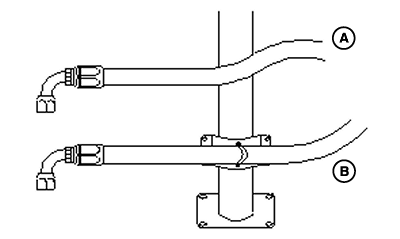
A - Wrong
B - Right
Install hose runs to avoid rubbing or abrasion. Clamps are often needed to support long runs of hose or to keep hose away from moving parts. It is important that the clamps be of the correct size. A clamp that is too large will allow the hose to move in the clamp causing abrasion at this point.
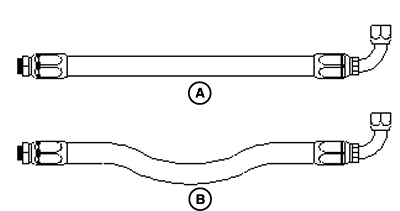
N97038-UN-27FEB12
A - Wrong
B - Right
In straight hose installations allow enough slack in the hose line to provide for changes in length that will occur when pressure is applied. This change in length can be from +2% to -4%.
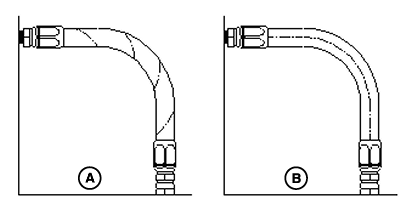
N97039-UN-27FEB12
A - Wrong
B - Right
Do not twist hose during installation. This can be determined by the printed layline on the hose. Pressure applied to a twisted hose can cause hose failure or loosening of the connections.
N97040-UN-27FEB12
A - Wrong
B - Right
Keep hose away from hot parts. High ambient temperature will shorten hose life. If you cannot route it away from the heat source, insulate it.
N97041-UN-27FEB12
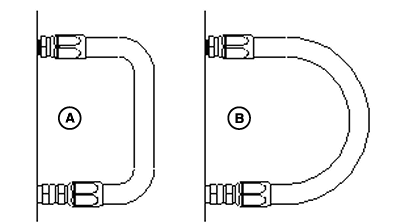
A - Wrong
B - Right
Keep the bend radius of the hose as large as possible to avoid hose collapsing and restriction of flow. Follow catalog specs on minimum bend radius.
|
OUO6435,0000696-19-20120307 |