Pneumatic Down Force
-
 CAUTION: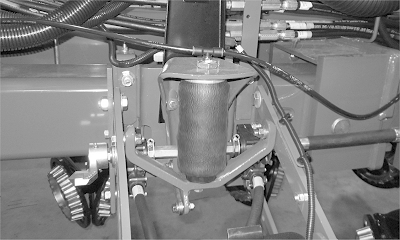
A86003-UN-02APR15Properly Rolled Air Spring
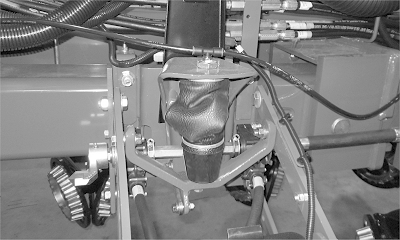
A86004-UN-02APR15Improperly Rolled Air Spring
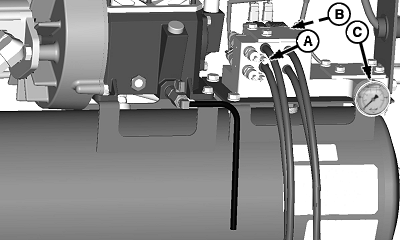
A87942-UN-30SEP15Hydraulic Compressor
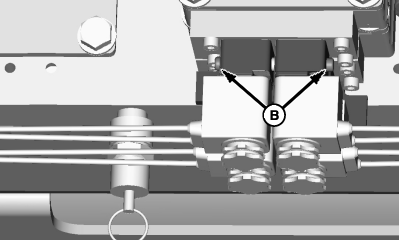
A87943-UN-30SEP15Manual Override (Far Side of Valve Block)
A - Fill Valve (one per block)
B - Manual Overrides (two per block)
C - Tank Gauge
Avoid serious injury from exploding parts due to over-pressurization or operating the system without all of the components in place.- Do not inflate the system above 827 kPa (8.2 bar) (120 psi) or 1779 N (400 lb down force).
- Do not remove the pressure relief valve.
- Do not pressurize the system unless all of the row unit components are in place.
IMPORTANT: Do not lower the machine with zero air pressure in the system. Maintain 34—55 kPa (0.3—0.5 bar) (4.3--7.8 psi) 76—120 N (17—27 lb down force) in the system to avoid kinks in the air springs. If an air spring kinks, raise the machine and pressurize the system until the air springs straighten out.
IMPORTANT: Do not operate if a pinched or unrolled air spring occurs. Lower the system pressure. Manually roll the air spring over the lower piston. Incremental lowering of the machine helps to start the air spring rolling over the lower piston.
NOTE: It is normal for the system air pressure to drop when the frame is raised and increase when the frame is lowered.
NOTE: If more down force is needed on the row units that follow tractor tires, install an extra non-adjustable spring on these row units. See your John Deere™ dealer or qualified service provider for more information.
If the compressor system fails, charge the air-spring circuit at the fill valves (A) with shop air.
-
If the control system fails, use the manual overrides (B) to increase or decrease the air-spring pressure. Check the air-spring pressure with a tire pressure gauge at the fill valve (A).
-
The tank gauge (C) displays the air pressure in the tank not the pressure in the air springs. The normal operating range for tank pressure is 790—1000 kPa (7.9—10 bar) (115—145 psi)
For more information, see your SeedStar™ Monitor Operator’s Manual.
Clean or Replace The Air Compressor Filter
CAUTION:
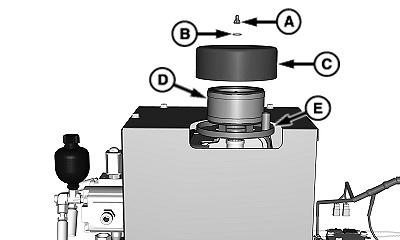
A88545-UN-11NOV15
A - Wing Nut
B - Seal Washer
C - Weather Shield
D - Filter Element
E - Filter Base
Avoid injury from sudden activation of the compressor. Turn off the tractor before service.-
IMPORTANT: Avoid compressor damage. Clean the air filter element every 50 operating hours. Replace the air filter element every 100 operating hours or at the beginning of each season. Filter cleanliness is critical to maintain the performance and service life of the air compressor.
Clean any dust from the area around the air filter.
-
Remove the wing nut (A) and the seal washer (B).
-
Remove the weather shield (C).
-
Remove the filter element (D).
-
IMPORTANT: Avoid filter and compressor damage. Do not damage the filter element while cleaning. To clean the filter, tap the filter lightly on a firm surface.
Clean the air filter or purchase a new air filter from your John Deere™ dealer.
-
IMPORTANT: Avoid compressor damage. Clean all excess material from the filter base (E) before installing the filter.
Install the cleaned or new filter.
-
Install the previously removed weather shield (C), seal washer (B), and wing nut (A).
-
Tighten the wing nut (A).
|
John Deere is a trademark of Deere & Company SeedStar is a trademark of Deere & Company |
OUO6074,0000EDB-19-20160309 |