CCS™ Operation
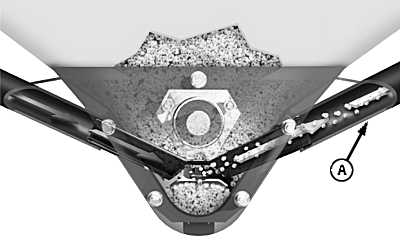
A53379-UN-20NOV03
A - Delivery Hose
Seed treatments, field conditions, humidity, and the seed size alter the CCS™ pressures required to deliver the seed to all the rows. Talc lubrication is required on all crops to lubricate the seed. Chemically treated seed can require 2—3 times the rate of lubrication to avoid plugging. When changing crops, use the initial setting found in the Set CCS™ Tank Pressure in this section before the adjusting for field conditions.Generally, the CCS™ system performs best when using the lowest possible pressure setting to deliver the seed to all the row units.
Some lightweight varieties of seed, such as sorghum-milo, are picked up too easily by the nozzles. Nozzle inserts are installed over the nozzles to restrict the opening slightly, limiting the amount of seed a nozzle picks up. Nozzle inserts allow the lightweight seeds to flow at the optimum rates and reasonable pressures ensuring reliable seed delivery to all the rows.
IMPORTANT: Avoid hydraulic motor and tank lid damage. Do not exceed 24 in of tank pressure.
Random drops in the population that last only short periods (5—20 seconds) can indicate the CCS™ system is not maintaining adequate seed flow.
Verify that the seed meters and the vacuum system are functioning properly before adjusting the CCS™ system.
Increase the CCS™ pressure in 2 inch increments until the random population drops stop.
If the monitor issues a “Row Failed” warning, first determine if the failure is caused by bridging or plugging.
Correcting Nozzle Bridging and Seed Delivery Hose Plugging:
See Bridged and Blocked CCS™ System in this section.
|
CCS is a trademark of Deere & Company |
OUO6435,0001DBD-19-20160516 |