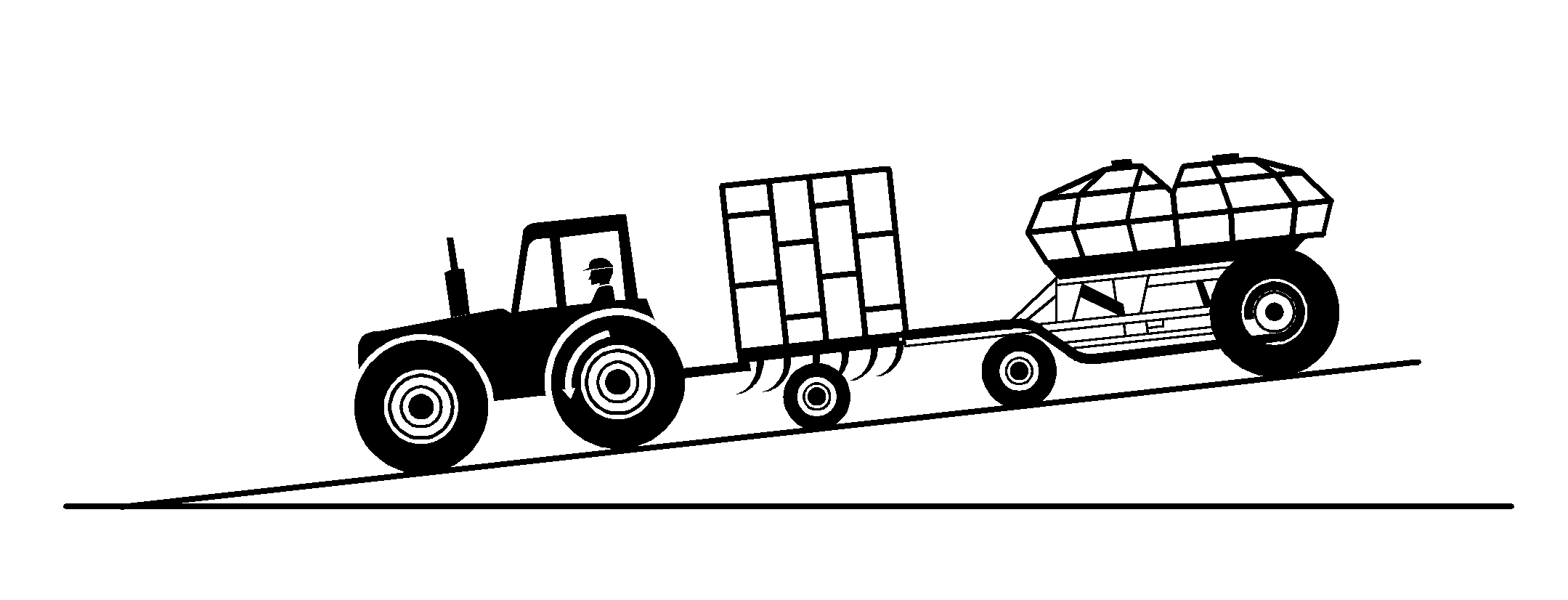
Operation or Transport on Hillsides

A42888-UN-18SEP98
- Avoid sharp turns on hillsides.
- Openers engaging the ground improve stability on slopes. Some seeding tools can be damaged if openers are engaged during turns. Refer to the seeding tool Operator's Manual for guidance.
- Never drive near the edge of a ditch, creek, gully, or steep embankment. Where holes, ditches or obstructions are unavoidable, reduce speed and proceed with caution.
- Avoid holes, ditches, and obstructions which can cause tractor, cart, or seeding tool to roll over, especially on hillsides.
- Reducing tank fill level adds stability against overturn of cart on slopes.
- Use a tractor with sufficient horsepower, traction, and ballast for the combined weight of the seeding tool and cart. (See Calculate Maximum Commodity Weight for Road Transport in Preparing the Machine section).
- When using a tow-behind cart, always equip and assemble the seeding tool per specifications. As slopes increase, reduce fill level of cart to avoid excessive load on the seeding tool.
Avoid loss of control due to decreased braking ability
when transporting down sloped roadways, wet or muddy roadways or roadways
with loose gravel or sand.
- Avoid steep slopes. Some slopes can exceed the tractor braking capability.
- Transport only with a properly sized tractor. (Refer to Calculate Maximum Commodity Weight for Road Transport in Preparing the Machine section.)
- Before transporting down a hill, verify that the brake hydraulic hose is connected and the cart brakes are operating properly.
- Before transporting down a hill, shift tractor to a lower gear and travel at a reduced speed. Reducing speed maximizes the tractor braking capability.
- Use engine braking to reduce speed.
- Avoid sharp turns or rapid steering corrections on slopes.
|
BB83525,00003A7-19-20170502 |