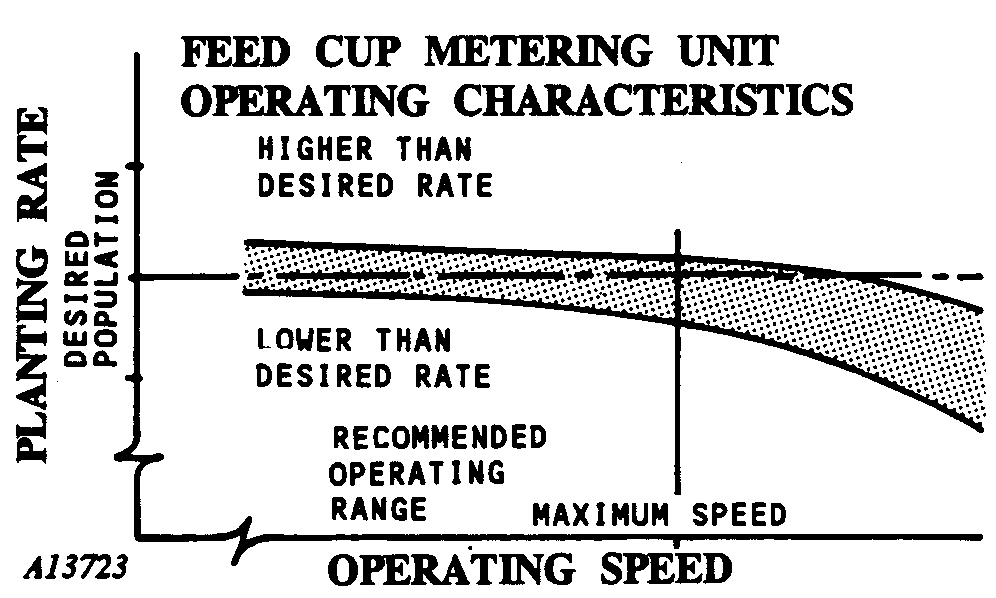
Feed Cup Operating CharacteristicsThe operating band illustrates how the feed cup metering unit performs with regard to the desired population (indicated by the horizontal line). The width of the band is due to various sizes and shapes of seeds. Best results are obtained when the planter is operated below the full maximum speed. IMPORTANT: Soybeans vary in size from about 815 seeds/kg to about 1600 seeds/kg (from about 1800 seeds per lb. to about 3500 seeds per lb.). Consequently, the planting rates can vary widely. The following charts were developed using uniform soybeans sized to 1600 seeds/kg (2600 seeds per lb.) and should be used only as a guide for initial planter settings. Large beans will generally result in lower rates than those in the chart and small beans will give somewhat higher rates. Actual rates MUST be checked in the field at planting speed and planter settings changed accordingly. If the desired rate cannot be obtained when planting large soybeans, the edible bean cup may be used. Refer to the Edible Bean Feed Cup chart. The Medium Size Beans section of the chart should be used as a guide for initial planter settings. Feed cup rates can also vary depending upon the surface texture of the bean as well as whether or not the bean is coated with seed treatment. These factors, in combination with variations in seed size can result in significant differences between the rates given in the charts versus what is actually planted. Further, in order to reduce rates by changing sprocket combinations, it may be necessary to increase ground speed somewhat in order to maintain feed cup rpm. If the feed cup rpm drops due to a change in the transmission setting, the cup may actually collect more seeds per revolution, and consequently not reduce the planting rate by the amount expected unless the ground speed is correspondingly increased to maintain feed cup rpm. |
|
GENOM,OPM,C -19-14NOV94-1/2 |
|
The best way to determine if the feed cup is delivering the correct rate is to actually check population in the field. Refer to the "Checking Seed Population" section of this manual. After determining the correct sprocket combination for your desired planting rate, be certain to plant at a speed no greater than the maximum speed shown for your sprocket combination. This will help ensure accurate planting rates. IMPORTANT: To prevent planting miscalculations, make field checks to be sure you are planting at the desired rate. |
GENOM,OPM,C -19-14NOV94-2/2 |