Roller Chain and Pesticide Sprocket Lubrication
IMPORTANT:
Do not use chain lube or any other heavy petroleum base lubricant that may cause a buildup of dust or dirt in the sprocket teeth.
The most effective roller chain lubrication routine varies, depending on the environmental conditions and/or condition of the chain. The goal is to maintain complete freedom at every chain link joint.
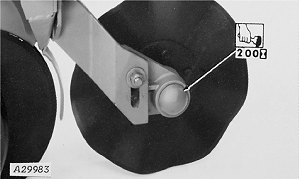
Lubricate all planter roller chains with John Deere Multipurpose Spray Lube, TY6350 (or equivalent) at intervals sufficient to maintain free chain movement.
When roller chains remain unused for several days, moisture in the air will accumulate on the chain, causing the chain to rust. This can and will become serious enough in time to cause the chain joints to become stiff, restricting their normal free movement. While very difficult to detect, this stiffness can disturb the smooth rotation of seed meter components and cause a deterioration in performance.
If the planter is not to be used for several days, thoroughly lubricate the chains with John Deere Multipurpose Spray Lube, TY6350, at the beginning of the idle period. If the roller chains have become rusty or stiff during the idle period, lubricate prior to continued usage and operate or "work" the chains sufficiently to ensure all chain joints move freely before normal planter operation is resumed.
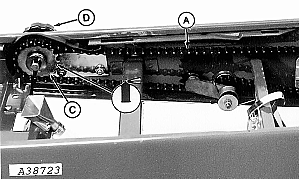
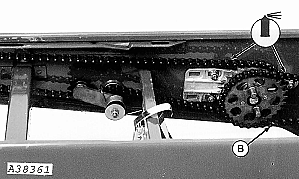
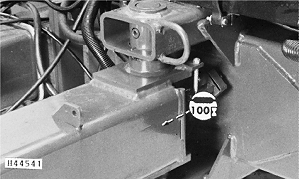
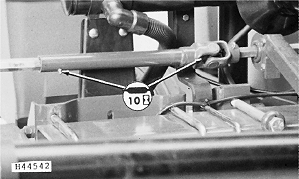
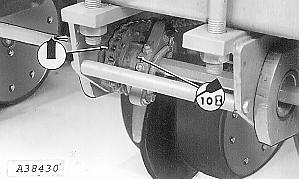
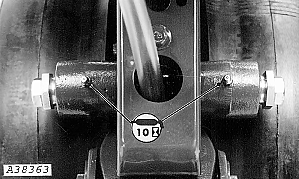
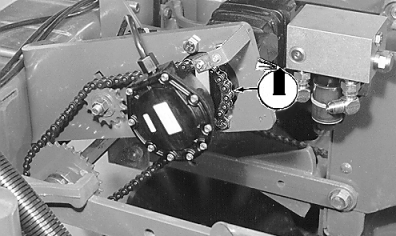
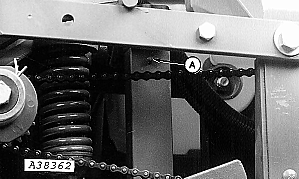
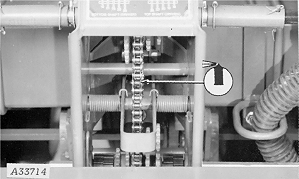
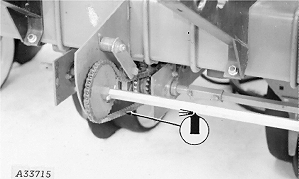
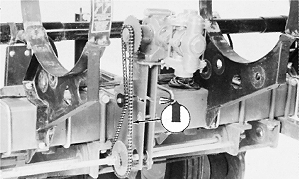
Lubricate pesticide drive chain (A) and seed meter drive chain (B) with John Deere Multipurpose Spray Lube, TY6350.
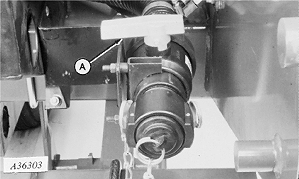
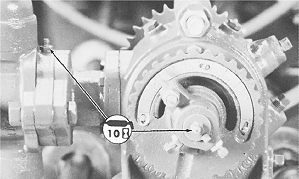
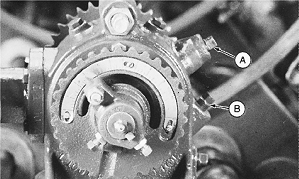
Lubricate pesticide drive sprocket (C) with John Deere Multipurpose Spray Lube, TY6350. Move the drive disconnect knob (D) back and forth while spraying. This will loosen any paint or dirt buildup and help allow the sprocket to turn freely. In adverse conditions it may be necessary to lubricate these sprockets daily.
|