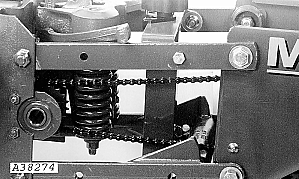
Drive Wheel SlippageAnother item that may cause the actual rates of seed or fertilizer to differ from the delivery rates shown in the operator's manual is the amount of drive wheel slippage. While a certain amount of wheel slippage is normal, excessive drive wheel slippage may cause undesirable changes in the actual rates. The rates shown in the operator's manual are based on approximately 15 per cent drive wheel slippage. Excessive drive wheel slippage may be caused by binding or poorly lubricated parts, misaligned bearings or caked material in the pesticide or fertilizer hoppers. In addition, down pressure springs, coulters, tine tooth attachments, or any other attachment that removed frame weight from the drive wheels, may contribute to drive wheel slippage and lower than expected rates. |
|
OM56586,90D -19-08MAY96-1/3 |
|
The effective circumference of the drive wheels is 2438 mm (96 in.). This means the drive wheels make one revolution for approximately 2438 mm (96 in.) of forward travel. |
|
OM56586,90D -19-08MAY96-2/3 |
|
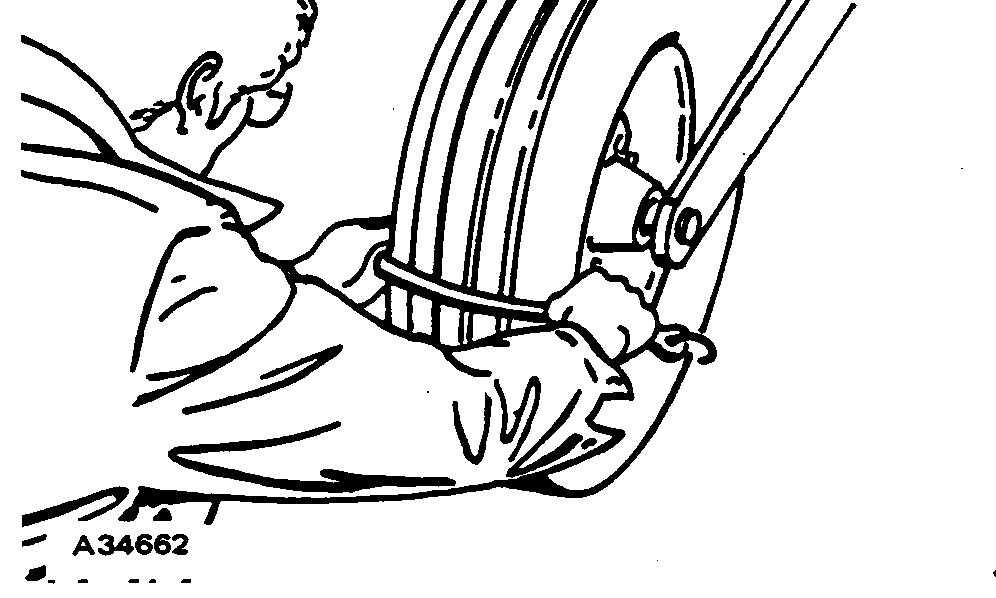
The amount of excessive drive wheel slippage can be determined by marking a length of field that would normally represent 30 drive wheel revolutions. This would be: 30 x 96 in. = 2880 in. or 240 ft. Next, mark the drive wheel by attaching rubber hold down strap, reflective tape or duct tape. This will make the wheel revolutions easier to count. With all rows planting under normal field conditions, have the customer drive through the 73 m (240 ft) course at normal planting speed while you count the drive wheel revolutions. Subtract the number of revolutions observed over the 73 m (240 ft) length from 30. Then divide this difference by 30. For example, if 28 wheel revolutions are observed, then: 30 - 28 = 2 2 ÷ 30 = .066, or 6.6 per cent excessive drive wheel slippage. This excessive slippage will cause a 6.6 per cent lower than expected seeding rate. |
|
OM56586,90D -19-08MAY96-3/3 |