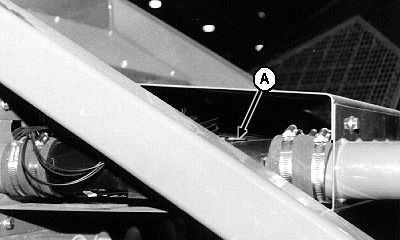
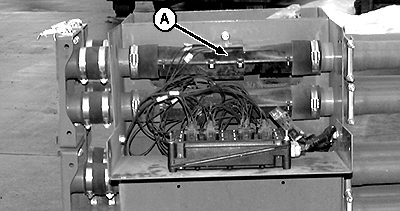
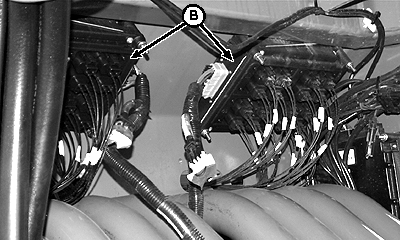
Primary Seed Counting SystemSeed counting system consists of fiber optic sensors (A), installed in-line on the primary air distribution lines, and electronic controller(s) (B) that translate the sensor's optical signals into communications language for seed count display on the tractor-mounted console. NOTE: On tow-behind models, seed counting sensors are installed at the front of the cart. Seed counting sensors are installed on the seeding tool hitch for tow-between carts. Regardless of cart configuration, seed counting sensors are mounted horizontally for smooth seed flow and accurate counting. Seed counting sensors work best with larger products, such as soybeans and peas. Small, light products, such as cereal grains, caraway, coriander and grass seeds may pass through the sensor "unseen" and not register an actual seed count. Seed counters should not be used with treated seeds. Seed treatments, such as videvax, will cloud optical eye, blinding the sensor. On tow-behind carts, communication cable from seed counting controller(s) attaches to cart controller at interface plug, dislocating terminator to the end of the CAN line. For tow-between carts, seed counting communications cable attaches to the back of the cart. Interface connection is necessary as seed count controller receives signals from the cart controller. Cart controller sends a meter enabled signal when all of the following conditions are met:
|
|
AG,OUO6023,1162 -19-21JUL00-1/4 |
|
NOTE: Seed delivery meter is the one providing product to the top bank of primary runs, where counting sensors are installed. Without "meter enabled" signal, counting system will not display seed count populations and associated warnings. Run identification is an important factor in set-up of seed counting systems. An in-line optical sensor is installed in each primary air run of a single-shoot system (maximum of eight sensors). On an all-run double-shoot system, all sensors are installed in the top runs that deliver countable seed. |
AG,OUO6023,1162 -19-21JUL00-2/4 |
|
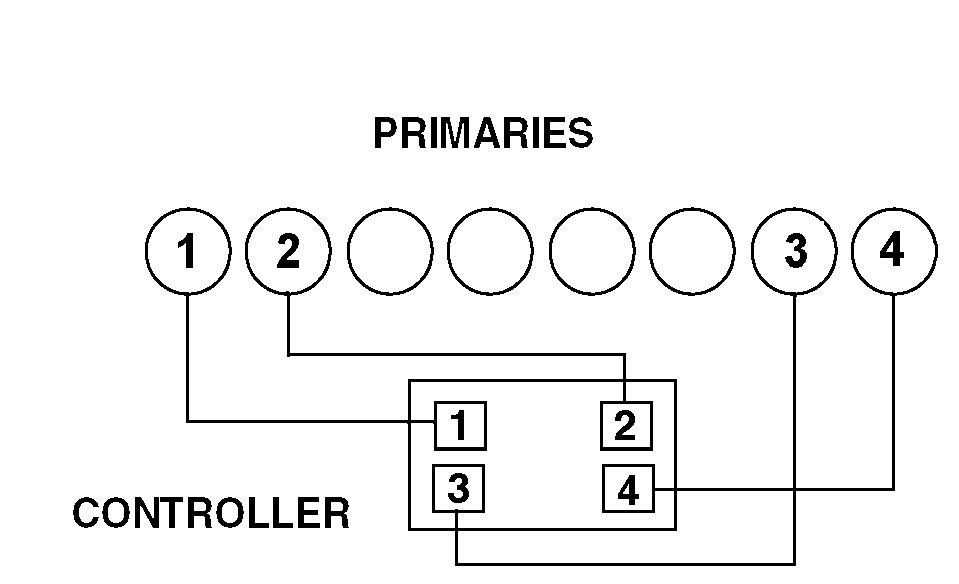
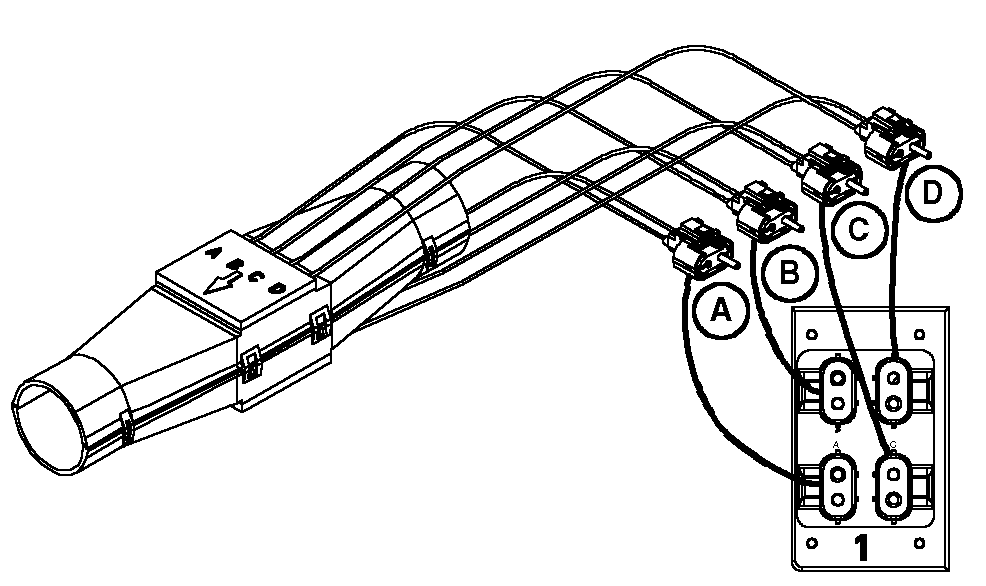
For a counting system having 1-4 primaries, install No. 1 sensor in the first active primary on the left-hand side of the cart. The four fiber optic cables are then attached to the four corresponding connectors (A-D) in quadrant 1 on the electronic controller. Sensors 2, 3 and 4 are then installed in their corresponding runs and connected to the corresponding controller connectors. Controller quadrants are numbered 1-4; with caps installed on unused connectors when less than four primaries are active. |
|
AG,OUO6023,1162 -19-21JUL00-3/4 |
|
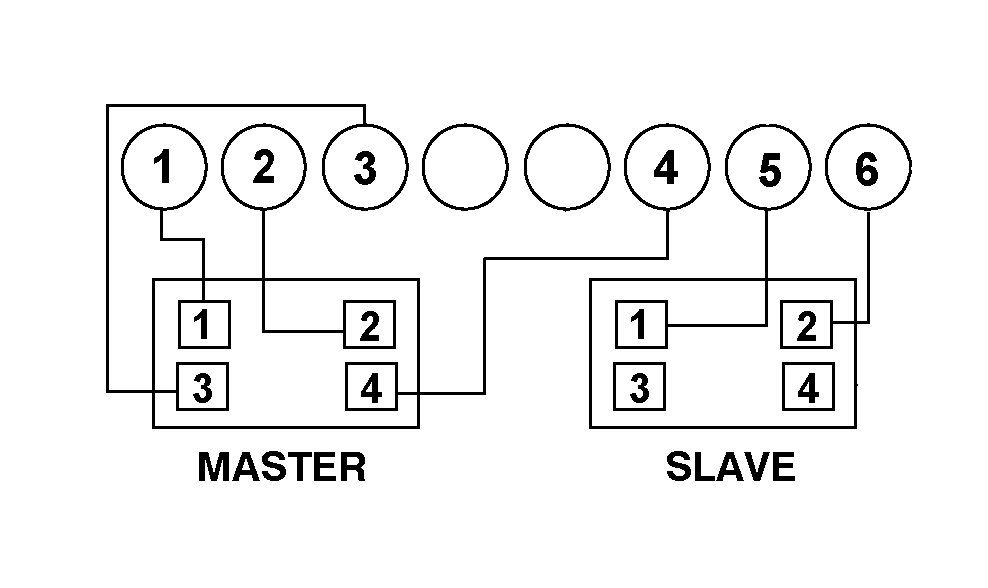
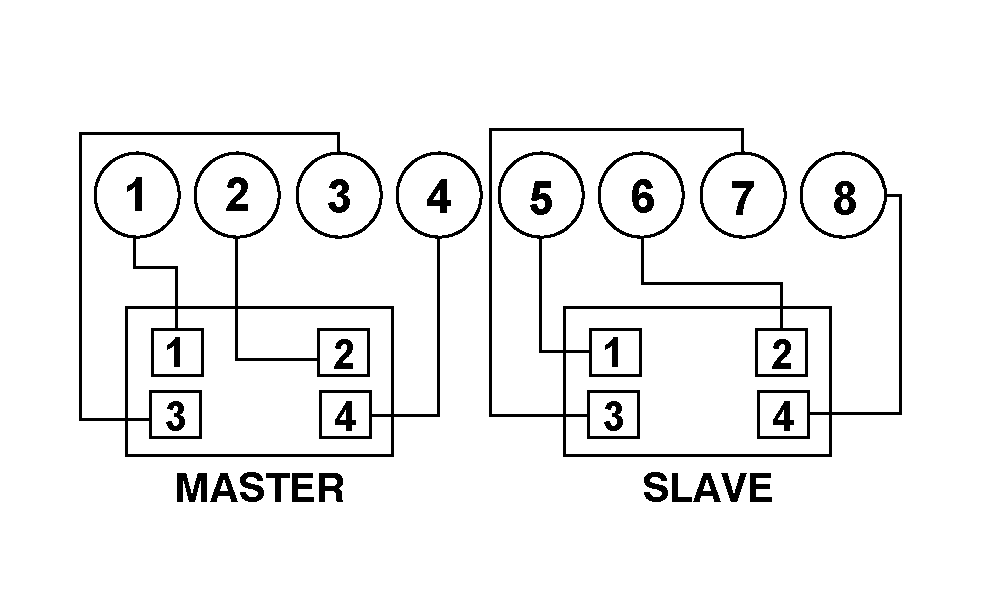
NOTE: Always install all four connectors (A-D) from a sensor into one quadrant. Connections for a counting system having more than four primaries is the same as described earlier, with sensors 1-4 installed in primaries 1-4 and connected to quadrants 1-4 on controller No. 1 (master). Sensors are installed in primaries five and above and then connected to the second electronic controller (slave). The hardware in both controllers are identical. Slave controller (2) is identified by a jumper connector installed on a harness stub near the controller. Jumper connector has an external wire that connects two pins. Master controller (1) has a connector plug on its harness stub. Connector plug has no external jumper wire. Quadrants on the second controller are numbered 1-4, but will be displayed as primaries 5-8 when sensors and both controllers are connected.
|
|
AG,OUO6023,1162 -19-21JUL00-4/4 |