Drive-Wheel Slippage-Machines with Mechanical Seed Transmission
|
Drive-wheel slippage may cause actual rates of seed or fertilizer to differ from delivery rates shown on the rate charts. While a certain amount of wheel slippage is normal, excessive drive-wheel slippage may cause undesirable changes in actual rates. The rates shown in the rate charts are based on approximately 6 percent drive wheel slippage. Excessive drive-wheel slippage may be caused by binding, poorly lubricated parts or misaligned bearings. |
Down pressure attachments, coulters, row tillage attachments, or any other attachment that removes weight from drive wheels, may contribute to drive-wheel slippage and lower than expected rates. Tire air pressure will affect slippage. Low air pressure will result in higher seeding rates. See CHECKING TIRE INFLATION in Preparing Machine section. |
OUO6074,0000943 -19-01JUN04-1/2 |
|
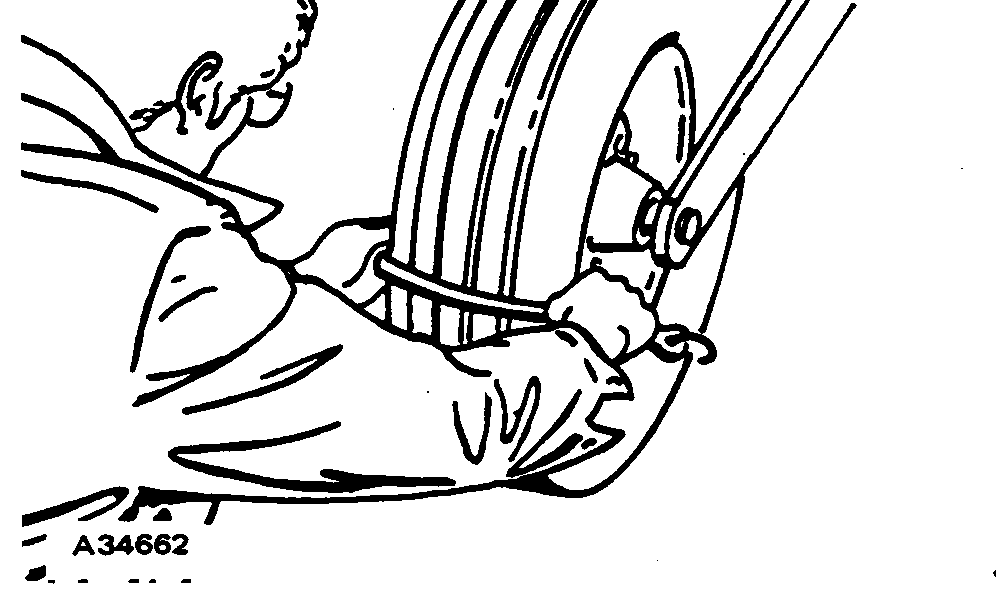
To calculate the amount of drive-wheel slippage proceed as follows. 1. Mark a length of field that measures 96 m (315 ft).NOTE: Centerframe and wing frame wheels are different sizes. If wing wheel revolutions are counted, the percentage of wheel slip calculated will be wrong. 2. Mark a CENTERFRAME drive wheel with a rubber hold-down strap, reflective tape or duct tape. This will help to count wheel revolutions. 3. Drive the 96 m (315 ft) course in actual field conditions, at normal planting speed, with all desired planter functions actually operating. 4. Have another person count drive-wheel revolutions from behind machine. 5. Subtract counted number of revolutions from 30. Divide this difference by 30. Multiply result by 100. EXAMPLE: If 28 wheel revolutions are counted, subtract 28 from 30. 30 - 28 = 2 Divide 2 by 30. 2 ÷ 30 = 0.066 Multiply 0.066 by 100. 0. 066 x 100 = 6. 6 There is 6.6 percent drive wheel slippage. If drive-wheel slippage is greater than or less than 6 percent (baseline slippage), adjust seed transmission to obtain desired population. |
|
OUO6074,0000943 -19-01JUN04-2/2 |