Pneumatic Down Force
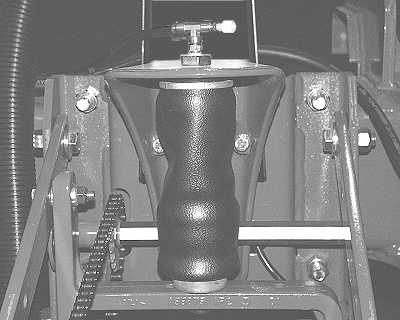
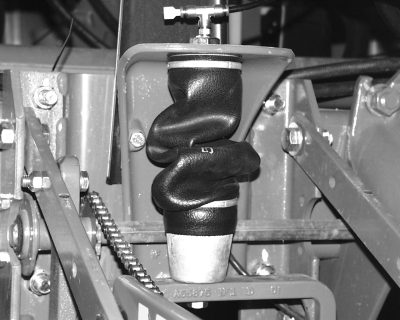
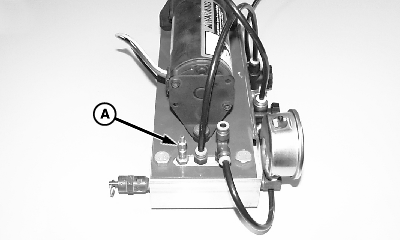
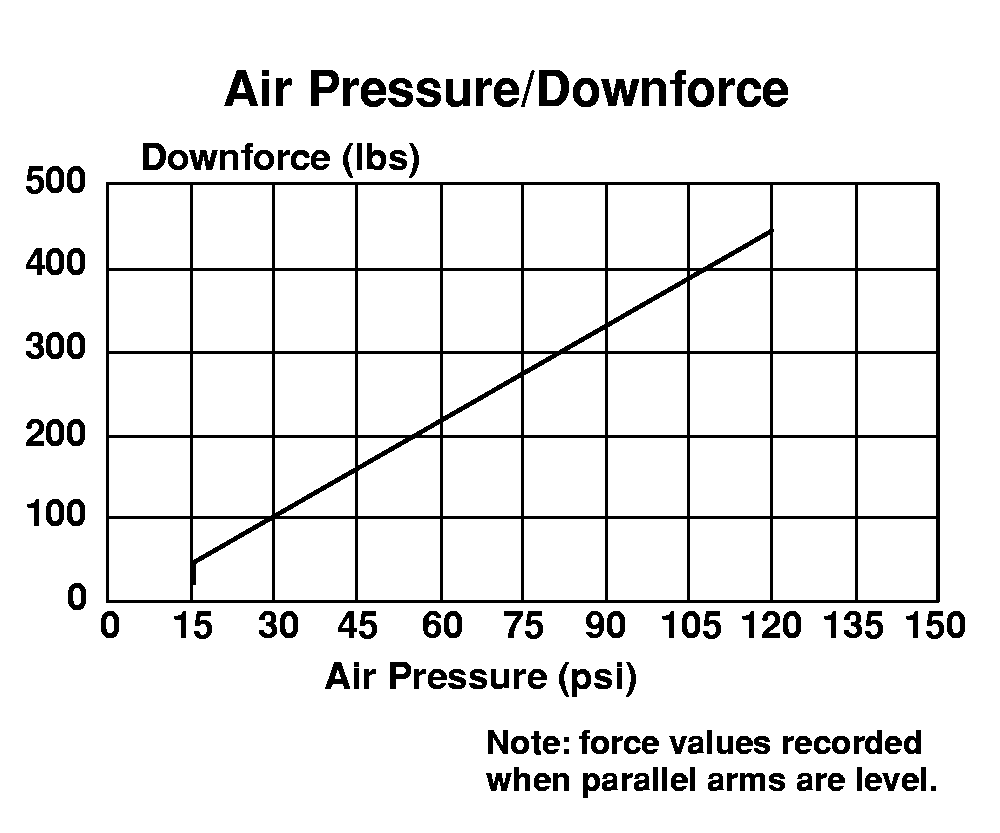
IMPORTANT: Do not lower machine with zero air pressure in system. Maintain 34 kPa to 55 kPa (0.3 bar to 0.5 bar) (5 psi to 8 psi) in system or air bags may kink. If air bag kinks, raise machine and pressurize the system until air bags straighten out. IMPORTANT: Do not operate a pinched or unrolled air spring. Should this occur, lower system pressure until springs can be rolled by hand. Roll spring back over lower piston. Incremental lowering of machine may be required to start air spring rolling over lower piston. NOTE: It is normal for system air pressure to drop when frame is raised and increase when frame is lowered. NOTE: Row units that follow in tractor tire tracks may require additional down force. To accomplish this without affecting other row units, an extra single down force spring can be installed on those row units. 1. With machine in planting position, apply shop air to valve stem (A) to pre-set down force to desired setting.
|
|
 CAUTION:
Avoid serious injury from exploding parts due to overpressurization or operating the system without all components in place.
CAUTION:
Avoid serious injury from exploding parts due to overpressurization or operating the system without all components in place.
OUO6074,0000A5D -19-07JUL05-1/2 |
|
|
|
|
|
|
|
2.
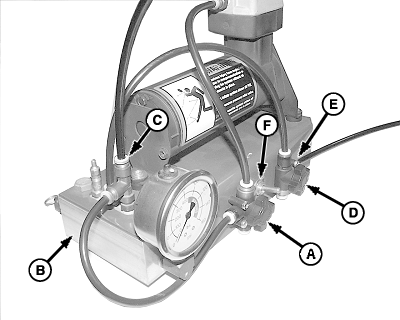
If equipped with split rows, attach hose with white mark to fitting (E). Attach hose without white mark, for primary rows, to T-fitting (C). Turn valve (A) counter clockwise to allow compressor pressure to entire system. Turn valve (D) counter clockwise to allow system pressure to split rows, if equipped. Turn valve (D) clockwise to release pressure from split rows, if equipped. Turn valve (A) clockwise to release pressure from entire system.
IMPORTANT: Do not leave compressor on while planting. Compressor may be damaged if allowed to run more than 7 minutes. Allow 30 minutes for compressor to cool down before operating again. Use shop air to preset down force and use compressor for small in-field adjustments. NOTE: Power to compressor is tied to tractor ignition switch. Compressor will not run if ignition switch is in "off" position. 3. To increase system pressure (increase down force), turn compressor on using toggle switch (F) and open appropriate valve(s) as described in preceding step. When desired setting is reached, turn compressor off. |
4. Pressure drop in excess of 83 kPa (0.8 bar) (12 psi) in 10 hours is considered excessive and could indicate a fitting leak. NOTE: Using a spray bottle, spray soap and water on fittings. Bubbles will be present, if air is leaking. In the event of excessive pressure drops, check all connections with soap and water in the following order: a. Threaded Compressor Fittings-If leaking, tighten or tape threads with thread tape and install fittings. b. Hose Compression Fittings-If leaking, push hose completely into coupler. If leak persists, first relieve system pressure, then simultaneously push in green compression ring and gently pull air line out of fitting. Cut off hose tip squarely, clean and reinstall hose in coupler. c. Threaded Swivel On Row Unit Where Fitting Screws Into Top Of Air Spring-If leaking, tighten fitting or remove fitting, apply thread tape and install fitting. |
OUO6074,0000A5D -19-07JUL05-2/2 |