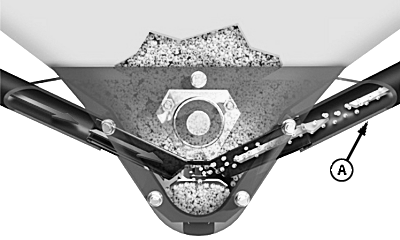
CCS System Theory of OperationSeed treatments, field conditions, humidity and seed size may alter CCS pressures required to properly deliver seed to all rows. Talc or graphite lubrication is required on ALL crops to properly lubricate seed. Chemically treated seed may require twice the rate of lubrication to avoid plugging. When changing crops, it is recommended to use the initial setting found in SETTING CCS TANK PRESSURE in this section before adjusting for field conditions. Generally, the CCS system performs best when using the lowest possible pressure setting to reliably deliver seed to all row units. There will be very little seed flowing in the delivery hoses (A) when operating at optimum performance (the system will run lean). However, if the system pressure is too low, the nozzles will not pick up enough seed. Increasing CCS pressure will help nozzles pick up seed more aggressively. If seed is picked up too easily or aggressively, it may begin to collect in the delivery hoses which can lead to system plugging . In general, increasing CCS pressure too much will contribute to delivery hose plugging and hopper elbow plugging. Another condition called bridging also results in poor seed delivery. Bridging occurs when seed does not flow to the nozzle inlets where it can be picked up by the air stream. Generally, the size or shape of the seed and/or sticky seed treatments are the cause. Increasing pressure will often take care of this condition but in some cases running the agitator is required. Some light weight varieties of seed, such as sorghum/milo, are picked up too easily by the nozzles. Nozzle inserts can be installed over the nozzles to restrict the opening slightly, limiting the amount of seed a nozzle can pick up. Nozzle inserts allow light weight seeds to flow at optimum rates and reasonable pressures ensuring reliable seed delivery to all rows. |
|
OUO6435,0001DBD -19-06JUL05-1/4 |
|
IMPORTANT: DO NOT exceed 20 in. of tank pressure or damage can occur to the hydraulic motor and seed tank lids. Random drops in population on the seed monitor that last only short periods (5 to 20 seconds) may indicate the CCS system is not maintaining adequate seed flow to the meters. Make sure meters and/or vacuum system is functioning properly before adjusting CCS system. Increase CCS pressure in 2 inch increments until random population drops stop, indicating adequate seed flow. |
OUO6435,0001DBD -19-06JUL05-2/4 |
|
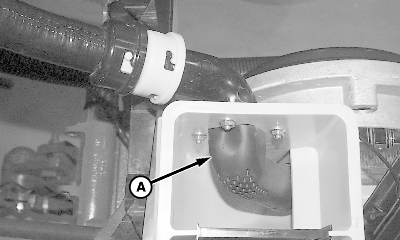
If seed monitor issues a "Row Failed" warning, first determine if the failure is caused by bridging or plugging. To determine this, with the CCS fan running, remove the hopper lid from the failed row and observe the amount of air flowing through the hopper discharge elbow (A). Bridging
Plugging
Correcting Nozzle Bridging 1.
Set CCS pressure to recommended level for selected crop.
IMPORTANT: DO NOT exceed 20 in. of tank pressure or damage can occur to the hydraulic motor and seed tank lids. 4. If the first three conditions are addressed and bridging still occurs, increase CCS pressure in 2 inch increments until seed flows properly to all rows.Correcting Hose Plugging 1.
Set CCS pressure to recommended setting for crop.
|
|
OUO6435,0001DBD -19-06JUL05-3/4 |
|
3.
Install nozzle inserts, if recommended for crop.
Correcting Hopper Discharge Elbow Plugging This style of plugging usually only occurs with large, flat or heavily treated seed in very smooth field conditions. Reduce CCS pressure as much as possible. High CCS pressures complicate elbow plugging. Do not lower CCS pressure too much or seed will not be picked up in nozzles. |
OUO6435,0001DBD -19-06JUL05-4/4 |