Adjusting Opener DepthThe gauge wheel can be positioned for three different application depths; regular, mid-range, and shallow. Seedbed conditions dictate the optimum setting for maintaining the most consistent fertilizer placement. The regular setting is used for most conditions except when inadequate opener penetration and rocks are an issue. In no-till and tough field conditions desired depths might not be achieved. Perform in-field checks to determine if fertilizer is being placed at desired depth. If fertilizer is not at desired depth, check the following before changing the depth adjustment.
NOTE: The concentration pattern of fertilizer varies with soil conditions. Dry, loose soil conditions can place the fertilizer in a narrow vertical band. Moist or firm soil creates a more well-defined furrow, causing a concentration of fertilizer near the bottom of the opener furrow. Depending upon soil conditions, the shallow setting applies fertilizer up to approximately 50 mm (2 in.) in depth. The mid-range setting applies up to approximately 75 mm (3 in.) in depth. The regular setting applies up to approximately 100 mm (4 in.) in depth. |
AG,OUO6074,1342 -19-14MAY08-1/2 |
|
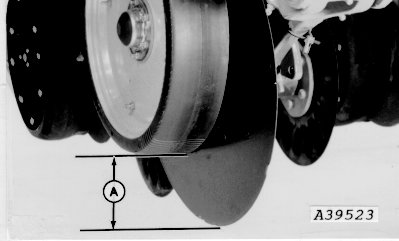
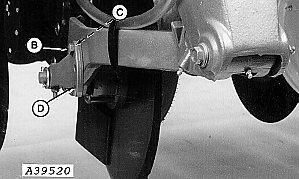
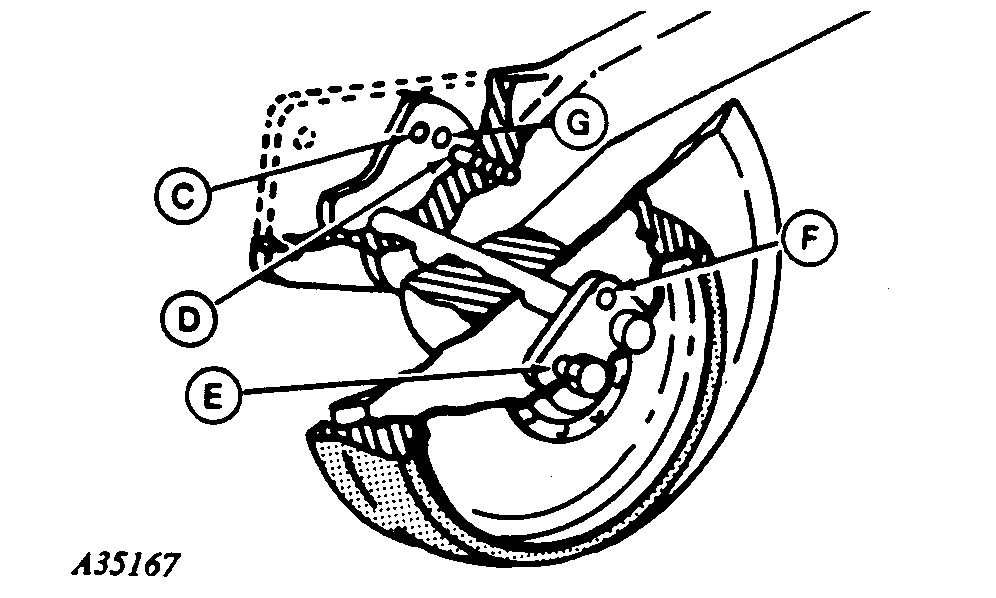
NOTE: On left-hand openers, cap screw (E) has left-hand threads. On right-hand openers, cap screw (E) has right-hand threads. Cap screws must be tightened in same direction as rotation of wheel. To adjust dimension (A), position depth adjustment cap screw (B) in the proper hole. MAXIMUM DEPTH-Locate adjustment cap screw in hole (C). MID-RANGE DEPTH-Locate adjustment cap screw in hole (G). MINIMUM DEPTH-Locate adjustment cap screw in hole (D). Gauge wheel can be installed in hole (F) for extra clearance for row unit attachments and countershaft clutches.
|
|
AG,OUO6074,1342 -19-14MAY08-2/2 |