Calculate Minimum Tractor Weight for Safe Transport
A52392-19-07JUL03
 CAUTION: Avoid serious injury or death. Tow with a properly
sized and ballasted tractor for proper control during transport and
braking.
CAUTION: Avoid serious injury or death. Tow with a properly
sized and ballasted tractor for proper control during transport and
braking.
Do not transport at speeds greater than 32 km/h (20 mph).
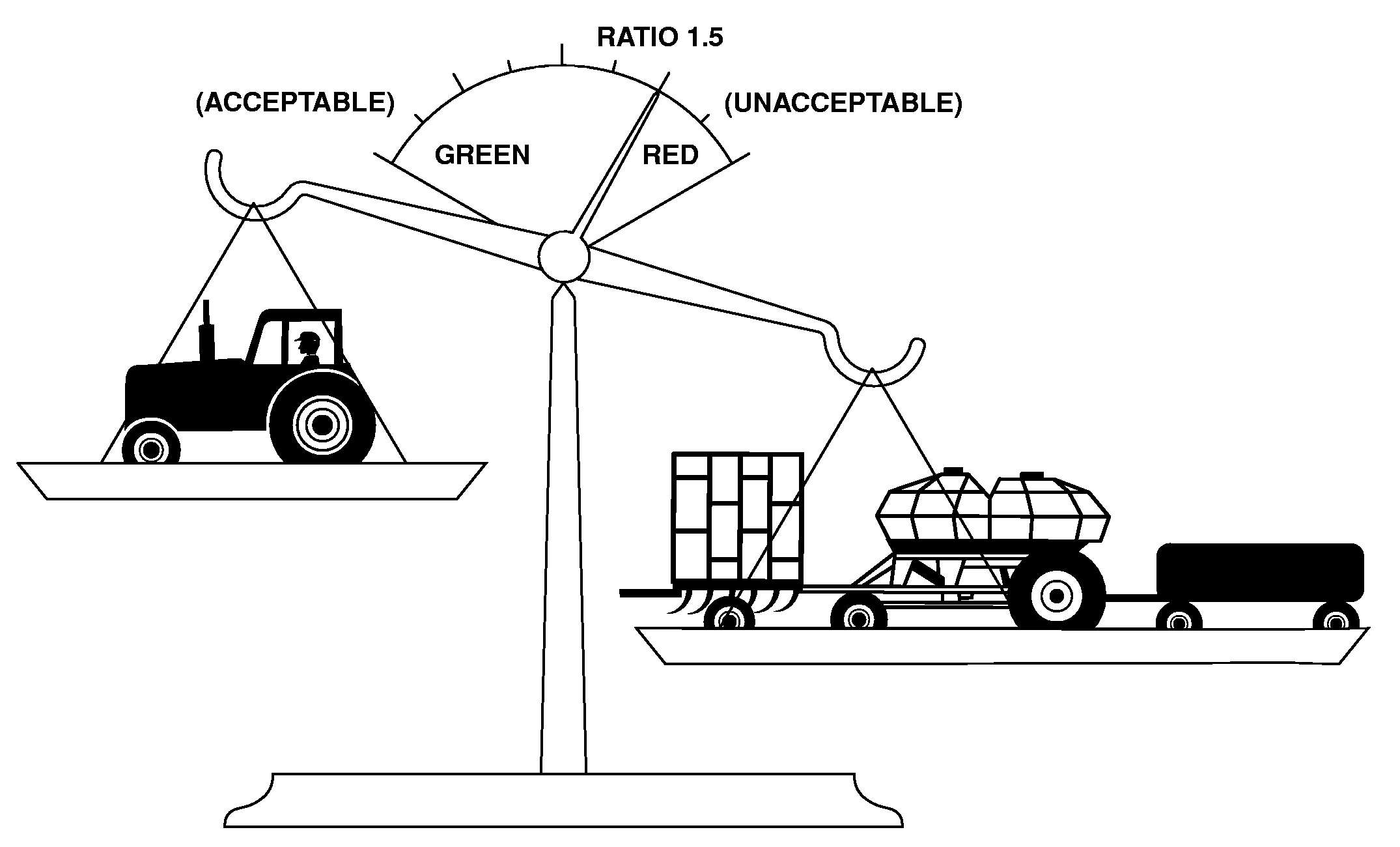
If an implement is attached to the rear of a tow-behind cart or seeding tool, add the implement weight to the total weight of the cart and seeding tool before dividing by 1.5.
NOTE: Refer to tractor operator's manual to determine tractor weight.
Add weight of cart when half full of fertilizer to weight of seeding tool. Refer to CALCULATE MINIMUM TRACTOR WEIGHT FOR SAFE TRANSPORT—CHART in this section for cart and tool weights. Divide total weight of cart (half full of fertilizer) and tool by 1.5 to determine minimum tractor weight for safe transport. If an implement is attached to the rear of the train, add the implement weight to the total weight of the cart and seeding tool before dividing by 1.5.
Train Weight = Cart + Seeding Tool + Ballast (If used) + Trailing Implement
Train weight must be equal to or less than 1.5 times the tractor weight for safe transport.
EXAMPLE:
Example with 270 TBT Cart Half-Full
|
EXAMPLE: 270 TBT CART HALF-FULL OF FERTILIZER |
|||||
|---|---|---|---|---|---|
|
1910 CART |
SEEDING TOOL |
||||
|
Model |
Middle Tank |
Weight Half-Full |
Model |
Transport Width |
Weight |
|
270 TBT |
No |
8455 kg (18 640 lb.) |
1870 |
6.1 m (20 ft.) |
9535 kg (21 020 lb.) |
Weight of half full Cart 8455 kg (18 640 lb.) + Weight of Seeding Tool 9535 kg (21 020 lb.) + Weight of Empty Trailing Implement 2268 kg (5000 lb.) = Train weight 20 257 kg (44 660 lb.)
Train weight 20 257 kg (44 660 lb.) ÷ 1.5 = 13 504 kg (29 773 lb.) minimum tractor weight for safe transport.
|
OUO6074,000103C-19-20070927 |