Rear Wheel Tread Adjustment (with Rack-and-Pinion Axles) — Steel Wheels (6140M only)
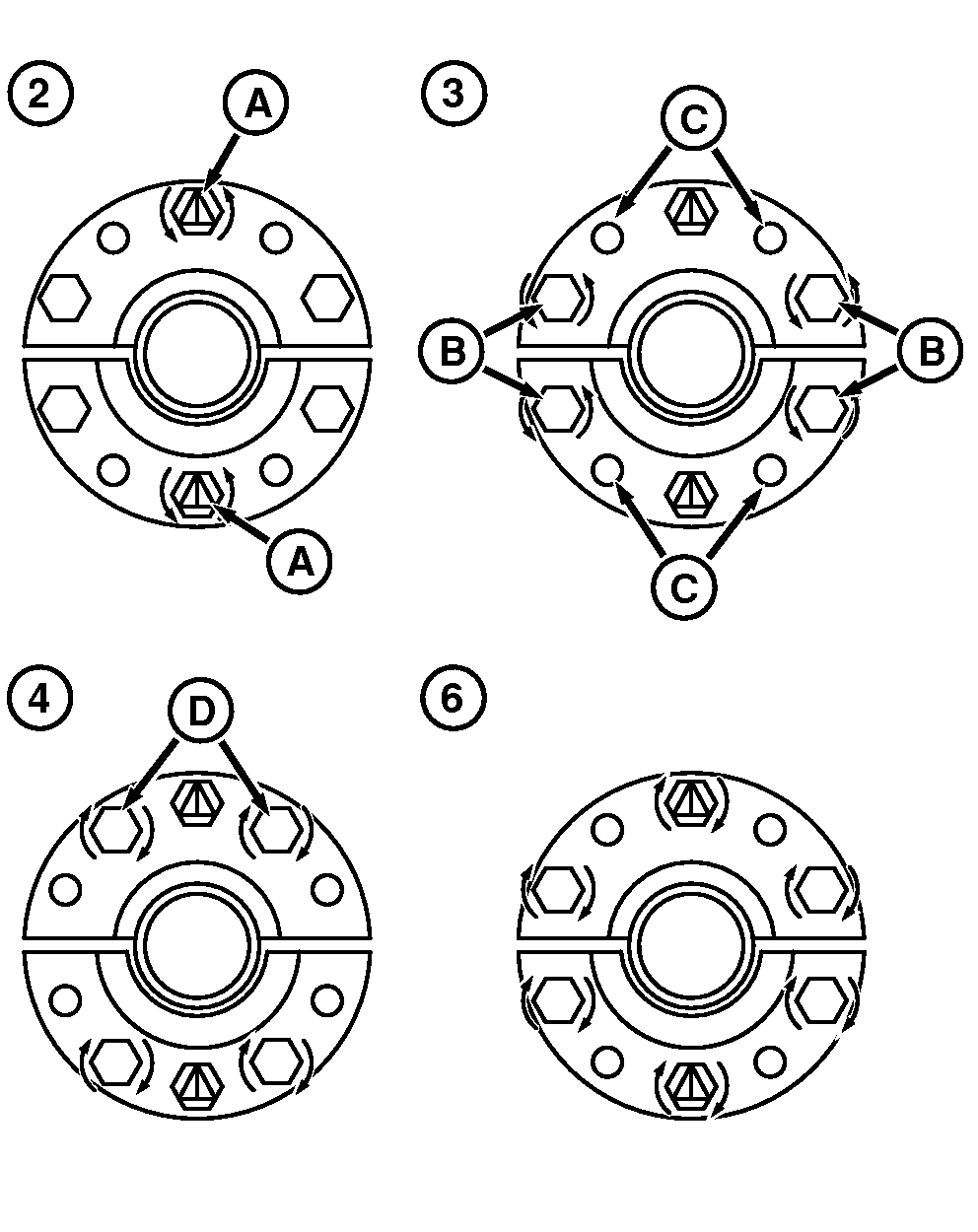
RXA0063068-UN-14OCT02
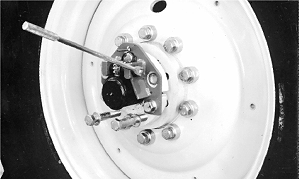
RW21374-UN-28JUL92
A - Hub Center Bolts
B - Hub Sleeve Bolts
C - Jack Screw Holes
D - Jack Screw Holes
 CAUTION: Avoid injury. Never run engine with transmission in
gear and rear wheels off ground. MFWD wheels could pull rear wheels
off support. MFWD must be disengaged and transmission in NEUTRAL to
rotate axle.
CAUTION: Avoid injury. Never run engine with transmission in
gear and rear wheels off ground. MFWD wheels could pull rear wheels
off support. MFWD must be disengaged and transmission in NEUTRAL to
rotate axle.
-
Raise tractor on level ground and turn wheel so rack on the axle is upward.
-
Loosen hub center bolts (A) against retaining nuts.
-
Remove hub sleeve bolts (B). Use hub sleeve bolts in jack screw holes (C) to loosen sleeves. Tighten screws up to 500—600 N∙m (370—440 lb.-ft.) if necessary.
NOTE: Strike end of axle with a heavy hammer and use penetrating oil if sleeves are difficult to break loose.
-
Remove screws from jack screw holes (D). Install JDG667A Wheel Adjusting Tool (available from your John Deere Dealer), using bolts removed from jack screw holes. Move wheel to desired position. Observe tread width limitations.
IMPORTANT: The distance between the side wall of the tire and the fender must not be less than 40 mm (1.57 in.)1.
The distance between the running surface (edge) of the tire and the fender must not be less than 60 mm (2.36 in.)1.
If snow chains are installed on the tires, the minimum distance from the tires to the fenders (side wall to fender and running surface to fender) must be 100 mm (3.94 in.).
-
Remove adjusting tool and jack screws.
-
CAUTION: Never operate tractor with a loose rim, wheel, or hub.
IMPORTANT: Keep the face of hub sleeves even to prevent hub breakage or bolt loosening.
Tighten hub sleeve bolts to 204 N∙m (150 lb.-ft.) beginning with the center bolts, then crisscrossing the other bolts. Retighten bolts to 410 N∙m (300 lb.-ft.) using the same sequence.
Drive tractor a minimum of 100 meters (100 yd) and tighten bolts to 600 N∙m (445 lb.-ft.).
Recheck all bolts after working 3 HOURS and again after 10 HOURS.
|
1 Europe only. In non-European countries, a minimum
clearance of 25 mm (1.0 in.) is recommended.
|
OULXA64,0002D94-19-20140408 |