Prestarting Checks
Engine oil level
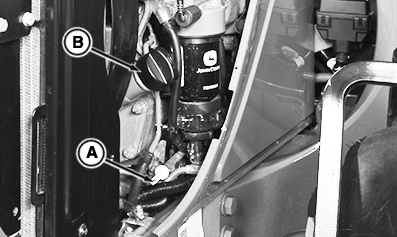
LX266698-UN-13JAN16
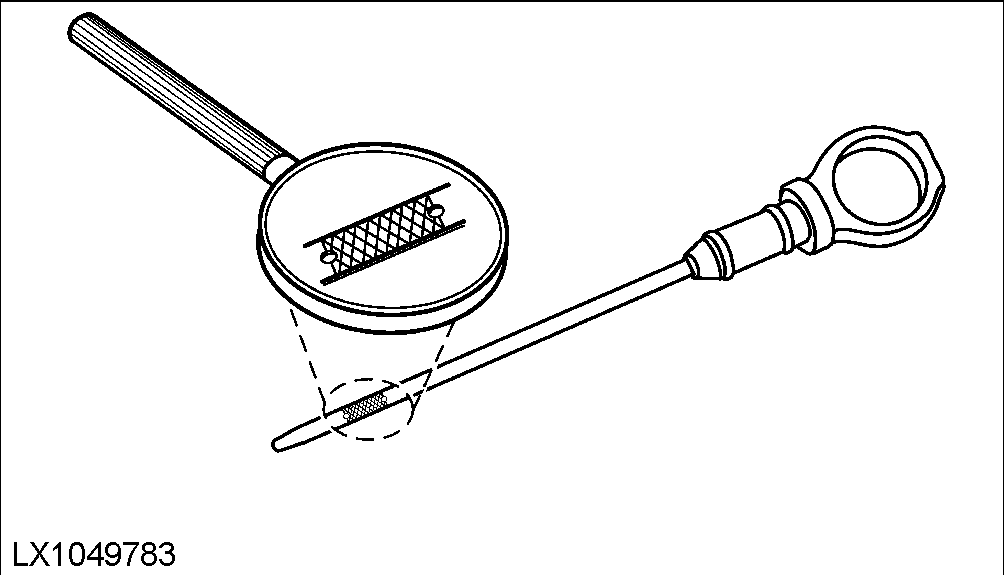
LX1049783-UN-12AUG10
A - Dipstick
B - Oil Filler Neck
-
Preconditions for checking engine oil level:
- Tractor parked on level surface
- Park lock ON
- Engine OFF
2 ways to check the engine oil level:
Cold engine oil
Warm engine oil
Check when the oil is cold, when the engine has been off for a long time (e.g. in the morning before starting the engine).
If the engine has warmed up, shut the engine off and wait approx. 40 minutes (oil at a temperature of approx. 40 °C; 104 °F).
-
Use oil dipstick (A) to check the level of the engine oil.
-
Remove the dipstick, wipe it clean, insert it as far as it will go, and pull it out again.
-
The oil level must be within the hatched area on the dipstick. Oil level must be corrected if the oil is above the top edge or below the bottom edge.
Do not start the engine if oil level is below lower mark on dipstick.
-
If necessary, refill with oil of correct viscosity. See the Fuel, Lubricants, Hydraulic Oil and Coolant section.
Foot brakes
 CAUTION: Press the brake pedals before starting the engine.
It must not be possible to press the pedals all the way to the stops,
not even if great force is used. Wait at least 30 seconds before repeating
the check.
CAUTION: Press the brake pedals before starting the engine.
It must not be possible to press the pedals all the way to the stops,
not even if great force is used. Wait at least 30 seconds before repeating
the check.
IMPORTANT: If the pedals can be pressed all the way to the stops, there is a fault and it is essential to contact your John Deere™ dealer.
After long storage period
Check whether dirt or other foreign bodies have collected under the hood or cab. If so, remove them.
Fuel Filter
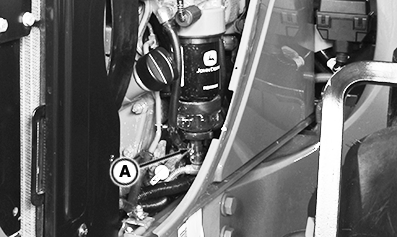
LX266699-UN-13JAN16
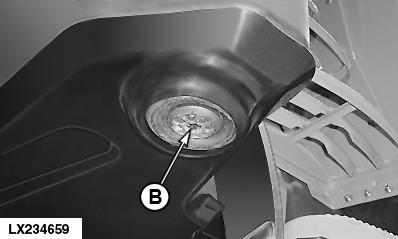
LX234659-UN-16APR15
A - Drain Screw
B - Drain Plug (Tank)
If water or sediment deposits have settled in the filter, proceed as follows:
-
Open drain screw (A) by 3/4 of a turn. Retighten the screw as soon as water and sediment deposits have drained out.
-
Turn key in ignition switch to the right to the first switch position so that the fuel transfer pump is operating. Keep the pump running for approx. 40 seconds.
If water was present in the fuel filter, then use a 1/2-inch square-section key to screw out the drain plug (B) under the fuel tank by turning it once. After draining off any water and sediment deposits, tighten drain plug until finger-tight.
Cleaning Dust Unloading Valve
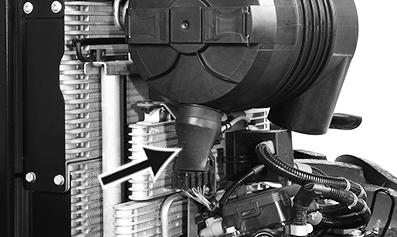
LX266700-UN-14JAN16
IMPORTANT: Do not run the engine when the dust-unloading valve is removed!
Remove deposits by squeezing the valve.
During harvesting, grass and chaff may affect the performance of the valve. Remove the valve and clean it. Replace any damaged valve.
Coolant level
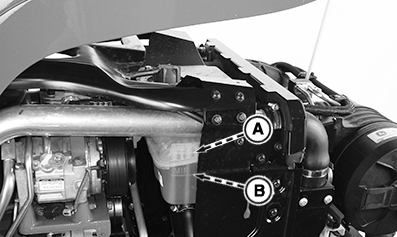
LX266701-UN-22JAN16
A - “MAX”
B - “MIN”
Check the coolant level. The level must be between “MIN” and “MAX” when the engine is cold.It must under no circumstances fall below the “MIN” mark (B).
Other checks
If the tractor is driven with high ballast weight on the front axle, it is necessary to check the toe-in before starting the tractor for the first time.
If the tractor is used to power external hydraulic equipment, check the level of the transmission/hydraulic oil every day.
If operating the tractor in extremely wet and muddy conditions, lubricate the following components also:
- Pivoting fenders
- Front hitch - if equipped
- Wagon hitch
- Hydraulic or electro-hydraulic pick-up hitch - if equipped
- Three-point hitch
- Front axle and universal-jointed shaft of the front-wheel drive
See “Lubricate Tractor - Lubrication Points” in the “Lubrication and Periodic Service” section.
Change in the area of the front axle
If modifications were made to front wheels, tread width, fenders, or steering stop, it must be ensured that the wheels or fenders will not come in contact with tractor components during steering. See "Preventing Front Wheel or Fender Contact with Tractor Components" in the “Wheels, Tires” Section.
|
OULXA64,0003B2D-19-20160511 |