Using Liquid Ballast
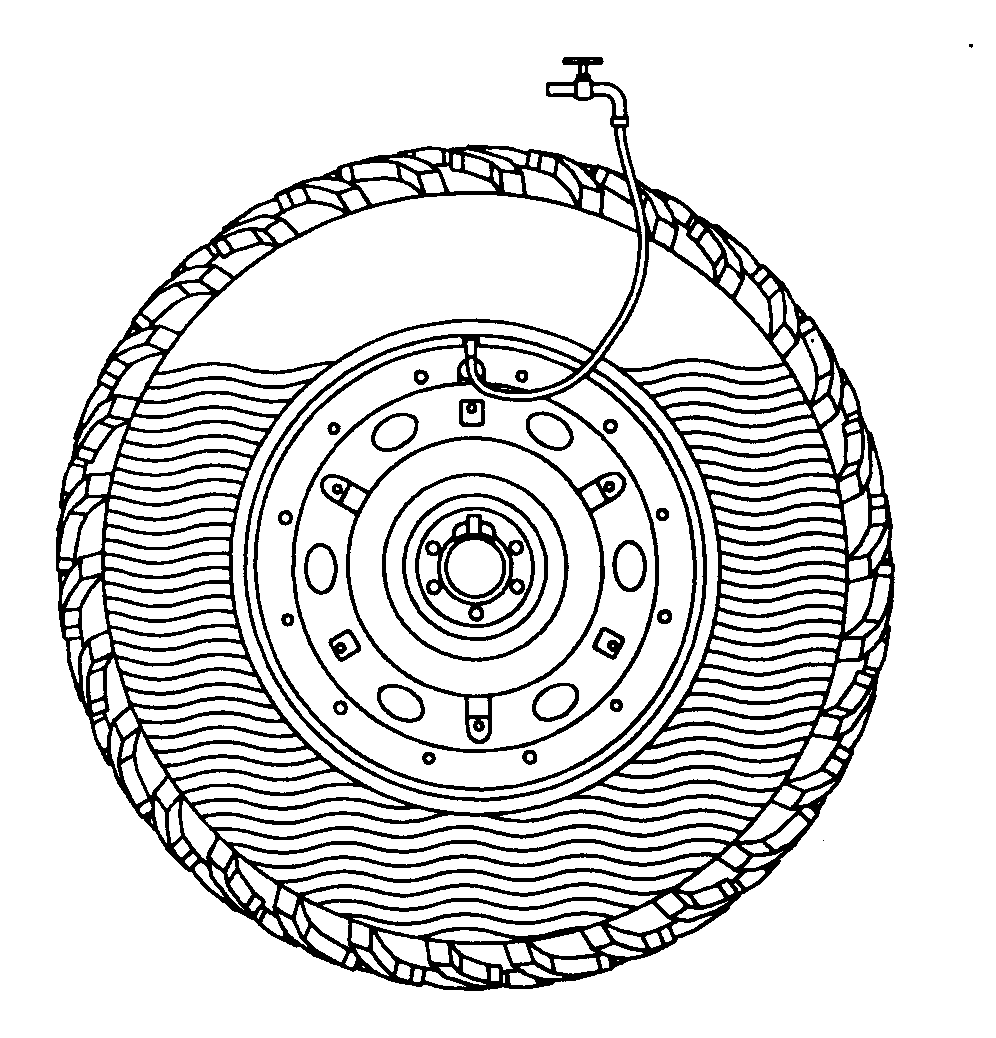
IMPORTANT: NEVER fill any tire to more than 90% full. More solution could damage tires. Use of water or calcium chloride solution can be used to provide economical ballast. Used properly, it will not damage tires, tubes, or rims. However, liquid ballast is not recommended because it results in harsh ride, difficulty in handling, spills if flats occur, and when used in rear tires can result in greater susceptibility to power hop.
A calcium chloride mixture of 420 g per liter (3.5 lb per gal) of water will not freeze solid above -45°C (-50°F) or a mixture of 600 g per liter (5.0 lb per gal) will not freeze solid above -50°C (-60°F). NOTE: Use of alcohol as liquid ballast is not recommended. Liquid ballast should be avoided in rear tires since it has a stiffening effect that causes the tractor to give a rough ride and generally reduces ability to control power hop. If liquid is used in the rear tires, all tires on the axle must be filled to the same level which should not exceed 40% fill. Up to 75% fill may be used in MFWD front tires for weight or to provide stiffness to assist in power hop control. Do this as a last alternative. Fill front tires to 40 or 75% full for needed ballast. Fill rear tires to maximum of 40% full. More solution could result in harsh ride. The following charts show how much weight is added in liquid ballast when tire is filled to 40% capacity and 75% capacity. |
|
 CAUTION:
Installing liquid ballast requires special equipment and training. See your John Deere dealer or a tire service store.
CAUTION:
Installing liquid ballast requires special equipment and training. See your John Deere dealer or a tire service store.
RF30435,0000070 -19-22MAR05-1/1 |