Using SCV Control Levers
 CAUTION:
To avoid personal injury, ensure hoses are not reversed. If cylinder response is reversed (extending instead of retracting), reverse hose connections at couplers. CAUTION:
To avoid personal injury, ensure hoses are not reversed. If cylinder response is reversed (extending instead of retracting), reverse hose connections at couplers.
NOTE:
Float can also be used to allow hydraulic motors to coast when shutting down an implement.
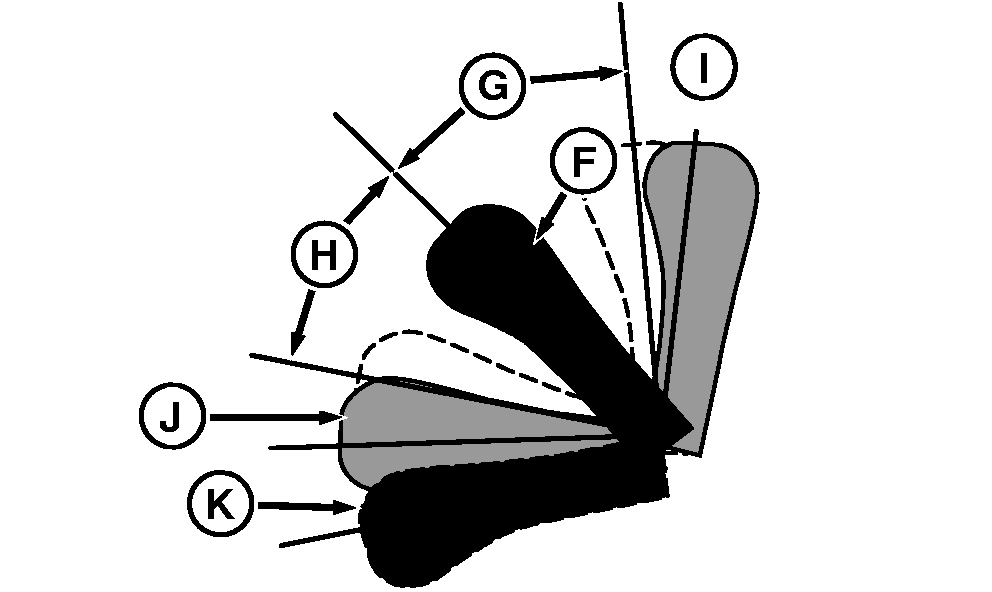
SCV control levers have six positions:
-
Neutral (F)
-Lever returns to center position when released except in float position
-
Extend (G)
(rearward between Neutral and Extend Detent Position)-Variable flow to extend cylinder, proportional to lever movement and flow settings; shuts off when released to center position
-
Extend Detent Position (I)
(rearward to "click" position)-Timed flow to extend cylinder, based on detent time setting and at a rate set by flow rate control. See Adjusting Detent Time and Adjusting SCV Flow Rate in this section. Lever returns to neutral when released
-
Retract (H)
(forward between Neutral and Retract Detent Position)-Variable flow to retract cylinder, proportional to lever movement; shuts off when released to center position
-
Retract Detent Position (J)
(forward to "click" position)-Timed flow to retract cylinder, based on detent time setting and at a rate set by flow rate control. See Adjusting Detent Time and Adjusting SCV Flow Rate in this section. Lever returns to neutral when released
-
Float (K)
(fully forward and down into locked position)-Valve is open to sump to allow cylinder to extend or retract to allow implement to follow ground contour; must be pulled up and out of locked position to disengage
NOTE:
To relieve hydraulic pressure in implement, move SCV control lever to float position, while engine is running.
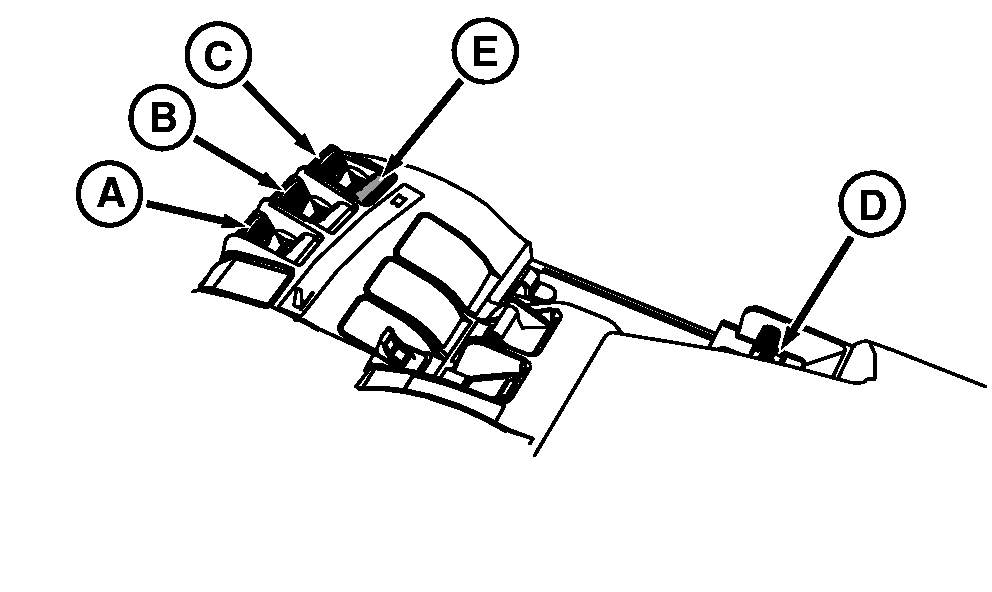
Push SCV lever covers (E) forward when SCV is not in use.
|
A-SCV I Lever
B-SCV II Lever
C-SCV III Lever
D-SCV IV Lever
E-Lever Cover
F-SCV Lever (In Neutral)
G-Extend Range
H-Retract Range
I-Extend Detent Position
J-Retract Detent Position
K-Float
|