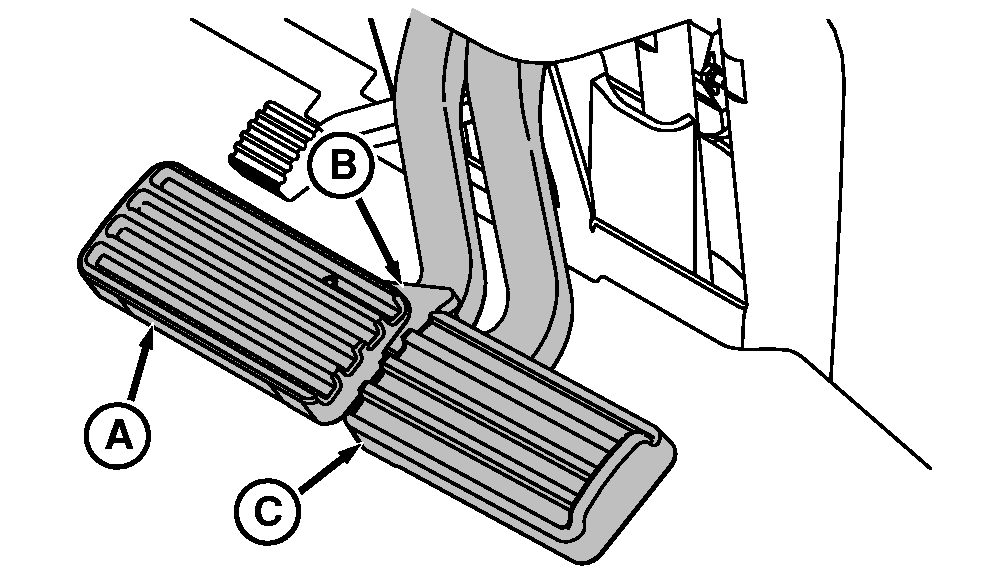
Using The BrakesUse individual brakes (A or C) to assist in making sharp turns.
Test brakes with engine stopped to be sure manual brake system is functioning. (See General Maintenance and Inspection section). Use individual brake pedals to assist in making sharp turns in non-transport situations. IMPORTANT: Avoid unnecessary wear on brakes and increased fuel consumption. DO NOT rest feet on brake pedals during tractor operation. For AutoPowr Tractors Only When operating at low idle, individual brake pedals will stop tractor without the use of clutch. To assist slow speed turning, depress either brake pedal while slowly increasing engine speed until desired turn is achieved. Returning engine speed to low idle while continuing to depress one brake pedal will slow tractor to a stop. |
|
 CAUTION:
Avoid possible injury from losing control of tractor:
CAUTION:
Avoid possible injury from losing control of tractor:
OURX935,0000225 -19-17JUL05-1/2 |
|
NOTE: Depressing the clutch to stop a tractor equipped with AutoPowr ™ is not necessary. (See STOPPING AND PARKING TRACTOR in the Operating AutoPowr transmission Section.) |
|
AutoPowr is a trademark of Deere & Company | OURX935,0000225 -19-17JUL05-2/2 |