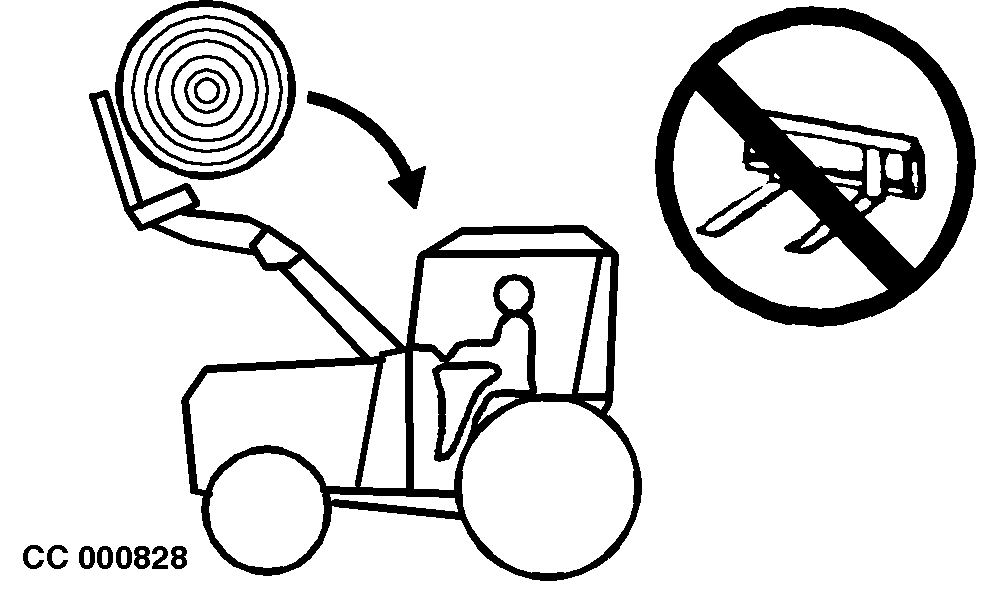
Avoid Injury or Death from Falling Loads
Improper use of loader to handle round bales or other material can result in injury to the tractor operator from:
- The bale rolling back down the loader boom onto the operator's station.
- The load spilling back from implement onto operator's station.
The risk of the load falling onto the driver is increased when the load is moved in the raised position, especially if the loader is used to lift pallets or bales with the load raised above the driving position.
The rollover protective structure (ROPS) provides only partial protection from a load falling onto the driving position and additional protection can only be achieved by the use of implements which are specially designed to prevent the load falling onto the driving position.
To help prevent personal injury or death caused by falling loads:
-
DO NOT handle round bales unless loader is equipped with an approved bale handling device. Otherwise, the bale can fall on the operator when the loader is raised.
-
Only use implements designed for handled material.
-
To avoid handling and stability problems, do not exceed the manufacturer's rated capacity of the tractor.
-
The tractor must have maximum rear ballast and maximum tread width. See your tractor operator's manual.
-
Carry loads low, drive slowly, maintain adequate visibility and ground clearance at all times.
-
Handle raised loads with caution.
-
Jerky operation causes tractor-loader instability. Operate the loader controls smoothly.
-
When handling round bales on a slope, approach the bale with tractor facing uphill.
-
Set detent selector knobs on top of valves to "loader" position when using the selective control valve levers to operate the loader. See "Setting Valve Detent Selector" in "Preparing the Tractor" Section.
|