Drive Wheel Slip— Machines with Mechanical Seed Transmission
One other reason that may cause the real seed or fertilizer rate to differ from the metering rates stated in the operator's manual is the amount of drive wheel slip that occurs.
While a certain amount of wheel slip is normal, excessive slip can cause undesirable alterations to real rates.
The rates indicated in the operator's manual are based on a drive wheel slip of approx. 16%.
Excessive slip of the drive wheel may result in badly lubricated or seized parts as well as misaligned bearings.
Down force springs, coulters, attachments with pointed teeth or any other attachment that remove weight from the drive wheel may contribute to wheel slip and to lower than expected rates.
The quantity of excessive drive wheel slip can be calculated.
-
Mark out a distance in the field that generally represents 30 wheel revolutions. Use the following formula to calculate the distance that should be traveled.
FORMULA:
Revolutions x Travel Circumference of Drive Wheel = Distance to be Traveled in Field
EXAMPLE:
- 30 revolutions x 2.5 m = 75 m
- 30 revolutions x 8.3 ft = 250 ft
-
Mark the wheel with a rubber tie, reflective tape or crepe tape. This will help count the wheel revolutions.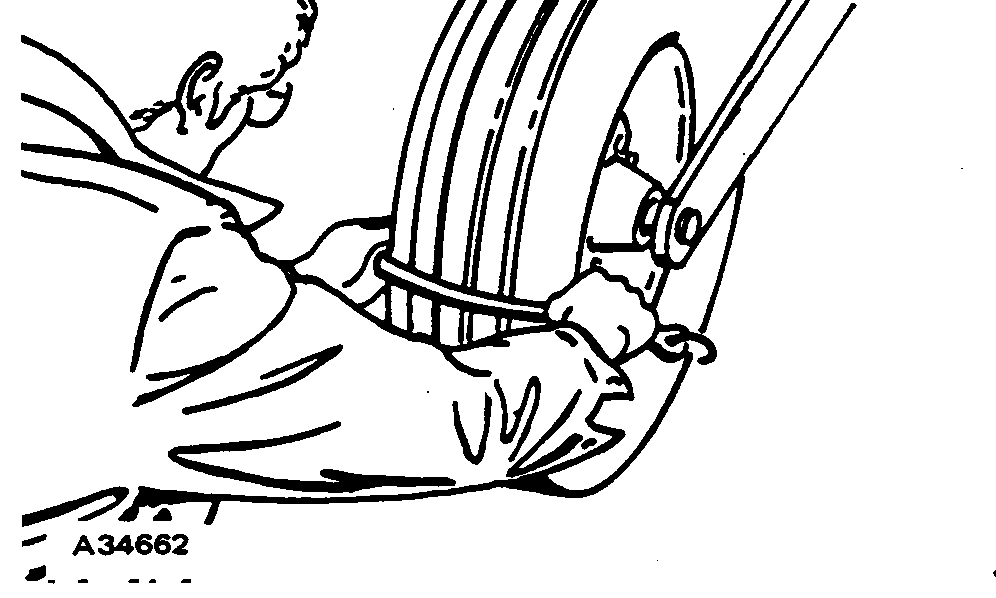
A34662-UN-10OCT88 -
With all rows planting in normal field conditions, drive the machine over a distance of 76 m (250 ft) at regular planting speed, while one other person counts the revolutions of the drive wheels.
-
Subtract the number of revolutions recorded over the distance traveled from 30. Then divide the difference by 30.
EXAMPLE:
If 28 revolutions were recorded, there is a slip of 6.6%.
30 - 28 = 2
2 ÷ 30 = 0.066
If the wheel slip is greater or lesser than 16% (slip baseline), adjust the seed transmission to obtain the required population.
|
ML70882,0000460-19-20041125 |