Operating Characteristics of Radial Bean Meter
IMPORTANT:
A40391-19-06NOV96
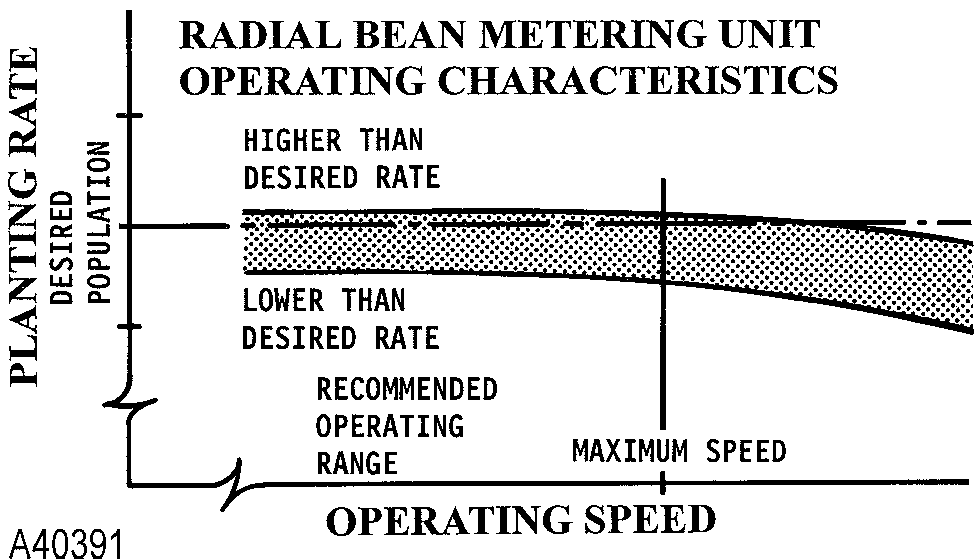
The operating band indicates how a radial bean metering unit performs with respect to the required population (indicated by the horizontal line). The width of the band is due to the different seed sizes and shapes.
IMPORTANT: To avoid incorrect planting calculations, carry out checks in the field in order to see if the correct planting rate is being implemented.
IMPORTANT: Replace feeder caps after these have been filled up. If the caps are not put back on, dust and dirt can accumulate in the metering apparatus, causing premature wear.
Best results are obtained when the machine is operated below maximum speed.
Larger seeds may cause lower rates than those indicated in the table for higher planting speeds. Smaller seeds may cause higher rates than those indicated in the table for lower planting speeds. The real rates MUST be checked in the field and the planting speed and machine settings altered accordingly.
The radial bean meter operates better with uniform seed sizes. Mixing seed size can cause a high drive torque, an increase in wear and even damage to the meter. If a mixture of seed sizes has to be used, always use the settings for the smallest seed size.
IMPORTANT: In the event that chemicals are to be applied by farmer, carefully follow product manufacturer's instructions. Generally, dry powder or treatments with quick drying liquids are recommended. TREATMENTS CONTAINING HIGH OIL CONTENTS ARE NOT RECOMMENDED.
Chemical reactions between treatments applied by the farmer and those commercially applied may turn the chemicals syrupy. Certain temperature and humidity levels may add further compatibility complications. Chemical treatments that accumulate on the components of the radial bean meter may reduce the number of seeds being fed and diminish spacing control.
Check with the chemical and seed suppliers in relation to treatment compatibility.
NOTE: The use of liquid to treat seeds, causing a humid environment in the seed feeders is not recommended.
Metering rates may vary according to the surface texture of the seeds as well as any chemical covering applied to the seeds. These factors combined with variations in seed size may result in differences between the rates indicated in the tables and real planting rates.
Increasing the quantity of graphite per gallon of seeds added to the feeder may improve the metering rate of chemically treated seeds or those with an irregular surface.
The best way to determine if a radial bean meter is metering at the correct rate is to check the population in the field. See “Checking Seed Population” section.
After defining the correct combination of drive wheels for the required planting rate, plant at a speed that does not surpass the specified maximum speed for the combination of drive wheels being used. This will help to guarantee precise planting rates.
|
ML70882,000050F-19-20050504 |