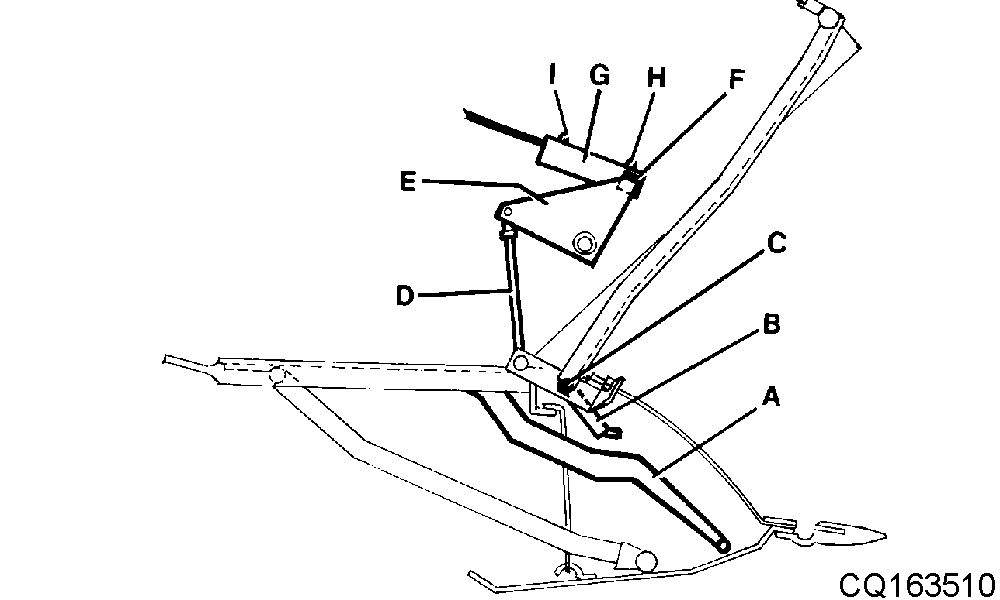
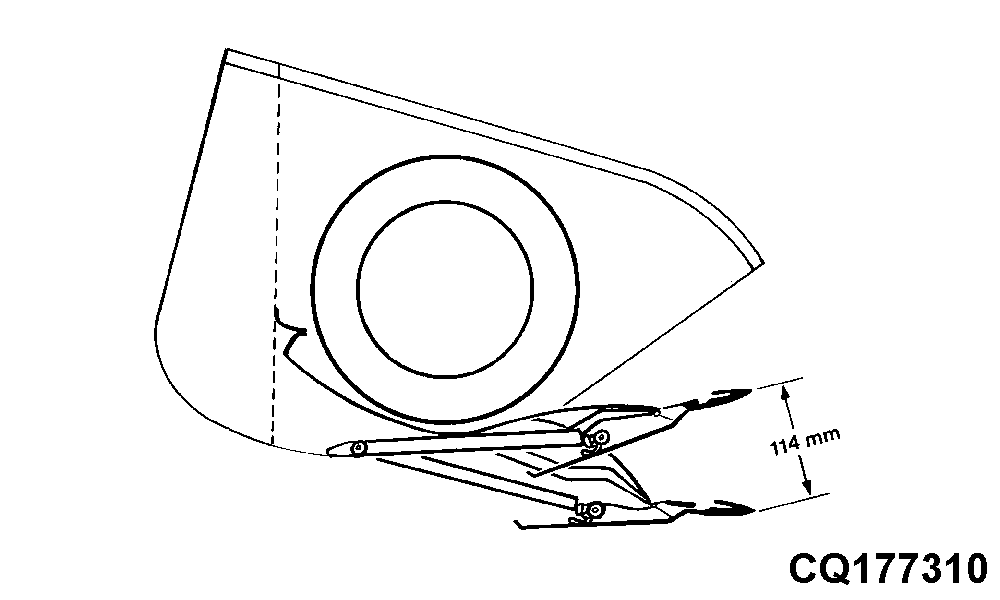
Automatic Cutting Height ControlHow it works The flexible cutterbar floats vertically within a space of 114 mm. Whenever any cutterbar section rises higher than the other sections, contact arm (A) moves drive arm (B) and turns height sensor shaft (C). The drive arm is not attached to the contact arm but is supported by it. Thus, whenever any cutterbar section lowers more than the other sections, height sensor shaft does not turn. This allows the highest cutterbar section always to control the Automatic Cutting Height Control System. When the height sensor shaft (C) turns, it moves rod (D) upward or downward. The movement of this rod in turn moves support (E) that causes magnet (F) to travel along sensor (G) which closes raise or lower switches inside the sensor. When the lowering switch is closed, the header is lowered and the front LED (H) lights up. When the raising switch is closed, the header is raised and the rear LED (I) lights up. |
|
AG,GG05155,101 -19-31MAR06-1/7 |
|
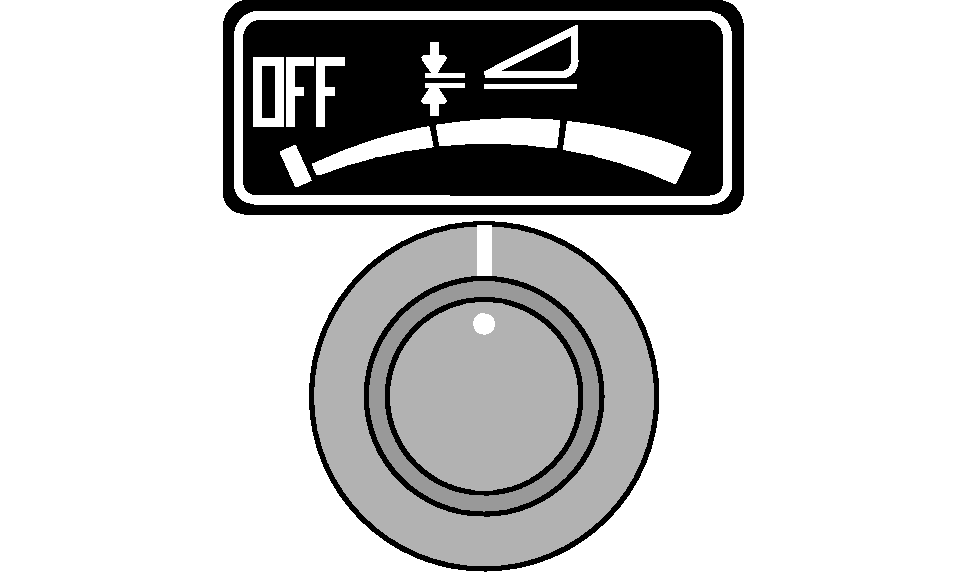
Within this rage of header floatation it is possible to adjust cutting height at any setting through the selector switch as floatation increases when turning the selector counterclockwise (Maximum floatation: 114 mm). Select the most adequate of 3 ranges according to soil conditions. Due to the force of the cutterbar towards the ground the rate of cutterbar movement will vary within the selected floating range. The curved sealing plates between cutterbar and header bottom operate as a spring, supporting the cutterbar. As the cutterbar rises within its floating range, tension of sealing plates is released and cutterbar will become heavier thus causing a greater force towards the ground. In dry soil conditions a greater force against the ground is allowed for cutting at ground level (Initial selector position). In wet soil conditions it is necessary to apply reduced force against the ground to prevent clogging of sliding shoes and collecting of earth (Intermediate and final selector positions). Choose one of the 3 operating ranges at the selector according to soil humidity, crop conditions and minimum harvesting height. Electrical System Components:
|
|
AG,GG05155,101 -19-31MAR06-2/7 |
|
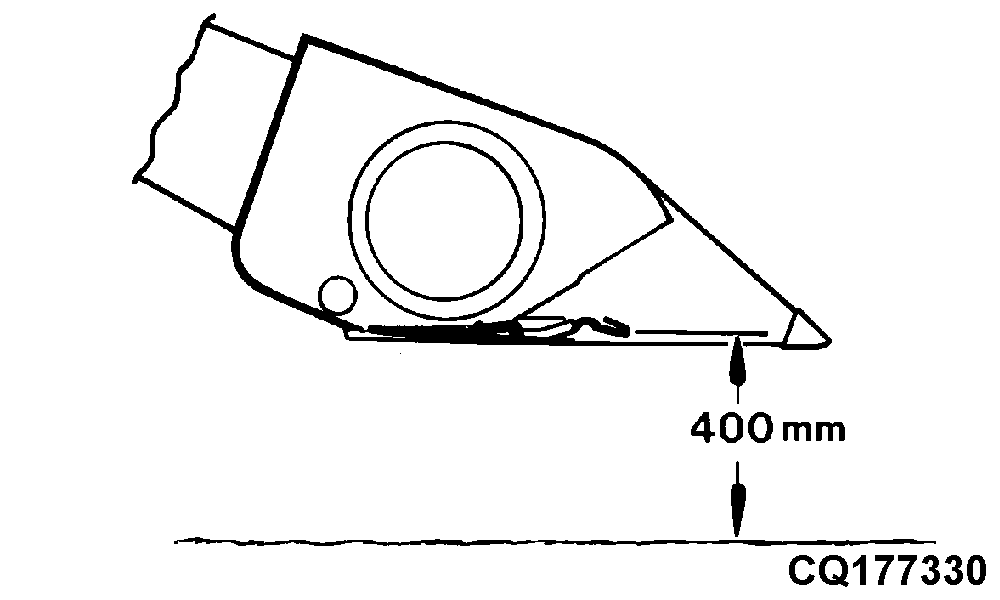
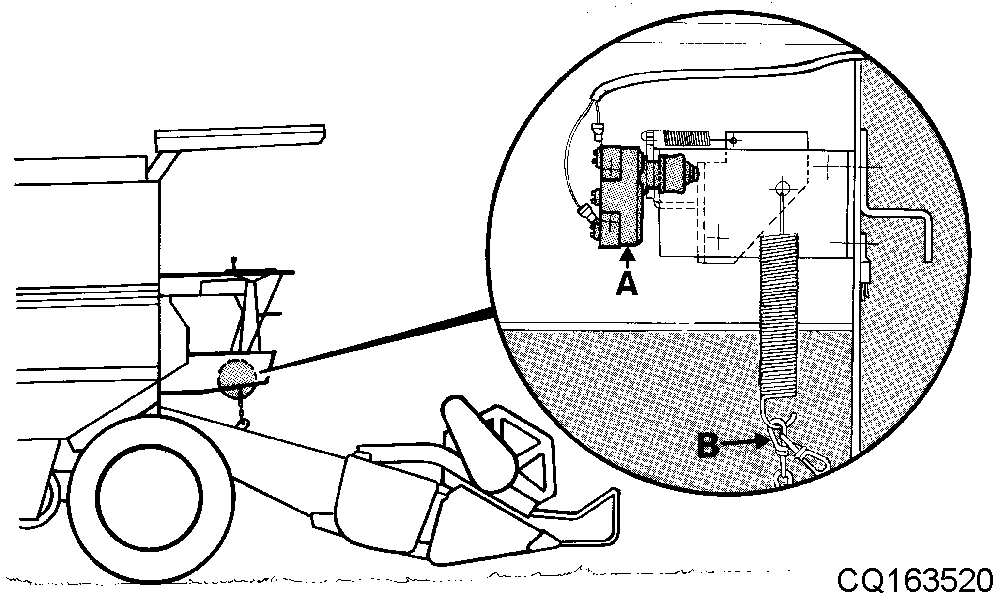
Height Limiting Switch Height limiting switch (A) is located below the operator's station. When cutterbar is more than 400 mm off the ground, the height switch will disengage, disconnecting the Automatic Cutting Height Control System. Thus the operator can return to a new cut or unload the grain tank without disengaging the selector switch on the instrument panel. When returning to harvesting, lower header manually to a height below 400 mm. This causes the height limiting switch to engage and connect the Automatic Cutting Height Control System. This switch is engaged through chain (B) that has one of its ends attached to the feeder house. |
|
AG,GG05155,101 -19-31MAR06-3/7 |
|
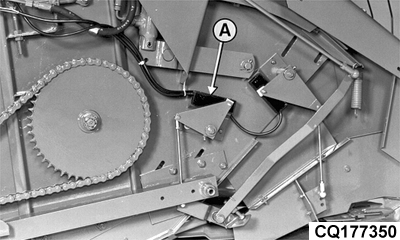
Position Sensor Position sensor (A) is located at the right-hand side of the header, under the shield. Its function is to capture any variation of the header height transmitted by the movement of the magnet, and transmit it electrically to the amplifier.
|
|
AG,GG05155,101 -19-31MAR06-4/7 |
|
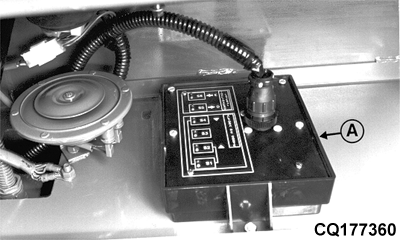
Amplifier Amplifier (A) is located on the right-hand side and under the operator's station. Its function is to amplify signals received from the position sensor and make them compatible with the solenoids. NOTE: There is also an amplifier in the lateral tilt system.
|
|
AG,GG05155,101 -19-31MAR06-5/7 |
|
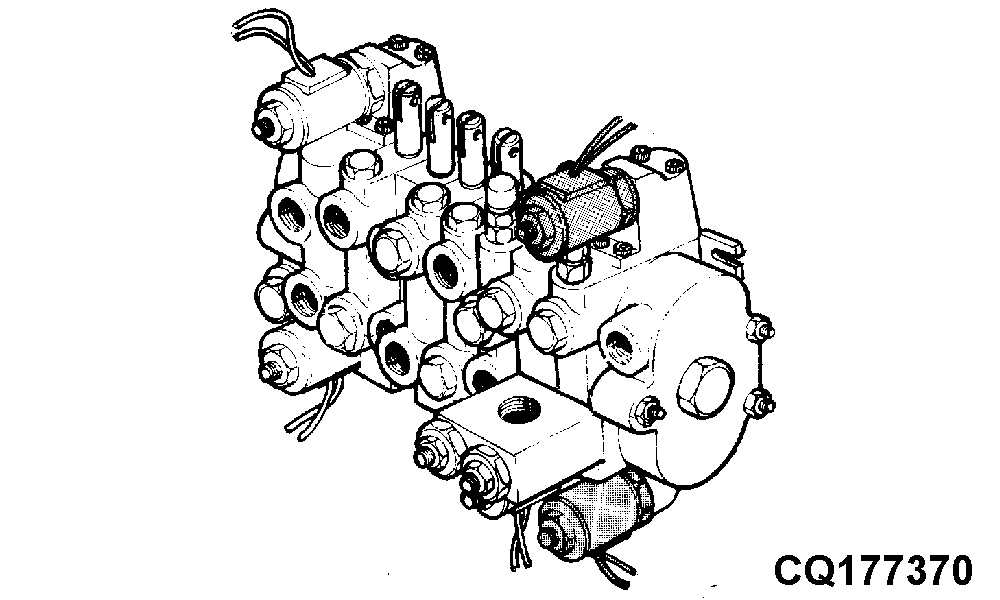
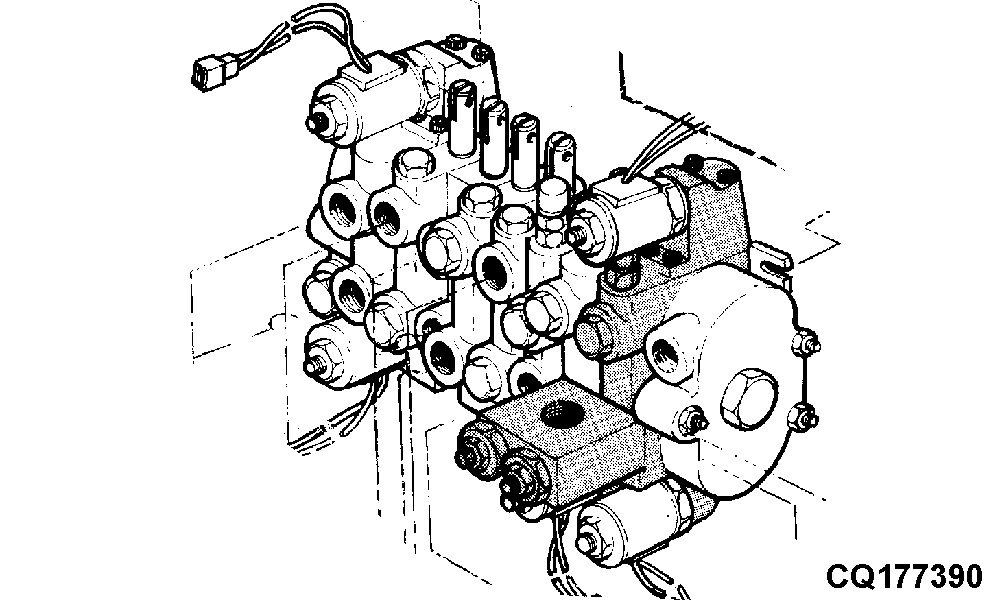
Solenoids Automatic Cutting Height Control Solenoids: Automatic Cutting Height Control Solenoids are incorporated into the hydraulic valve block, located at the right-hand side of the combine. Their function is to transform signals received by the position sensor and amplified by the amplifier into commands to the hydraulic valve block to permit the operation of the Automatic Cutting Height Control. Lateral Tilt System Solenoids: Lateral tilt system solenoids are incorporated into the hydraulic valve block, located at the right-hand side of the combine. Their function is to transform signals received by the sensors and amplified by the amplifier into commands to the hydraulic valve block to permit the operation of the system. |
|
AG,GG05155,101 -19-31MAR06-6/7 |
|
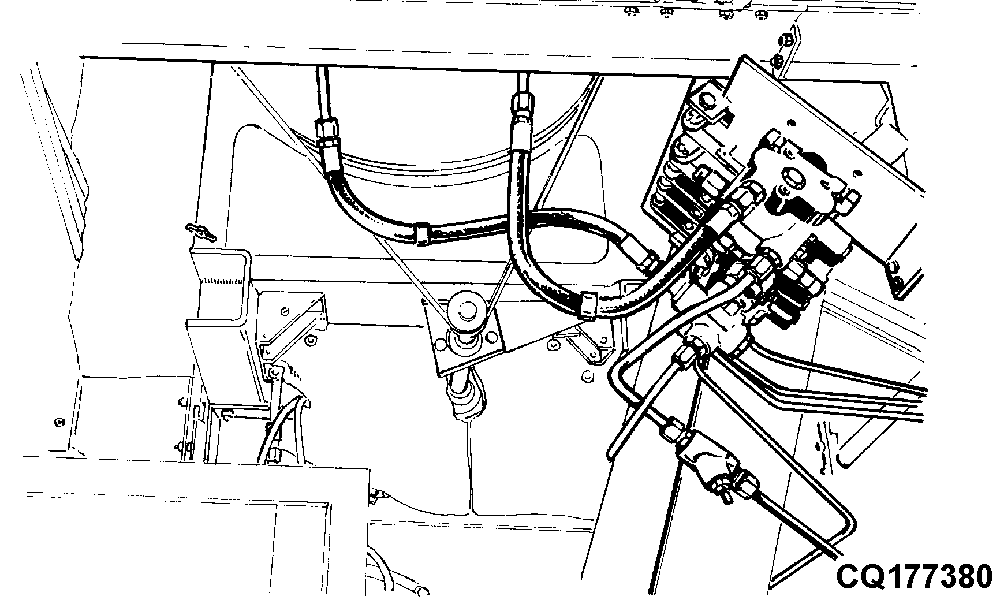
Hydraulic System Hydraulic Valve Block of Automatic Cutting Height Control The hydraulic valve block is located at the right-hand side of the combine. This device is equipped with a special body and specific functions for the Automatic Cutting Height Control. On receiving the electrical command emitted by the solenoid the body has elements to control and direct hydraulic oil flow to raise or lower the header automatically according to requirements captured by the position sensor.
Hydraulic Valve Block of Lateral Tilt System: The hydraulic valve block is located at the right-hand side of the combine. This device is equipped with a special body and specific functions for the header lateral tilt system. On receiving the electrical command emitted by the solenoid the referred body controls and directs hydraulic oil flow to make the header incline automatically on one side or the other, actuated by a hydraulic cylinder, according to requirements captured by the sensors. |
|
AG,GG05155,101 -19-31MAR06-7/7 |