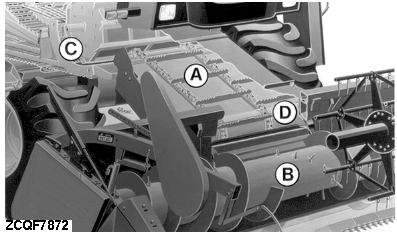
Feeder HouseThe feeder house conveyor (A) collects the product received from auger (B) and transports it to cylinder and concave (C). Components: A - Feeder House B - Auger C - Concave D - Floating Roller |
|
AG,GG05155,105 -19-05APR06-1/4 |
|
|
|
 CAUTION:
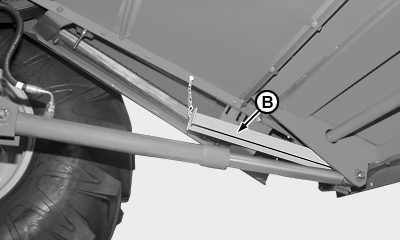
Always when working under the header, set safety stops (B) to feeder.
CAUTION:
Always when working under the header, set safety stops (B) to feeder.
AG,GG05155,105 -19-05APR06-2/4 |
|
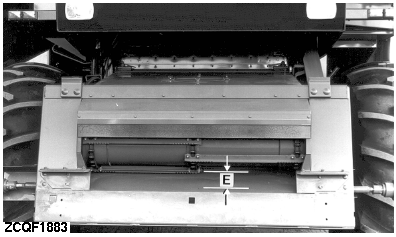
Floating Roller Separation (E) between floating roller and feeder house bottom must be adjusted differently according to the crop being harvested. A small opening for corn will cause whipping of the conveyor chain as the roller will jump up and down when corn ears are passing. This will provide irregular feeding as well as grain shelling and considerable grain damage. On the other hand, if the floating roller is very high for a crop like soybeans, wheat and rice, feeding will not be uniform. This will cause crop accumulation that will prevent efficient operation of the threshing, separating and cleaning units (See section "Basic Adjustments"). |
|
AG,GG05155,105 -19-05APR06-3/4 |
|
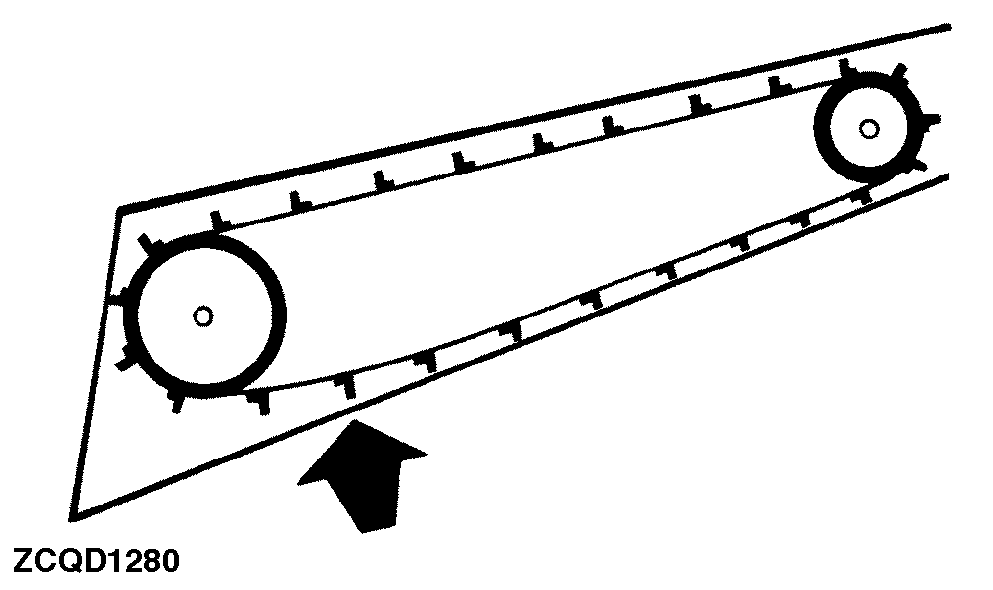
Conveyor Conveyor chains should be sufficiently tensioned to let crossmembers touch slightly on the feeder house bottom. With correct adjustment, the chain will bow to accept variable crop volumes and assure even feeding into the threshing system. If the conveyor chains are too tight the conveyor will be too distant from the crop causing weak feeding and risk of clogging (See "Basic Adjustments"). |
|
AG,GG05155,105 -19-05APR06-4/4 |