Check and Adjust Elevator Chain Tension
-
 CAUTION: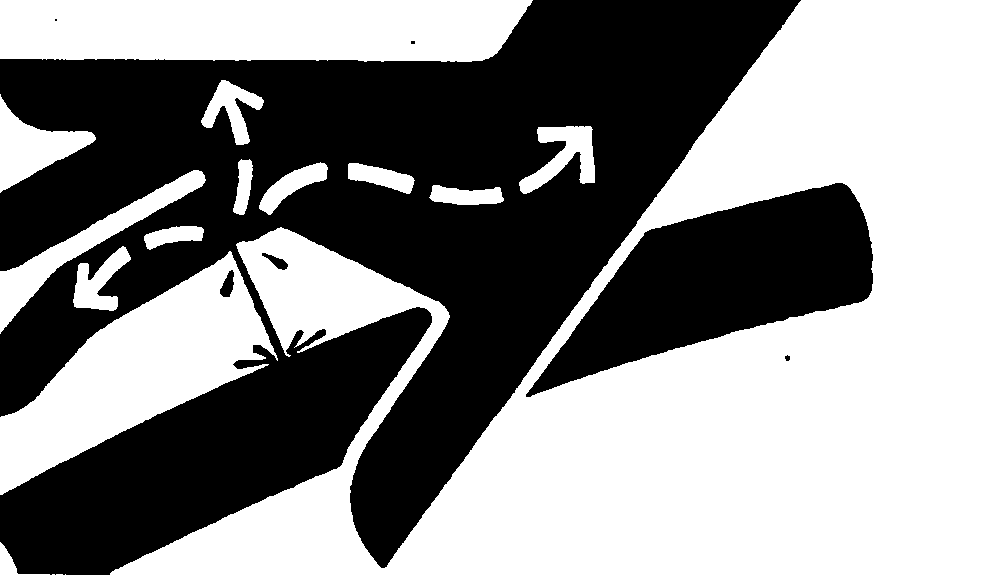
X9811-UN-23AUG88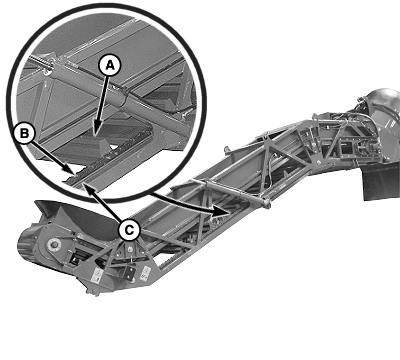
T8T510-UN-29MAY14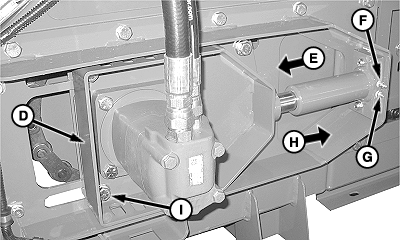
T8T509-UN-29MAY14Chain Tension Adjustment Location (right-hand side shown)
T8T3387-UN-08DEC15A - Slat
B - Chain
C - Wear Strip
D - Plate Assembly (2 used)
E - Increase Tension
F - Grease Relief Valve
G - Grease Fitting
H - Decrease Tension
I - Cap Screw (4 used each side)
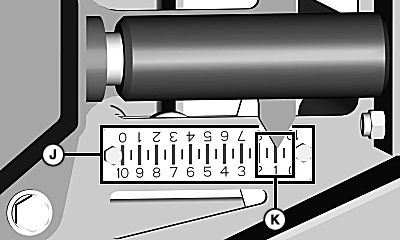
J - Tension Guide
K - Setting
Use care when relieving grease from chain tension adjusting cylinders. Grease under pressure can penetrate the skin. Wear appropriate safety apparel and eye protection.If an accident occurs, see a doctor immediately. Any fluid injected into the skin must be surgically removed within a few hours or gangrene may result. Doctors unfamiliar with this type of injury should reference a knowledgeable medical source. Such information is available from Deere & Company Medical Department in Moline, Illinois, U.S.A.
IMPORTANT: Cylinders on both sides must be adjusted equally so that slats remain perpendicular to elevator side wall.
NOTE: Grasping and pulling slat to check gap should be performed with relative ease. Difficulty checking gap indicates that chain tension is too tight.
It is not necessary to loosen cap screws (I) to adjust chain tension. Plate assemblies (D) slide on elevator frame to allow chain adjustment.
Select a slat (A) in lower chain area near the center of elevator assembly as shown. Grasp selected slat by hand and pull upward away from wear strip. Gap between chain (B) and wear strip (C) should be approximately 25 mm (1 in).
Increase or decrease chain tension as necessary.
IMPORTANT: If equipped with tension guide (J), setting (K) must be the same on each side of elevator.
- To increase chain tension (E): pump an equal amount of grease into fitting (G) on each side of elevator. Cylinders must have chain tension increased equally to maintain proper movement of chain slats along elevator side walls.
- To decrease chain tension (H): slowly open valve (F) and allow grease to escape from tension cylinder. Cylinders must have tension released equally on each side of the elevator.
-
CAUTION: Avoid personal injury and equipment damage. Ensure
that all personnel and tools are removed from elevator area before
testing elevator operation.
Start engine and operate elevator at a slow speed. Check for smooth operation.
-
Shut off engine. If necessary, repeat procedure until elevator chain assembly operates smoothly and without binding.
|
WM05597,00013F2-19-20151208 |