Repairing BeltsA belt lacing tool and hardware is available for repairing belts. 1. Remove broken belt(s). |
|
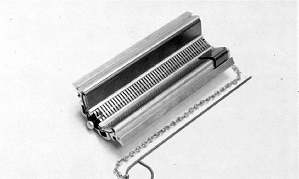
OUO6077,000196C -19-05JAN05-1/11 |
|
2.
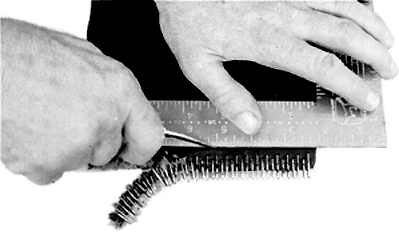
Using a square and sharp knife, remove damaged area. Check belt to be sure it is cut squarely
IMPORTANT: If belt lengths are less than specifications, belts will contact each other and accelerate wear to the belt diamond pattern. Belt contact occurs between the rear two tension arm rollers when the baler is empty and the gate is closed. If belts are longer than specifications, belts may slip on drive rolls and bale density may be reduced. Make sure all belts are within 38 mm (1-1/2 in.) of the other belts of similar length. There should not be more than 152 mm (6 in.) difference between the long and short belts. NOTE: If belts are shorter than the specified dimensions, a short piece of belt may be added. Splices (on same belt) should be at least 305 mm (12 in.) apart. 3. Check belt length. Make sure belt is neither longer or shorter than specified. |
|
| Belt Lengths | |||
|---|---|---|---|
| mm (in.) | Minimum | Repair | Maximum |
| Short Belts | 11633 (458) | 11709 (461) | 11760 (463) |
| Long Belts | 11773 (463-1/2) | 11849 (466-1/2) | 11900 (468-1/2) |
OUO6077,000196C -19-05JAN05-2/11 |
|
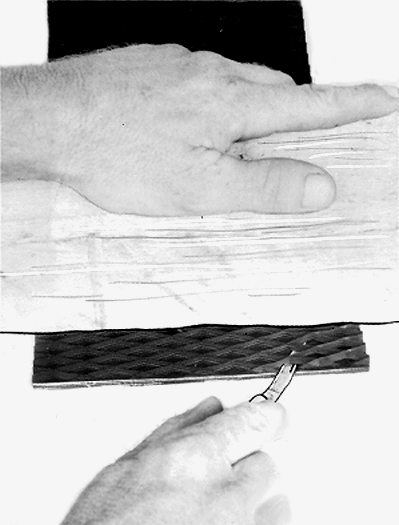
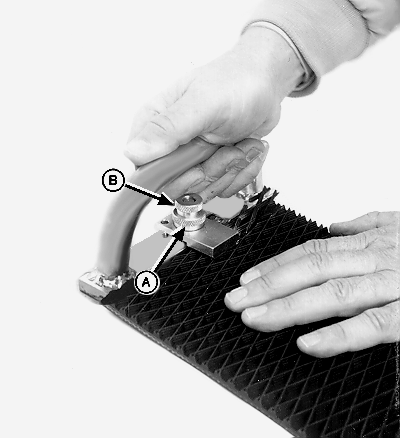
IMPORTANT: Cut only the diamond pattern. Cutting deeper can damage the belt cords. Do not use a grinder to remove diamond pattern. Heat from grinder can cause damage to rubber and fabric. 4. Remove diamond pattern from belt using a knife or skiving tool.
NOTE: To reduce cutting effort, dip knife blade in liquid soap. |
|
OUO6077,000196C -19-05JAN05-3/11 |
|
|
OUO6077,000196C -19-05JAN05-4/11 |
IMPORTANT: Do not leave more than 0.5 mm (0.020 in.) of pattern on belt in area to be laced. If too much material is left on belt, hooks will not fasten properly to belt. Do not remove too mush material. If belt cords show, repeat steps 2-4. Make sure belt length is still within specifications. Add section of belt if necessary. NOTE: Illustrations show incorrect and correct examples of diamond pattern removal from belt. |
|
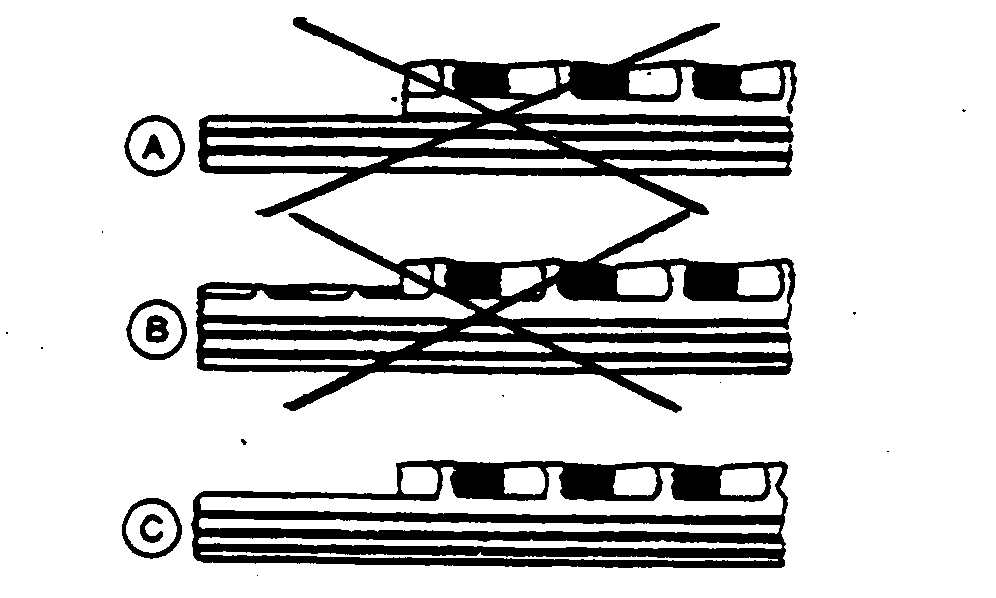
OUO6077,000196C -19-05JAN05-5/11 |
More examples of incorrectly cut belts: |
|
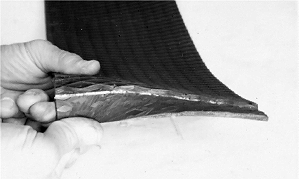

OUO6077,000196C -19-05JAN05-6/11 |
|
IMPORTANT: Trailing end of belt must be trimmed using dimensions shown in illustration. DO NOT vary from these dimensions. 5.Trim trailing end of belt as shown. |
|
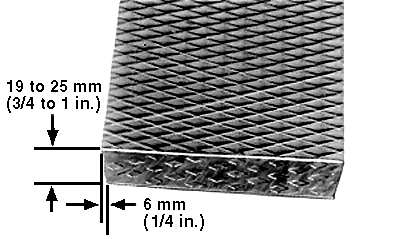
OUO6077,000196C -19-05JAN05-7/11 |
|
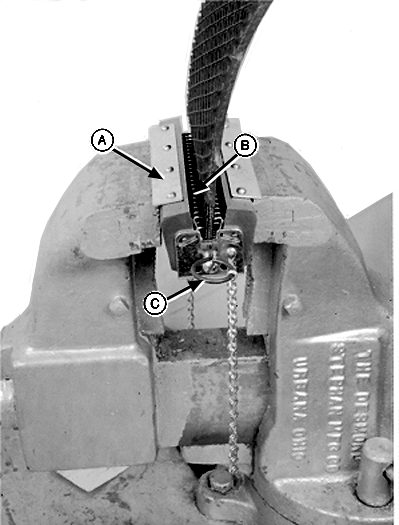
IMPORTANT: If repair is needed on only one end of belt, count the hooks. There should be 44 hooks for the trimmed end of belt and 45 hooks for the square end of belt. 6.Put belt lacing tool (A) in a vise. Set the determined amount of hooks (B) in center of the lacing tool and insert long pin (C) to hold hooks (B) in position. NOTE: Remove cardboard holding the hooks together before pressing lacing hooks onto belt end. 7.Visually align belt so hooks (B) are centered in belt. Make sure full width of belt is in contact with bottom of lacer. Tighten vise to force the lacing hooks through the belt.
|
|
OUO6077,000196C -19-05JAN05-8/11 |
|
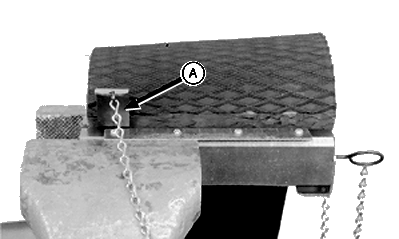
IMPORTANT: To ensure hooks are clinched correctly, retighten vise on approximately six hooks at a time to exert maximum pressure. Doing this will increase the life of the belt. 8.Starting at one end of belt and keeping pressure plate (A) centered in the vise, retighten vise to exert maximum pressure on approximately six hooks at a time.
|
|
OUO6077,000196C -19-05JAN05-9/11 |
|
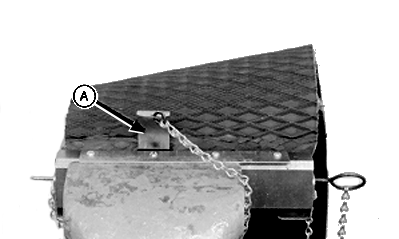
Always keeping pressure plate (A) centered in the vise, move belt and lacing tool over six hooks and retighten vise. Repeat procedure until all hooks are clinched.
|
|
OUO6077,000196C -19-05JAN05-10/11 |
|
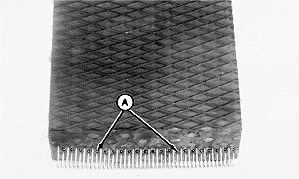
Belt splices are properly installed when points (A) come through belt from opposite side and are slightly clinched. Install belt(s). (See INSTALLING BELTS in this section.)
|
|
OUO6077,000196C -19-05JAN05-11/11 |