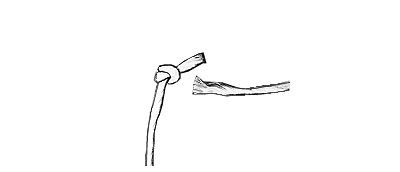
Adjusting Twine HolderNOTE: Incorrect twine holder adjustments are one of the major causes of tying difficulties. Adjust twine holder only as tight as necessary to prevent twine from pulling out of twine disk and resulting in a missed tie. Excessive tension will increase chance of twine fracture and wear on knotter drive parts. If not adjusted correctly, the twine will be over the bale and pulled out of the twine disk. This can be detected by a square cut end which has been flattened in the disks. The twine will usually be shorter than mating twine tied on opposite side of bale. Also, the twine could be over the bale, but sheared out of the twine disks. The twine ends will be frayed and torn, not cut squarely as in the illustration. Adjust the twine holder as follows: |
|
OUO6038,000008E -19-28SEP00-1/3 |
|
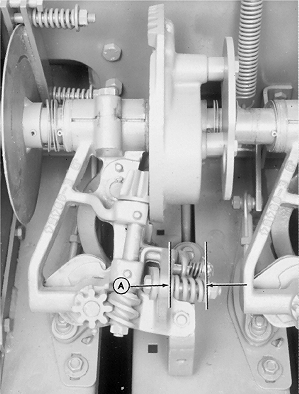
IMPORTANT: Adjustments on twine holder should be made in one turn increments. NOTE: Various hay conditions and moisture content may require greater or lesser twine holder tension. 1. Loosen nut until twine disk pullouts occur when baling. Using one turn increments on the nut, adjust twine holder ONLY as tight as necessary to prevent twine from pulling out of the disk when baling. Starting spring length (A) should be within specification. Specification
|
|
OUO6038,000008E -19-28SEP00-2/3 |
|
2.
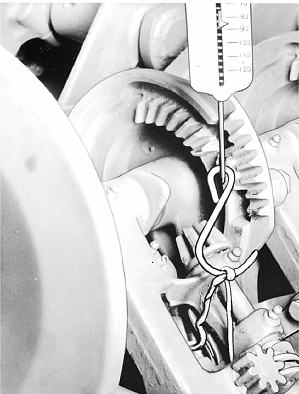
In most baling conditions, an upward pressure (pulling parallel with twine disk) is required to pull the twine out of holder after a knot has been tied. Pressure applied should be within specification.
Specification
|
|
OUO6038,000008E -19-28SEP00-3/3 |