Understanding the Tying Cycle
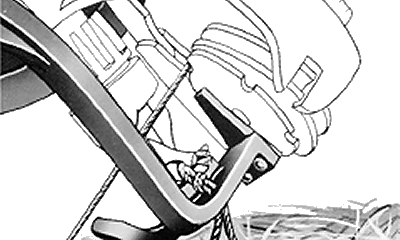
Understanding the tying cycle is critical for performing baler adjustments. Twine tying cycle is as follows:
1.
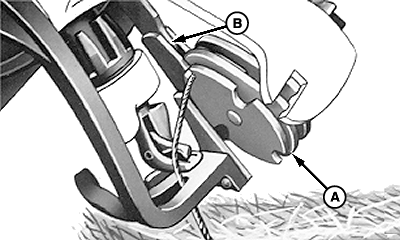
Twine is held in twine disk (A) by twine holder (B). As the bale is formed, it pulls twine from the twine box.
A-Disk
B-Holder
|
|
|
|
OUO6038,00000A5 -19-29SEP00-1/6
|
|
2.
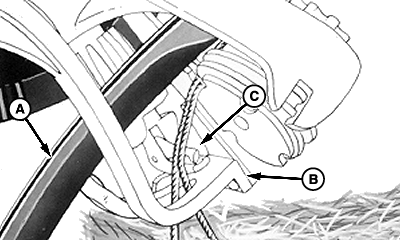
When the bale reaches its proper length, the measuring wheel trips the tying mechanism. The needle (A) (with help of the tucker finger) brings the second strand of twine through the guide on the knife arm (B), across the billhook (C) and into the twine disk.
A-Needle
B-Knife Arm
C-Billhook
|
|
|
|
OUO6038,00000A5 -19-29SEP00-2/6
|
|
3.
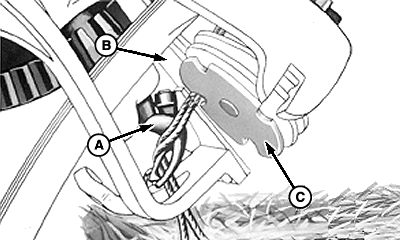
Billhook (A) starts its revolution when the gear teeth on the intermittent knotter gear have operated the disk driving pinion and turned the disk sufficiently to permit twine holder (B) to secure both strands of twine in disk (C).
A-Billhook
B-Twine Holder
C-Disk
|
|
|
|
OUO6038,00000A5 -19-29SEP00-3/6
|
|
4.
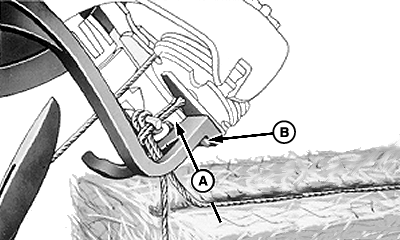
As the billhook turns, it forms a loop of twine around the hook, and the jaw opens to receive the twine. Knife (A) advances, ready to cut the twine between billhook and disk.
5.
At this stage, needle (B) begins to recede, leaving the twine in the disk which will be held there for the next knot.
A-Knife
B-Needle
|
|
|
|
OUO6038,00000A5 -19-29SEP00-4/6
|
|
6.
Billhook jaw has closed and now holds the ends of the twine tightly. The twine has been cut and wiper (A) on knife arm (B) wipes looped twine from the outside of the billhook to complete the knot.
A-Wiper
B-Arm
|
|
|
|
OUO6038,00000A5 -19-29SEP00-5/6
|
|
7.
Knot is tied and drops from the billhook.
Needles then return to the "home" position, leaving the strand of twine in the disk and extending through the bale chamber ready to receive material for the next bale, at the end of which another tying cycle begins.
|
|
|
|
OUO6038,00000A5 -19-29SEP00-6/6
|
|