Cutting Grass
|
|
|
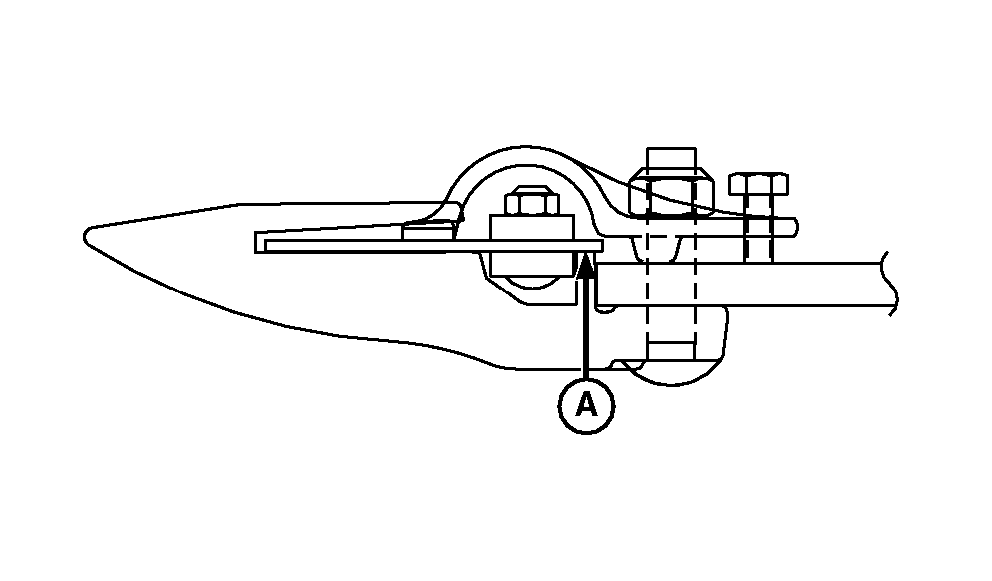
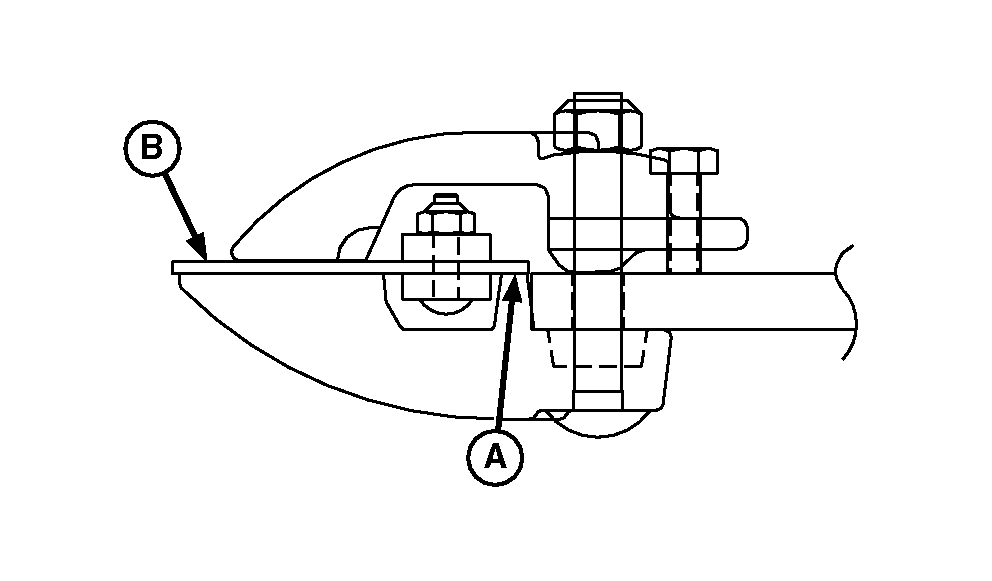
The toughest crops are fine stemmed grasses such as blue grass, Bahia, perennial rye, and native wild hay. Dense or moist grass makes cutting more difficult. Long or uneven stubble is usually the first sign of cutting problems. The windrow may start to show a ragged edge and be bunchy. As cutting problems get worse, there will be patches or strips of uncut crop and definite windrow bunching. At worst, poor cutting can cause plugging at the cutterbar or conditioner. 1. Keep knives sharp. Dull knives slow the cutting process causing crop to pause on cutterbar and feed unevenly. Knives may need to be sharpened or changed daily to avoid stripping or cutterbar plugging. 2. Keep hold-downs adjusted. Knife sections must be held close to guard ledger surface to handle grass. Non-clog guards are especially good in tough grass due to their ability to hold the knife down close to the guard. 3. Replace worn guards if ledger surface has rounded edges or the wear bar (A) is severely worn. Check |
for wear at rear edge of knife head. The section tip (B) should protrude in front of guard tip on non-clog guards.
4. Keep knife drive belt tight and slip clutch adjusted correctly. 5. Rotate reel cam to late material release position. If necessary, use a steeper guard angle to get reel closer to ground. (See Adjusting Reel Cam in this section.) 6. Check platform float. (See Adjusting Platform Float in this section.) If cutterbar plugging occurs, adjust the reel, cutterbar, and platform float to make sure the crop is not hesitating on the cutterbar. If machine is well adjusted and crop hairpins on the tips of standard guards, replace standard guards with non-clog guards. Non-clog guards eliminate this type of cutterbar plugging, because the tip of the knife section protrudes in front of the guard tip. |
EX,820J,GA1 -19-31OCT95-1/1 |