Attaching to Tractor Hydraulic System
|
|
|
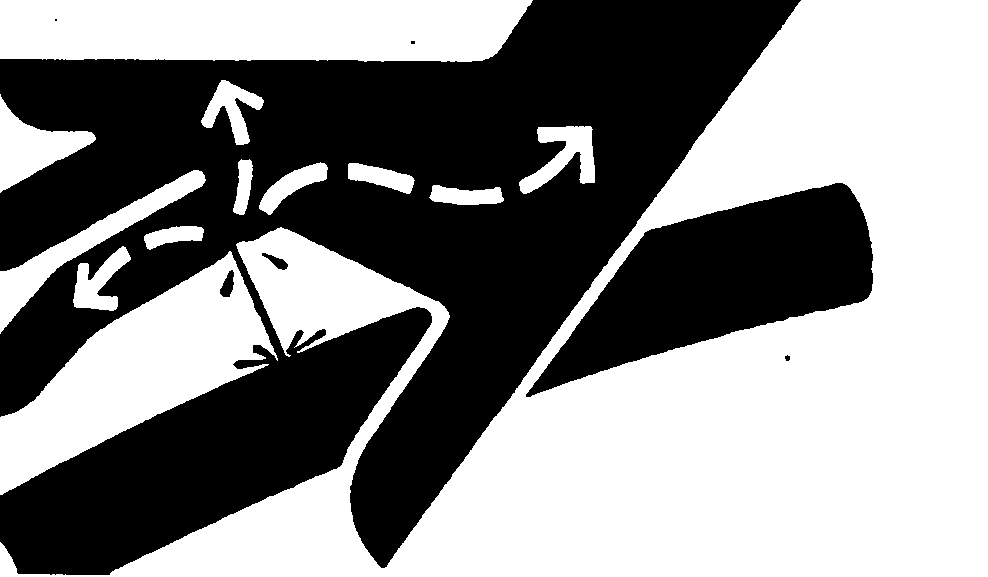
If an accident occurs, see a doctor immediately. Any fluid injected into the skin must be surgically removed within a few hours or gangrene may result. Doctors unfamiliar with this type of injury should reference a knowledgeable medical source. Such information is available from Deere & Company Medical Department in Moline, Illinois, U.S.A.
IMPORTANT: All hydraulic couplers must be clear of debris, dust, and sand. Use protective caps on fluid openings |
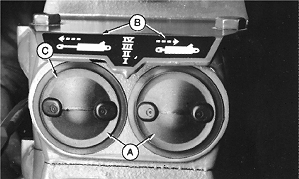
until ready to make connection. Foreign material can damage the hydraulic system. NOTE: To help identify and properly connect hoses, Hose Identification Kits are available from your John Deere dealer. ISO hydraulic couplers are standard with the mower-conditioner. If they do not fit the tractor, see your John Deere dealer. 1. Clean off receptacle dust covers (A). 2. Check to be sure symbols (B) on receptacle identification plate, indicating cylinder movement, match cylinder travel direction. 3. Insert platform lift hydraulic hose into "extended side" receptacle (C) (SCV I). 4. If equipped with optional hydraulic tongue positioner and/or hydraulic tilt control, insert hydraulic hoses into the next set of tractor receptacles (SCV II and/or SCV III). 5. Push hoses firmly into tractor receptacles. |
 CAUTION:
Escaping fluid under pressure can penetrate the skin causing serious injury. Avoid the hazard by relieving pressure before connecting or disconnecting hydraulic lines. Tighten all connections before applying pressure. Search for leaks with a piece of cardboard. Protect hands and body from high pressure fluids.
CAUTION:
Escaping fluid under pressure can penetrate the skin causing serious injury. Avoid the hazard by relieving pressure before connecting or disconnecting hydraulic lines. Tighten all connections before applying pressure. Search for leaks with a piece of cardboard. Protect hands and body from high pressure fluids.
EX,925RW,B -19-04AUG97-1/1 |