Remote Hydraulic Cylinders
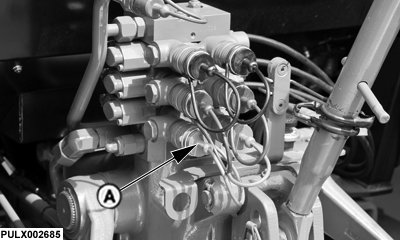
Connecting single-acting cylinder
PULX002685-UN-05NOV08
IMPORTANT: The volume of oil required to extend cylinder must not lower transmission/hydraulic oil level below end of dipstick. Check oil level with cylinder fully extended.
In order for lever to work properly, a single-acting cylinder should be connected only to receptacle (A).
Correcting reversed cylinder response
 CAUTION: If cylinder response is reversed, extending when it
should retract, reverse cylinder hose connections at coupler.
CAUTION: If cylinder response is reversed, extending when it
should retract, reverse cylinder hose connections at coupler.
Neutral position
AGCPTJD0651-UN-01OCT14
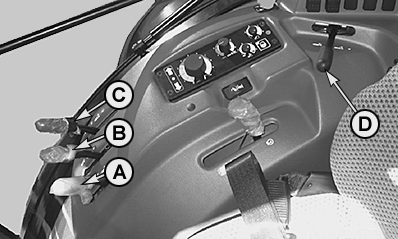
Spring pressure returns levers (A), (B), (C) and (D) to a centered position (see arrow). With the control lever in this position, the remote cylinder is hydraulically locked in position.
Retracting cylinder
AGCPTJD0408-UN-12JUL13
M47174-UN-31JAN92
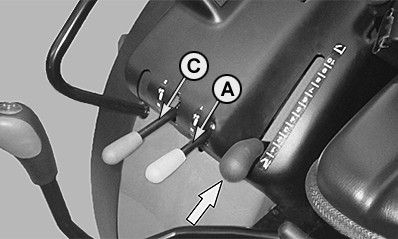
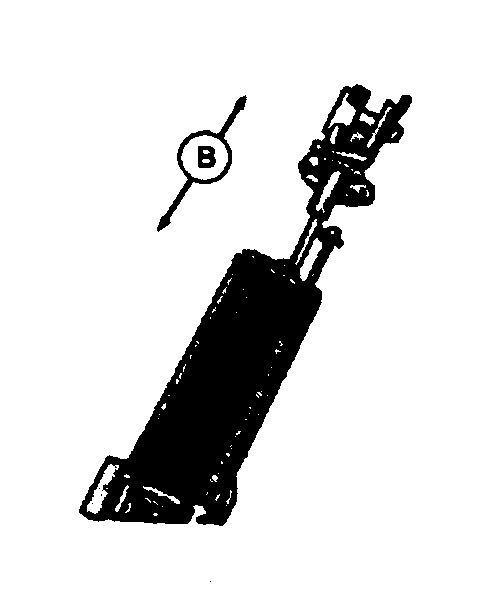
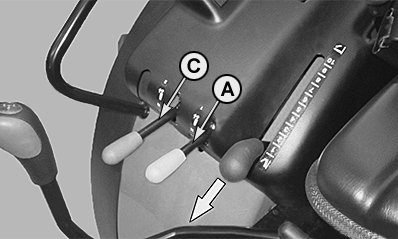
Pull lever (A) or (C) from neutral to the rear and hold it against spring pressure. This retracts cylinder (B) (arrow down) connected to SCV I, II or III coupler receptacles.
Extending cylinder
AGCPTJD0425-UN-15JUL13
Push lever (A) or (C) from neutral to the front and hold it against spring pressure. This extends cylinder (B) (arrow up) connected to SCV I, II or III coupler receptacles.
Disconnecting cylinder hoses
AGCPTJD0409-UN-02NOV15
-
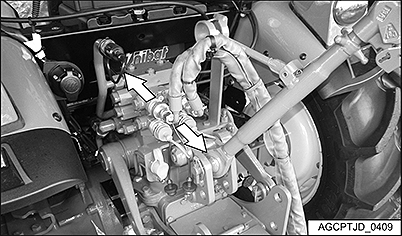
If possible, retract remote cylinder as much as possible to protect cylinder rod from damage.
-
With as much hydraulic pressure as possible relieved from hoses, pull hoses from couplers.
-
Make sure dust plugs for receptacles and dust caps for hoses are clean, then reinstall.
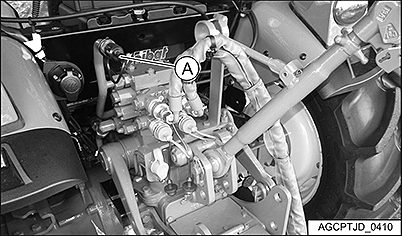
Return line to sump
AGCPTJD0410-UN-02NOV15
|
OULXBER,0002514-19-20141030 |