Operational CheckoutUse this procedure to check all systems and functions on the machine. It is designed so you can make a quick check of machine operation while doing a walk around inspection and performing specific checks from the operators seat. Should you experience a problem with your machine, you will find helpful diagnostic information in this checkout that will pinpoint the cause. This information may allow you to perform a simple adjustment yourself which will reduce the down time of your machine. Use the table of contents to help find adjustment procedures. The information you provide after completing the operational checkout will allow you or your authorized dealer to pinpoint a specific test or repair needed to restore the machine to design specifications. A location will be required which is level and has adequate space to complete the checks. No tools or equipment are needed to perform the checkout. Complete the necessary visual checks (oil levels, oil condition, external leaks, loose hardware, linkage, wiring, etc.) prior to doing the checkout. The machine must be at operating temperature for many of the checks. Start at the top of the left column and read completely down column before performing check. Follow this sequence from left to right. In the far right column, if no problem is found, you will be instructed to go to next check. If a problem is indicated, you will be referred to either a section in this manual or to your authorized dealer for repair. |
OUTJ003,0000A12 -19-06NOV01-1/1 |
1 Inspection
- - -1/1 |
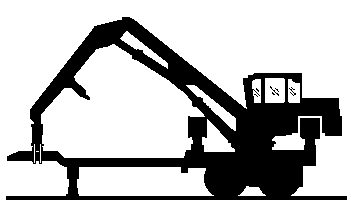
Clean Machine |
|
OK: Machine cleanliness is acceptable. NOT OK: Clean the machine. IF OK: Go on to next check. |
|||
- - -1/1 |
Operator's Manual Check |
|
OK: Operator's Manual is OK. NOT OK: Replace Operator's manual IF OK: Go on to next check. |
|||
- - -1/1 |
Service Decal Check |
|
OK: Service Label is OK. NOT OK: Replace service label. IF OK: Go on to next check. |
|||
- - -1/1 |
Safety Decals Check |
|
OK: Safety decals are OK. NOT OK: Replace missing or illegible safety decals. IF OK: Go on to next check. |
|||

- - -1/1 |
Cab Door and Latch Check |
|
OK: Cab door and latch are OK. NOT OK: Repair or replace cab door or latch. IF OK: Go on to next check. |
|||
- - -1/1 |
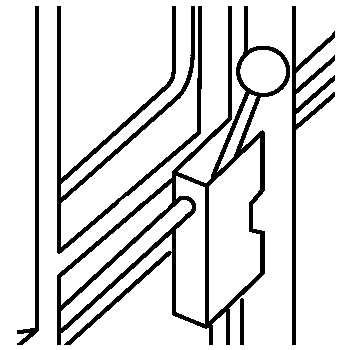
Windows Check |
|
OK: Windows are OK. NOT OK: Clean, repair or replace windows, as necessary. IF OK: Go on to next check. |
|||
- - -1/1 |
Covers and Panels Check |
Check covers and panels. LOOK: Covers and panels must fit properly and be in good condition. Fasteners must be tight. |
OK: Covers and panels are OK. NOT OK: Tighten or replace fasteners. Repair or replace damaged or missing covers and panels. IF OK: Go on to next check. |
- - -1/1 |
Check Wiring Harness |
Inspect wiring harnesses. LOOK: Wiring harnesses should not show signs of wear which may lead to open, shorted or grounded circuits. Check for worn or burnt insulation. Check for loose, damaged or corroded terminals. |
OK: Wiring harness is OK. NOT OK: Contact authorized dealer to service electrical system. IF OK: Go on to next check. |
- - -1/1 |
Check Hydraulic Hoses and Fittings |
Check hydraulic hoses and fittings. LOOK: Hoses should not be twisted kinked or worn. Fittings should be tight. Check for accumulations of dirt which may indicate leaks. |
OK: Hydraulic hoses and fittings are OK. NOT OK: Tighten fittings. Contact authorized dealer to replace worn hoses. IF OK: Go on to next check. |
- - -1/1 |
Check Loose Hardware |
Check for loose hardware: nuts, bolts, clamps, etc. LOOK: Fasteners should be in place and tight.
Fasteners are OK. Tighten or replace loose or missing fasteners. See the Bolt Torque Table for recommended torques. Go on to next check. |
- - -1/1 |
Stabilizers Condition CheckInspect the condition of the stabilizers. LOOK: Stabilizer weldments should be in good condition and show no indication of damage or wear. Stabilizer pads should pivot freely and show no indications of damage or wear. Pins should be properly installed, lubricated and in good condition. Stabilizer cylinders should in good condition and show no indications of damage or leaks. Stabilizers condition is OK Repair stabilizers, as necessary. Go on to next check. |
- - -1/1 |
Booms and Grapple Condition CheckInspect the condition of the booms and grapple. LOOK: Boom and grapple weldments should be in good condition and show no indication of damage or wear. Grapple arms should open and close freely and show no indications of damage or wear. Pins should be properly installed, lubricated and in good condition. Boom and grapple cylinders should in good condition and show no indications of damage or leaks. Grapple rotate motor should in properly mounted and show no indications of damage or leaks. Booms and grapple condition is OK. Repair booms and grapple as necessary. Go on to next check. |
- - -1/1 |
Battery Disconnect Switch CheckBattery Disconnect Switch ON. Ignition switch to ACC. Cab Interior Light ON. LOOK: Cab Interior Light should be lit. Battery Disconnect Switch OFF. LOOK: Cab Interior Light should NOT be lit. After the check, turn the Battery Disconnect Switch ON and the Ignition Switch OFF. Battery Disconnect switch is OK. Contact authorized dealer to service the battery disconnect switch. Go on to next check. |
- - -1/1 |
Fuses and Circuit Breakers CheckNOTE: To access the fuses and circuit breakers, remove the front cover from the console in the cab. Check the fuses and circuit breakers. LOOK: Check for any open fuses or circuit breakers. Circuit Breakers are OK. Identify cause of open circuit breaker. Contact authorized dealer to service the electrical system. Circuit breakers are thermally operated. They should reset automatically if allowed to cool. Go on to next check. |
- - -1/1 |
Radiator and Oil Cooler CheckRemove the grill and check the radiator and oil cooler. LOOK: Fins on the radiator and oil cooler should not be bent or blocked with dirt and debris. The radiator and oil cooler should be clean and in good condition. Radiator and , oil cooler are OK. Clean radiator and oil cooler. Contact authorized dealer to replace damaged equipment. Go on to next check. |
- - -1/1 |
Hydraulic Oil Level CheckIMPORTANT: When checking the hydraulic fluid level, the loader must be level with the booms fully extended, the grapple head supported and the stabilizers in the raised position. Failure to configure the loader in this manner will lead to false fluid level reading and possible equipment damage. Check the hydraulic oil level on the sight gauge on the side of the tank. LOOK: The oil level should be at the full mark on the sight gauge. Hydraulic oil level is OK. Add hydraulic oil. See Section 3-1 for recommended hydraulic oil. Go on to next check. |
- - -1/1 |
Swing Gearbox Oil Level CheckCheck the oil level on the sight gauge on the side of the swing gearbox. LOOK: The oil level should be at the full mark on the sight gauge. Swing gearbox oil level is OK. Add oil. See Section 3-1 for recommended hydraulic oil. Go on to next check. |
- - -1/1 |
Engine Oil Level and Condition CheckNOTE: The engine oil dipstick is part of the filler cap. Check engine oil level on the dipstick. LOOK: Engine oil level should be between the Add and Full marks on the dipstick. Check the condition of the oil. LOOK: Engine oil should not be burnt or contaminated with fuel or engine coolant. Engine oil level and condition is OK. Add oil. See Section 3-1 for recommended engine oil. Contact authorized dealer to remedy burnt or contaminated oil. Go on to next check. |
- - -1/1 |
Engine Coolant Level and Condition Check
Liquid cooling systems build pressure as the engine heats. Before removing the radiator cap, stop the engine and let the engine cool. Remove the radiator cap ONLY after the system has cooled enough to touch with bare hands. To avoid possible injury, turn the tank filler cap approximately 1/4 turn to relieve residual pressure before removing the cap completely. NOTE: Check coolant when the engine has cooled. Open engine compartment door. Check engine coolant level in expansion tank mounted on door. LOOK: The coolant level should be between the FULL and ADD marks on the expansion tank. Coolant should not be contaminated with engine oil. Engine coolant level is OK. Add coolant. See Section 3-1 for recommended engine coolant. Go on to next check. Contact authorized dealer to remedy contaminated coolant. |
 CAUTION:
Explosive release of fluids from pressurized cooling system can cause serious burns.
CAUTION:
Explosive release of fluids from pressurized cooling system can cause serious burns.
- - -1/1 |
2 Gauges and Indicators
- - -1/1 |
Gauges CheckStart the engine. Allow the system to warm up to normal operating temperature. Check the Tachometer. Use the throttle switch to change the engine RPM. LOOK: The tachometer should indicate any changes in engine rpm. Fast idle should be 2350 ± 100 rpm. Slow idle should be 950 ± 45 rpm. Check the Hourmeter. LOOK: Hourmeter numbers should be moving, indicating the number of hours the engine has operated. NOTE: Since the Hourmeter registers tenths of a hour, the numbers will change very slowly. Check the Engine Coolant Temperature Gauge. LOOK: The gauge should indicate engine coolant temperature rising as the system warms up. Normal operating temperature should be 71 - 93°C (160 - 200°F). Check the Voltmeter. LOOK: The Voltmeter should indicate normal alternator output a few seconds after the engine starts. Normal voltage range is 12 - 14 volts. Check the Engine Oil Pressure Gauge. LOOK: The gauge should indicate the engine oil pressure. Normal operating pressure is 103 - 517 kPa (15 - 75 psi). Check the Fuel Gauge. LOOK: The gauge should indicate fuel level corresponding to the level known to be in the tank. Check the Gauge Lights. LOOK: The Gauge Lights should be lit. NOTE: After the checks, shut off the engine. Gauges are OK. Contact authorized dealer to service any malfunctioning gauge or sensing circuit. Go on to next check. |
- - -1/1 |
Indicator Lights Check
Start the engine. Allow the system to warm up to normal operating temperature.
Check the Air Filter Restriction Indicator Light. LOOK: The Air Filter Restriction Indicator Light should NOT be lit. NOTE: If the Air Filter Restriction Indicator Light is lit, shut off the engine and do not operate the machine until the problem has been remedied. Check the engine air intake filters. Clean or replace the filters, as necessary.
Check the Low Engine Oil Pressure Indicator Light.
LOOK: The Low Engine Oil Pressure Indicator Light should NOT be lit. NOTE: [The Engine Oil Pressure Indicator Light may be lit for up to 15 seconds when the engine is first started.] If the Engine Oil Pressure Indicator Light remains lit, shut off the engine and do not operate the machine until the problem has been remedied. Check the engine oil level. Add oil, as necessary.
Check the Hydraulic Filter Restriction Indicator Light.
LOOK: The Hydraulic Filter Restriction Indicator Light should NOT be lit. NOTE: In cold conditions, the Return Filter Warning Light may be lit for a few minutes while the system warms to normal operating temperature. If the warning light stays lit, shut off the engine and do not operate the machine until the problem has been remedied. The hydraulic oil return filters may be plugged.
Check the High Engine Coolant Temperature Indicator Light.
LOOK: The High Engine Coolant Temperature Indicator Light should NOT be lit. NOTE: If the High Engine Coolant Temperature Indicator Light is lit, shut off the engine and do not operate the machine until the problem has been remedied. Check the engine coolant level. Add coolant, as necessary. NOTE: After the checks, shut off the engine. Indicator lights are OK. If any indicator light is lit during normal operation, shut off the engine and do not operate the machine until the problem has been remedied. If problem persists, contact authorized dealer for service. Contact authorized dealer to service the indicator lights circuits. Go on to next check. |
- - -1/1 |
Indicator Lights Bulb CheckHold the Ignition Switch between position 3 (IGN) and position 4 (START). NOTE: There is no detent between position 3 and position 4. LOOK: All four indicator lights should be lit as a bulb check. Indicator lights are OK. If any indicator light does not light during the bulb check, replace the bulb. If problem persists, contact authorized dealer for service. Contact authorized dealer to service the indicator lights circuits. Go on to next check. |
- - -1/1 |
3 Controls
- - -1/1 |
Ignition Switch CheckIgnition Key Switch to Position 2 (OFF). LOOK: All gauges and indicator lights should be off. Ignition Key Switch to Position 1 (ACC). LOOK: All gauges and gauge back lights should be ON. All indicator lights should be OFF. Cab accessories (Interior Light, Cab Air Circulation Fan, etc.) should be available. Ignition Key Switch to Position 3 (RUN). LOOK: All gauges and gauge back lights should be ON. All indicator lights should be OFF. Cab accessories (Interior Light, Cab Air Circulation Fan, etc.) should be available. Ignition Key Switch to Position 4 (START). Start engine. LOOK/LISTEN: Engine should start. Key should return to position 3 (RUN) when released. NOTE: After the checks, shut off the engine. Ignition Switch is OK. Contact authorized dealer to service the Ignition Switch. Go on to next check. |
- - -1/1 |
Throttle Switch CheckStart engine. Press Throttle Switch to increase engine speed. LOOK: Engine speed on Tachometer should increase as Throttle Switch is held. Fast idle should be 2350 ± 100 rpm. Release Throttle Switch. LOOK: Engine speed on Tachometer should remain steady after Throttle Switch is released. Press Throttle Switch to decrease engine speed. LOOK: Engine speed on Tachometer should decrease as Throttle Switch is held. Slow idle should be 950 ± 45 rpm. Release Throttle Switch. LOOK: Engine speed on Tachometer should remain steady after Throttle Switch is released. NOTE: After the checks, shut off the engine. Throttle Switch is OK. Contact authorized dealer to service the Throttle Switch. Go on to next check. |
- - -1/1 |
Pilot Shutoff Whisker Switch CheckNOTE: A rod connected to an electrical switch must be flipped down in front of the cab door in order to enable the hydraulic functions. When the rod (whisker) is flipped up away from the door the pilot control pressure is dumped to tank, disabling the hydraulics. NOTE: The Operator's Seat Armrest is also equipped with a switch which will disable the pilot hydraulics when the armrest is raised. The armrest must be lowered during this check. Start engine. Lower the Pilot Shutoff Whisker into place in front of cab door. Use switch on Instrument Panel to raise and lower one stabilizer. LOOK: Hydraulic functions should be enabled. Stabilizer function should operate normally. Flip up the Pilot Shutoff Whisker. Use switch on Instrument Panel to raise and lower one stabilizer. LOOK: Hydraulic functions should be disabled. Stabilizer function should NOT operate. After check, lower the Pilot Shutoff Whisker into place in front of cab door. NOTE: After the checks, shut off the engine. Pilot Shutoff Whisker Switch is OK Contact authorized dealer to service the Pilot Shutoff Whisker Switch. Go on to next check. |
- - -1/1 |
Pilot Shutoff Armrest Switch CheckNOTE: The operators seat armrest must be lowered in order to enable the hydraulic functions. When the armrest is raised the pilot control pressure is dumped to tank, disabling the hydraulics. NOTE: The Pilot Shutoff Whisker is also equipped with a switch which will disable the pilot hydraulics when the whisker rod is flipped up away from the cab door. The Pilot Shutoff Whisker must be flipped down across the cab door during this check. Start engine. Lower the operator seat left armrest. Use switch on Instrument Panel to raise and lower one stabilizer. LOOK: Hydraulic functions should be enabled. Stabilizer function should operate normally. Raise the operator seat left armrest. Use switch on Instrument Panel to raise and lower one stabilizer. LOOK: Hydraulic functions should be disabled. Stabilizer function should NOT operate. After check, lower the operator seat armrest. NOTE: After the checks, shut off the engine. Pilot Shutoff Armrest Switch is OK. Contact authorized dealer to service the Pilot Shutoff Armrest Switch Go on to next check. |
- - -1/1 |
Stabilizers Raise/Lower Function CheckStart engine. Use the switches on the Instrument panel to raise and lower each stabilizer in turn. LOOK: Each stabilizer raise and lower function should operate promptly and smoothly. Each switch should operate the appropriate stabilizer. NOTE: After the check, shut off the engine. Stabilizers Raise/Lower Functions are OK. Contact authorized dealer to service the Stabilizer control functions. Go on to next check. |
- - -1/1 |
Swing Control Pedal CheckEngine OFF. Inspect the Swing Control Pedal. LOOK: The swing control pedal should not show indications of damage or wear. Press the right side of the Swing Control Pedal, then release. Press the left side of the Swing Control Pedal, then release. LOOK/FEEL: The pedal should require equal effort to operate on either side. The pedal should return to center when released. Swing Control Pedal is OK. Repair or replace Swing Control Pedal Go on to next check. |
- - -1/1 |
Swing Function Check
Failure to observe proper safety precautions may lead to risk of equipment damage or personal injury. Start engine. Press the right side of the Swing Control Pedal. LOOK: The turntable should rotate clockwise and stop rotating when the pedal is released. Press the left side of the Swing Control Pedal. LOOK: The turntable should rotate counterclockwise and stop rotating when the pedal is released. NOTE: Under normal circumstances, the turntable will rotate at approximately 7 rpm. One full rotation should take approximately 10 seconds in each direction. NOTE: After the check, shut off the engine. Swing Function is OK. Contact authorized dealer to service Swing Function controls or hydraulics. Go on to next check. |
- - -1/1 |
Joysticks CheckEngine OFF. Move each joystick through its normal range of motion. LOOK/FEEL: Each joystick should move smoothly throughout its normal range of motion and return to center when released. Valves under the joystick should not stick. Joystick handles should not show indications of wear or damage. Joysticks should not be excessively loose. Joysticks are OK. Repair or replace joystick control valve. Contact authorized dealer to service the Joysticks. Go on to next check. |
- - -1/1 |
Main Boom Raise/Lower Function CheckStart engine. Move the left joystick back towards the operator. LOOK: Main boom should be raised. Move the left joystick forward away from the operator. LOOK: Main boom should be lowered. NOTE: Hydraulic functions should operate promptly and smoothly and stop when the control is released. The control should operate the appropriate function. NOTE: After checks are completed, shut off the engine. Main Boom Raise/Lower Function is OK. Contact authorized dealer for service. Go on to next check. |
- - -1/1 |
Stick Boom Raise/Lower Function CheckStart engine. Move the right joystick back towards the operator. LOOK: Stick boom should be raised. Move the right joystick forward away from the operator. LOOK: Stick boom should be lowered. NOTE: Hydraulic functions should operate promptly and smoothly and stop when the control is released. The control should operate the appropriate function. NOTE: After checks are completed, shut off the engine. Stick Boom Raise/Lower Function is OK. Contact authorized dealer for service. Go on to next check. |
- - -1/1 |
Grapple Open/Close Function CheckStart engine. Move the left joystick to the left, away from the operator. LOOK: Grapple should open. Move the left joystick to the right, towards the operator. LOOK: Grapple should close. NOTE: Hydraulic functions should operate promptly and smoothly and stop when the control is released. The control should operate the appropriate function. NOTE: After checks are completed, shut off the engine. Grapple Open/Close Function is OK. Contact authorized dealer for service. Go on to next check. |
- - -1/1 |
Grapple Rotate Function CheckStart engine. Move the right joystick to the right, away from the operator. LOOK: Grapple should rotate clockwise. Move the right joystick to the left, towards the operator. LOOK: Grapple should rotate counterclockwise. NOTE: Hydraulic functions should operate promptly and smoothly and stop when the control is released. The control should operate the appropriate function. NOTE: After checks are completed, shut off the engine. Grapple Rotate Function is OK. Contact authorized dealer for service. Go on to next check. |
- - -1/1 |
4 Attachments
- - -1/1 |
Delimber Condition CheckNOTE: (See the Delimber Attachment Operator's Manual for information and service procedures regarding the Delimber.) Check the general condition of the Delimber Attachment, if installed. LOOK: The Delimber should be reasonably clean. The Delimber should not show indications of wear or damage. Delimber blades should be serviceably sharp. Hydraulic hoses should not show indications of wear or damage. Fittings should be tight and not show indications of leaks. Hydraulic motors and cylinders should not show indications of damage or leaks. Fasteners should be in place and properly tightened. Delimber Attachment condition is OK Clean the Delimber. Repair or replace any worn or damaged components. Repair or replace worn or damaged hydraulic hoses. Tighten loose fittings. Tighten or replace loose or missing fasteners. Go on to next check. |
- - -1/1 |
Delimber Knives and Guide Arms Function CheckStart engine. Press the left button on the left joystick to open the Delimber Knives and Guide Arms. LOOK: Delimber Knives and Guide Arms should open. NOTE: If the Guide Arms do not open, check the position of the Guide Arms Lockout Switch. Press the right button on the left joystick to close the Delimber Knives and Guide Arms. LOOK: Delimber Knives and Guide Arms should close. NOTE: After checks are completed, shut off the engine. Delimber Knives and Guide Arms Function is OK. See the Delimber Operator's manual for more information. Go on to next check. |
- - -1/1 |
Guide Arm Lock Out Switch CheckNOTE: The Guide Arm Lock Out Switch is used to prevent the guide arms from closing. Start engine. Press the left button on the left joystick to open the Guide Arms. LOOK: Delimber Guide Arms Should open. Press the Guide Arms Lockout Switch on the Instrument Panel. Press the right button on the left joystick to close the Guide Arms. LOOK: Delimber Guide Arms should NOT close. NOTE: After checks are completed, shut off the engine. Guide Arm Lock Out Switch is OK. See the Delimber Operator's manual for more information. Go on to next check. |
- - -1/1 |
Delimber Toping Saw Function CheckNOTE: The Delimber topping saw is operated by the same buttons on the right joystick used to operate the saw on the Slasher. When the Delimber Knives and Guide Arms are closed, the buttons will operate the topping saw on the Delimber. When the Delimber Knives and Guide Arms are open, the buttons will operate the saw on the Slasher. Start engine. Press the right button on the left joystick to close the Delimber Knives and Guide Arms. LOOK: Delimber Knives and Guide Arms should close. NOTE: If the guide arms do not close, check the position of the Guide Arms Lock Out Switch on the Instrument Panel.
Press the left button on the right joystick to lower the topping saw on the Delimber.
LOOK: The topping saw on the delimber should be lowered. Press the right button on the right joystick to raise the topping saw on the Delimber. LOOK: The topping saw on the delimber should be raised. NOTE: After checks are completed, shut off the engine. Delimber Topping Saw Function is OK. See the Delimber Operator's manual for more information. Go on to next check. |
- - -1/1 |
Slasher Condition CheckNOTE: (See the Slasher Attachment Operator's Manual for information and service procedures regarding the Slasher.) Check the general condition of the Slasher Attachment, if installed. LOOK: The Slasher should be reasonably clean. The Slasher should not show indications of wear or damage. Slasher blades should be serviceably sharp. Hydraulic hoses should not show indications of wear or damage. Fittings should be tight and not show indications of leaks. Hydraulic motors and cylinders should not show indications of damage or leaks. Fasteners should be in place and properly tightened. Slasher Attachment condition is OK. Clean the Slasher. Repair or replace any worn or damaged components. Repair or replace worn or damaged hydraulic hoses. Tighten loose fittings. Tighten or replace loose or missing fasteners. Go on to next check. |
- - -1/1 |
Slasher Saw Function CheckNOTE: The Slasher saw is operated by the same buttons on the right joystick used to operate the topping saw on the Delimber. When the Delimber Knives and Guide Arms are closed, the buttons will operate the topping saw on the Delimber. When the Delimber Knives and Guide Arms are open, the buttons will operate the saw on the Slasher. Start engine. Press the left button on the left joystick to open the Delimber Knives and Guide Arms. LOOK: Delimber Knives and Guide Arms should open.
Press the left button on the right joystick to lower the Slasher saw.
LOOK: The Slasher saw should be lowered. Press the right button on the right joystick to raise the Slasher saw. LOOK: The Slasher saw should be raised. NOTE: After checks are completed, shut off the engine. Slasher Saw Function is OK. See the Slasher Operator's manual for more information. Go on to next check. |
- - -1/1 |
5 Accessories
- - -1/1 |
Horn CheckIgnition switch to ACC or RUN. Press Horn Button on right joystick.
Horn is OK. Contact authorized dealer for service. Go on to next check. |
- - -1/1 |
Work Lights CheckIgnition switch to ACC or RUN. Press the Work Lights Switch on the Instrument Panel to ON. LOOK: Exterior work lights mounted on cab should be ON. NOTE: When engine is not running, any electrical system operated will drain the batteries. Work Lights are OK. Check bulbs. Check circuit breaker. If problem persists, contact authorized dealer for service. Go on to next check. |
- - -1/1 |
Windshield Washer CheckIgnition switch to ACC or RUN. Press the Windshield Washer Switch on the Instrument Panel to ON. LOOK: Washer pump should spray washer fluid on windshield. Washer pump should stop when the switch is released. Windshield Washer is OK. Check washer fluid level. If problem persists, contact authorized dealer for service. Go on to next check. |
- - -1/1 |
Windshield Wiper CheckIMPORTANT: Always use washer before using wiper. Operating the wiper on a dry windshield can damage the window material. Inspect the wiper blade. LOOK: Wiper blade should be properly installed and not show indications of damage or wear. Ignition switch to ACC or RUN. Press the Windshield Wiper Switch on the Instrument Panel to SLOW. LOOK: Windshield wiper should operate at slow speed. Press the Windshield Wiper Switch on the Instrument Panel to FAST. LOOK: Windshield wiper should operate at fast speed. Press the Windshield Wiper Switch on the Instrument Panel to OFF. LOOK: Windshield wiper should stop when the switch is returned to OFF. Windshield Wiper is OK. Replace wiper blade if worn or damaged. If wiper operates incorrectly or does not operate at all, check the fuse. If problem persists, contact authorized dealer for service. Go on to next check. |
- - -1/1 |
Interior Light CheckIgnition switch to ACC or RUN. Press the Interior Light Switch on the light housing to ON. LOOK: Light should be lit. Swivel the light mounting. LOOK/FEEL: The position of the light should be adjustable. The light should remain in any position. Interior Light is OK. Check the bulb. Check the Accessories fuse. If problem persists, contact authorized dealer for service. If light position cannot be adjusted or if the light does not remain in position, repair or replace the light fixture. Go on to next check. |
- - -1/1 |
Cab Air Circulation Fan CheckIgnition switch to ACC or RUN. Press the Cab Air Circulation Fan switch on the fan housing to ON. LOOK: Fan should operate. Swivel the fan mounting. LOOK/FEEL: The position of the fan should be adjustable. The fan should remain in any position. Cab Air Circulation Fan is OK If fan does not operate, check the Accessories fuse. Repair or replace the fan. If problem persists, contact authorized dealer to service the electrical system. If fan position cannot be adjusted or if the fan does not remain in position, repair or replace the fan. Go on to next check. |
- - -1/1 |
Lighter and Powerpoint Socket CheckIgnition switch to ACC or RUN. Press lighter down. LOOK: After a few moments, the lighter should pop back up. The lighter element should be glowing red. Plug a suitable appliance into the Powerpoint socket. LOOK: The appliance should receive 12 volts to operate normally. NOTE: Alternatively, use a meter to check the contacts in the Powerpoint socket. Lighter and Powerpoint Socket are OK. Replace lighter. Check fuse. If problem persists, contact authorized dealer for service. Go on to next check. |
- - -1/1 |
AM/FM Radio CheckIgnition switch to ACC or RUN. Radio ON. LOOK/LISTEN: Radio should operate. Sound should be heard at both speakers. Ignition switch OFF. Battery Disconnect Switch OFF, then ON. Ignition switch to ACC or RUN. Radio ON. LOOK: The radio memory should retain the preset stations. AM/FM Radio is OK. Check fuse. Replace radio. Contact radio manufacturer to service radio. If problem persists, contact authorized dealer to service machine electrical system. If the radio memory has to be reset after turning off the Battery Disconnect Switch, contact an authorized dealer to service the electrical system. Go on to next check. |
- - -1/1 |
AC/Heater Controls CheckNOTE: The AC/Heater is optional equipment that may not be installed on all machines. NOTE: The fan will operate only when the ignition switch is at ACC or RUN. The cab heater will operate only when the engine is running at normal operating temperature in order to provide hot engine coolant for the heater coil. The air conditioner will operate only when the engine is running in order to operate the AC compressor. NOTE: AC/Heater Controls are located on the instrument panel. Start engine. Turn the Fan Speed Switch clockwise from OFF to LOW, MED and HIGH.
Set the Fan Speed Switch to MED. Turn the Heater Temperature Control clockwise all the way. FEEL: After a few moments, warm air should flow from the cab vents. Turn the Heater Temperature Control counterclockwise all the way. FEEL: After a few moments, ambient air should flow from the cab vents. Turn the Air Conditioner Switch ON. Turn Air Conditioner Temperature Control clockwise all the way. FEEL: After a few moments, cool air should flow from the cab vents. Turn Air Conditioner Temperature Control counterclockwise all the way. FEEL: After a few moments, ambient air should flow from the cab vents. Turn the Cab Air Recirculation Control clockwise all the way. FEEL: Baffle in AC unit should move directing outside air into the cab. Turn the Cab Air Recirculation Control counterclockwise all the way. |
- - -1/1 |
|
FEEL: Baffle in AC unit should move recirculating air inside cab. Turn the Fan Speed Switch to OFF. NOTE: After the check, shut off the engine. AC/Heater Controls are OK. Contact authorized dealer for service. Go on to next check. |
-19- -1/1 |
Seat Adjustment Controls CheckCheck the operation of all seat adjustment controls. See Section 2-1 for procedures to adjust the seat. LOOK/FEEL: All adjustment controls should work smoothly and lock securely in position.
Seat Adjustment Controls are OK. Repair or replace operators seat. Go on to next check. |
- - -1/1 |
Seat Belt CheckInspect the seat belt. LOOK/FEEL: The seat belt must not show signs of fraying or wear. The buckle and retractor must operate smoothly. Fasteners should be tight. NOTE: The seat belt must be replaced every three years from the date on the decal. Seat belt is OK. Tighten fasteners. Replace entire seat belt assembly, if worn or damaged. Go on to next check. |
- - -1/1 |
Fire Extinguisher CheckCheck the fire extinguisher. LOOK: Fire extinguisher must be present and charged. Mounting bracket must hold fire extinguisher securely. Fire extinguisher is OK. Replace missing fire extinguisher. Refer to Fire Extinguisher manufacturer's recommendation for charging. Checks complete. |
- - -1/1 |