Operational Checkout
|
Use this procedure to check all systems and functions on the machine. It is designed so you can make a quick check of machine operation while doing a walk around inspection and performing specific checks from the operators seat. Should you experience a problem with your machine, you will find helpful diagnostic information in this checkout that will pinpoint the cause. This information may allow you to perform a simple adjustment yourself which will reduce the down time of your machine. Use the table of contents to help find adjustment procedures. The information you provide after completing the operational checkout will allow you or your authorized dealer to pinpoint a specific test or repair needed to restore the machine to design specifications. |
A location will be required which is level and has adequate space to complete the checks. No tools or equipment are needed to perform the checkout. Complete the necessary visual checks (oil levels, oil condition, external leaks, loose hardware, linkage, wiring, etc.) prior to doing the checkout. The machine must be at operating temperature for many of the checks. Start at the top of the left column and read completely down column before performing check. Follow this sequence from left to right. In the far right column, if no problem is found, you will be instructed to go to next check. If a problem is indicated, you will be referred to either a section in this manual or to your authorized dealer for repair. |
MR64971,00000B7 -19-05DEC01-1/1 |
1 Gauges and Indicators
- - -1/1 |
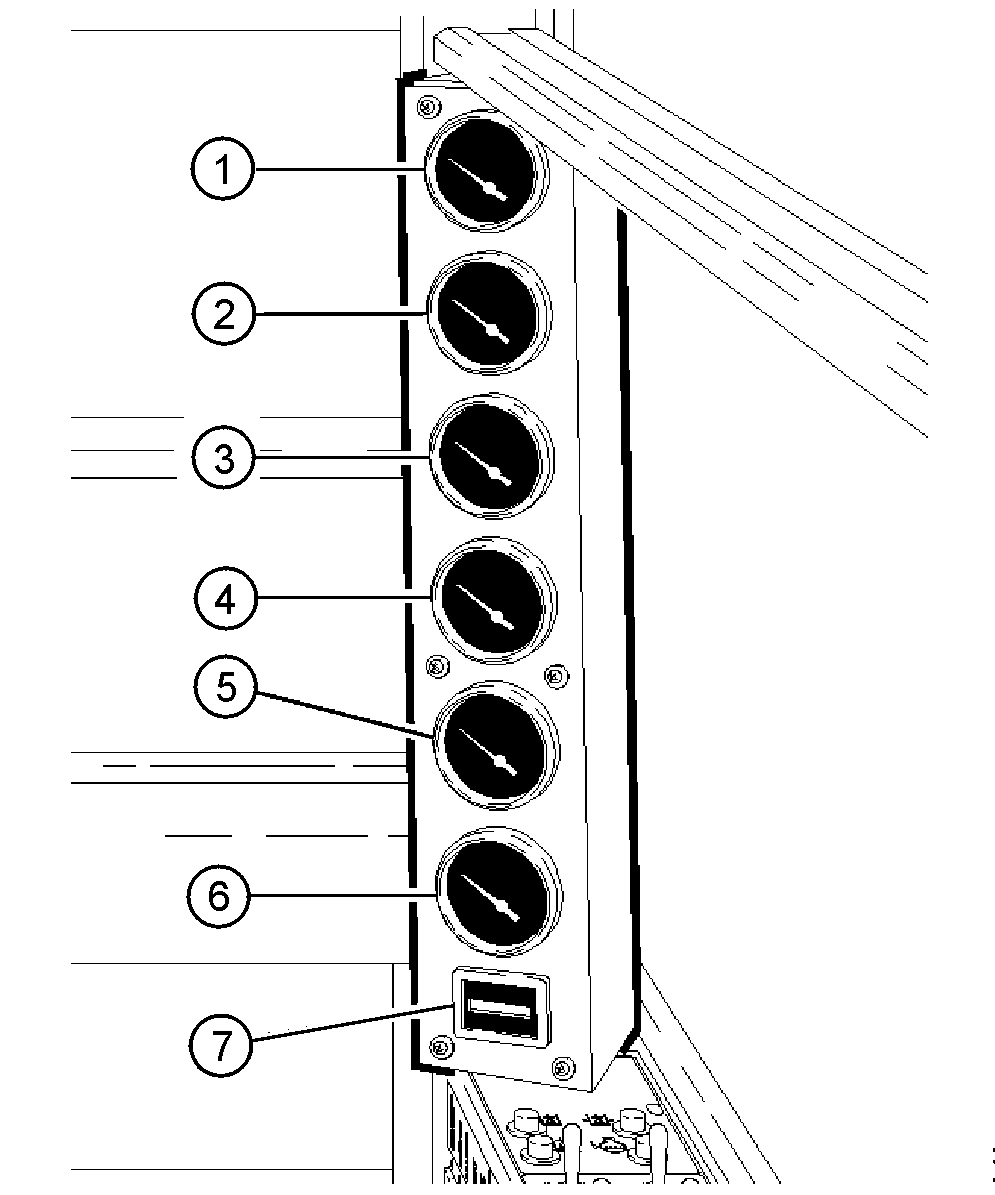
Check Gauges |
|
|||||||
- - -1/1 |
|
LOOK: The gauge should indicate normal alternator output a few seconds after the engine starts. Normal voltage range is 25 - 28 volts. Check the Fuel Gauge. LOOK: The gauge should indicate fuel level corresponding to the level known to be in the tank. Check Hourmeter. LOOK: The hourmeter should be moving, indicating the number of hours the engine has operated. Since the hourmeter registers tenths of an hour, the indicator will move slowly. After checking the gauges, shut off the engine. |
OK: Gauges are OK. NOT OK: Contact authorized dealer to service any malfunctioning gauge or sensing circuit. IF OK: Go on to next check. |
-19- -1/1 |
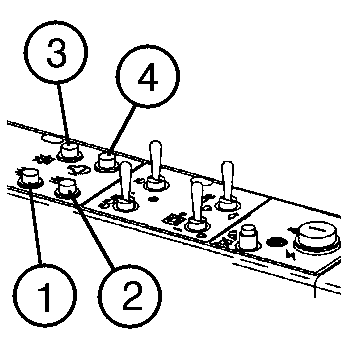
Check Horn Override and Lamp Test Switch |
|
OK: Horn Override and Lamp Test Switch and warning lights bulbs are OK. NOT OK: Replace bulbs. If problem persists, contact authorized dealer to service the warning lights circuits. IF OK: Go on to next check. |
|||

- - -1/1 |
Check Warning Lights |
|
OK: Warning lights are OK. NOT OK: If any warning light is lit, shut off the engine and do not operate the machine until the problem has been remedied. If problem persists, contact authorized dealer for service. Contact authorized dealer to service the warning lights circuits. IF OK: Go on to next check. |
|||
- - -1/1 |
2 Driving Controls
- - -1/1 |
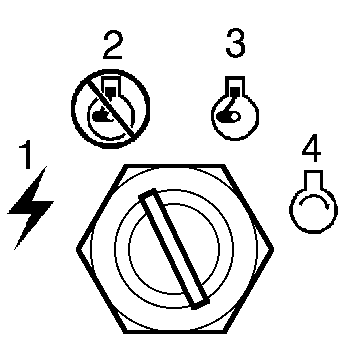
Check Ignition Key Switch |
|
OK: Ignition Key Switch is OK. NOT OK: Contact authorized dealer to service the Ignition Key Switch. IF OK: Go on to next check. |
|||
- - -1/1 |
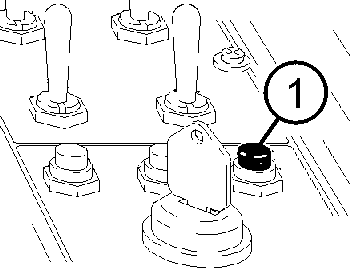
Check Travel Alarm and Override |
|
|||
- - -1/1 |
3 Hydraulic Functions
- - -1/1 |
Check Pilot Hydraulic Circuit and Reset SwitchStart engine. Lower left armrest. Pilot Reset switch OFF. LOOK: Pilot hydraulics should be disabled; hydraulic functions should not operate. The amber indicator light on the console should not be lit. Pilot Reset Switch ON. LOOK: Pilot hydraulics should be enabled; hydraulic functions should operate. The amber indicator light on the console should be lit. Raise left armrest. LOOK: Pilot hydraulics should be disabled; hydraulic functions should not operate. The amber indicator light on the console should not be lit. Lower left armrest. LOOK: Pilot hydraulics should be disabled; hydraulic functions should not operate. The amber indicator light on the console should not be lit. Press Pilot Reset switch OFF then ON. LOOK: Pilot hydraulics should be enabled; hydraulic functions should operate. The amber indicator light on the console should be lit. After check, shut off engine. Pilot Hydraulic Circuit and Reset Switch are OK. Contact authorized dealer to service Pilot Hydraulic Circuit and Reset Switch. Go on to next check. |
- - -1/1 |
Check Swing Brake ControlStart engine. Swing Brake Control ON. Move the left joystick side to side to operate the turntable swing function. LOOK: Swing Brake should be engaged. Turntable should not rotate. Swing Brake Control OFF. Move the left joystick side to side to operate the turntable swing function. LOOK: Swing Brake should be disengaged. Turntable should rotate. After check, shut off engine. Swing Brake Control is OK. Contact authorized dealer to service swing brake control. Go on to next check. |
- - -1/1 |
Check Left Joystick Stick Boom FunctionStart engine. Move the left joystick forward away from the operator. LOOK: Stick boom should move OUT. Move the left joystick back towards the operator. LOOK: Stick boom should move IN. NOTE: Hydraulic functions should operate promptly and smoothly and stop when the control is released. NOTE: After checks are completed, shut off the engine. Left Joystick Stick Boom Function is OK. Contact authorized dealer for service. Go on to next check. |
- - -1/1 |
Check Left Joystick Turntable Swing FunctionStart engine. Move the left joystick to the left away from the operator. LOOK: Turntable should swing left. Move the left joystick to the right towards the operator. LOOK: Turntable should swing right. NOTE: Hydraulic functions should operate promptly and smoothly and stop when the control is released. NOTE: After checks are completed, shut off the engine. Left Joystick Turntable Swing Function is OK. Contact authorized dealer for service. Go on to next check. |
- - -1/1 |
Check Left Joystick Lower (Accumulating) Clamps Open/Close FunctionStart engine. Press the right thumb button on the left joystick. LOOK: Lower (accumulating) clamps should close. Press the left thumb button on the left joystick. LOOK: Lower (accumulating) clamps should open. NOTE: Hydraulic functions should operate promptly and smoothly and stop when the control is released. NOTE: After checks are completed, shut off the engine. Left Joystick Lower (Accumulating) Clamps Open/Close Function is OK. Contact authorized dealer for service. Go on to next check. |
- - -1/1 |
Check Left Joystick Wrist Tilt Left FunctionStart engine. Press the finger switch on the left joystick. LOOK: Felling head should tilt left. NOTE: Hydraulic functions should operate promptly and smoothly and stop when the control is released. NOTE: After checks are completed, shut off the engine. Left Joystick Wrist Tilt Left Function is OK. Contact authorized dealer for service. Go on to next check. |
- - -1/1 |
Check Right Joystick Hoist Boom FunctionStart engine. Move the right joystick forward away from the operator. LOOK: Hoist boom should move OUT. Move the right joystick back toward the operator. LOOK: Hoist boom should move IN. NOTE: Hydraulic functions should operate promptly and smoothly and stop when the control is released. NOTE: After checks are completed, shut off the engine. Right Joystick Hoist Boom Function is OK. Contact authorized dealer for service. Go on to next check. |
- - -1/1 |
Check Right Joystick Felling Head Tilt FunctionStart engine. Move the right joystick left towards the operator. LOOK: Felling head should tilt IN. Move the right joystick right away from the operator. LOOK: Felling head should tilt IN. NOTE: Hydraulic functions should operate promptly and smoothly and stop when the control is released. NOTE: After checks are completed, shut off the engine. Right Joystick Felling Head Tilt Function is OK. Contact authorized dealer for service. Go on to next check. |
- - -1/1 |
Check Right Joystick Upper (Harvesting) Clamps Open/Close FunctionStart engine. Press the left thumb button on the right joystick. LOOK: Upper (harvesting) clamps should close. Press the right thumb button on the right joystick. LOOK: Upper (harvesting) clamps should open. NOTE: Hydraulic functions should operate promptly and smoothly and stop when the control is released. NOTE: After checks are completed, shut off the engine. Right Joystick Upper (Harvesting) Clamps Open/Close Function is OK. Contact authorized dealer for service. Go on to next check. |
- - -1/1 |
Check Right Joystick Wrist Tilt Right FunctionStart engine. Press the finger switch on the right joystick. LOOK: Felling head should tilt right. NOTE: Hydraulic functions should operate promptly and smoothly and stop when the control is released. NOTE: After checks are completed, shut off the engine. Right Joystick Wrist Tilt Right Function is OK. Contact authorized dealer for service. Go on to next check. |
- - -1/1 |
Check Saw Drive Control
Start engine. Press the Saw Drive Control to ON. LOOK: Disc saw blade should spin. Press the Saw Drive Control to OFF. LOOK: Disc saw blade should slow to a stop. NOTE: The Disc Saw Blade will continue to spin for several minutes after being turned off. When it is necessary to stop the disc saw blade quickly, carefully lower the disc onto a stump. The disc saw blade can be brought to a stop in a matter of seconds. NOTE: After checks are completed, shut off the engine. Saw Drive Control is OK. Contact authorized dealer for service. Go on to next check. |
 CAUTION:
The disc stores inertia and does not stop immediately when it is turned OFF. When normal operations end, the saw disc should be switched OFF and lowered onto a stump to stop blade rotation. The saw must not be operated with personnel outside of the operators cab within 300 feet (100 meters) of the machine, unless the saw guard is in place.
CAUTION:
The disc stores inertia and does not stop immediately when it is turned OFF. When normal operations end, the saw disc should be switched OFF and lowered onto a stump to stop blade rotation. The saw must not be operated with personnel outside of the operators cab within 300 feet (100 meters) of the machine, unless the saw guard is in place.
- - -1/1 |
Check Disc Saw Drive LockoutNOTE: If for any reason the engine has stalled or is shut down and the saw drive switch was not turned OFF, both the saw drive switch and the pilot control valve switch must be moved to the OFF position to restart the engine. Once the engine has started, then move the pilot reset switch and the saw drive switch to the ON position to engage the saw drive. This lock-out feature prevents unintentional start-up of the saw drive when the engine is restarted. Start engine. Saw Drive Control to ON. LOOK: Disc Saw Blade should spin. Shut off engine. Attempt to re-start engine. LOOK: Engine should not start. Move the Saw Drive Control switch to OFF. Move the Pilot Reset switch to OFF. Attempt to re-start engine. LOOK: Engine should start normally. NOTE: After checks are completed, shut off the engine. Disc Saw Drive Lockout is OK. Contact authorized dealer for service. Go on to next check. |
- - -1/1 |
4 Undercarriage Checks
- - -1/1 |
Check TracksInspect tracks for unusual signs of wear, cracks and damage. Check for accumulation of dirt and debris. LOOK: Tracks should be in good condition. Tracks are OK. Remove dirt and debris. Contact authorized dealer to repair any damage to tracks. Go on to next check. |
- - -1/1 |
Track Sag CheckSwing upper structure to side and raise track off ground. Operate track in reverse three or four revolutions. Stop engine. Measure at middle track roller from bottom of rock guard to top surface of track shoe. Track sag specifications:
Specification
See Adjusting Track Sag in Maintenance-As Required chapter. |
- - -1/1 |
Roller and Idler Leakage CheckCheck rollers and idlers for oil leaks. Is oil leaking from rollers or idlers? Raise other side of machine and repeat checks. NOTE: Proper track adjustment is critical to get maximum wear life for track pins and bushings. Tight track increases stresses at the sprocket to bushing contact surfaces causing accelerated wear. Proper track adjustment can only be done with the tractor in its working environment. Packing conditions tighten track and accelerate pin and bushing wear. Go to next check. Go to your authorized dealer for repair if oil leakage is noted from idlers or rollers. |
- - -1/1 |
5 Cooling System Checks
- - -1/1 |
Coolant Hoses and Clamps CheckAre radiator and heater hoses free of twists, kinks, cracks, leaks or wear from rubbing on adjacent parts? Are hose clamps tight and installed correctly? Go to next check. Replace or untwist hoses as required. Tighten or reinstall hose clamps. |
- - -1/1 |
Water Pump CheckEngine stopped. Is coolant leaking from weep hole (A)? Go to next check. Seal (B) has failed. Replace seal or water pump. Go to your authorized dealer. |
- - -1/1 |
Fan Blades CheckAre fan blades bent or twisted? Are fan blades cracked or nicked? Go to next check. Replace fan. |
- - -1/1 |
Fan Shroud and Fan Guard CheckCheck clearance between fan and fan shroud. Is fan centered in shroud? Is guard free of damage? Are all mounting brackets and hardware tight? Go to next check. Adjust fan shroud if fan is not centered. Repair or replace guard. Tighten loose hardware. Replace fan shroud if needed. |
- - -1/1 |
Fan Belt and Air Conditioner Belt CheckAre fan belts free of oil or grease? Are inside surfaces of belts free of cracks or frayed edges. Are belts aligned with pulleys? Go to next check. Replace fan belts if oily, greasy, cracked or otherwise damaged. Repair or replace tightener if belts are loose. |
- - -1/1 |
Check Radiator, Oil Cooler, Condenser and PrescreenOpen radiator access door and check the radiator and prescreen. LOOK: Fins on the radiator, oil cooler and condenser should not be bent or blocked witch dirt and debris. Prescreen should be clean and in good condition. Radiator, oil cooler, condenser and prescreen are OK. Clean Radiator, oil cooler, condenser or prescreen. Contact authorized dealer to replace damaged equipment. Go on to next check. |
- - -1/1 |
6 Accessories
- - -1/1 |
Check AC/Heater Controls
Start engine. NOTE: The cab heater will not function unless the engine is operating at normal speed, providing heated coolant for the cab heater coil. The air conditioning will not function, unless the engine is running to operate the AC compressor. Turn the Fan Speed Switch through all four positions.
Fan Speed Switch at HIGH. Air Conditioner Switch OFF. Pull up Heater Control Knob. FEEL: After a few minutes, warm air should flow from the cab vents. Fan Speed Switch at HIGH. Push down Heater Control Knob. Air Conditioner Switch ON. FEEL: After a few minutes, cool air should flow from the cab vents. After the checks: AC/Heater Controls are OK Contact authorized dealer for service. Go on to next check. |
- - -1/1 |
Check Forward HornIgnition Key Switch to Position 3 (RUN). Press Horn Button.
Horn OK. Contact authorized dealer for service. Go on to next check. |
- - -1/1 |
Check Seat BeltInspect the seat belt. LOOK/FEEL: The seat belt must not show signs of fraying or wear. The buckle and retractor must operate smoothly. Fasteners should be tight. NOTE: The seat belt must be replaced every three years from the date on the decal. Seat belt is OK. Tighten fasteners. Replace entire seat belt assembly. Go on to next check. |
- - -1/1 |
Check Fire ExtinguisherCheck the fire extinguisher. LOOK: Fire extinguisher must be present and charged. Mounting bracket must hold fire extinguisher securely. Fire extinguisher is OK. Replace missing fire extinguisher. Refer to Fire Extinguisher manufacturer's recommendation for charging. Go on to next check. |
- - -1/1 |
Check Fire Suppression System Time DelayNOTE: The Fire Suppression System is an option which may not be installed on all machines. Refer to the Fire Suppression System manufacturer's manual to check the system or set the time delay. Fire Suppression System Time Delay Contact Fire Suppression System manufacturer for servicing. Checks complete. |
- - -1/1 |