Check and Adjust Wheel Bearing Play
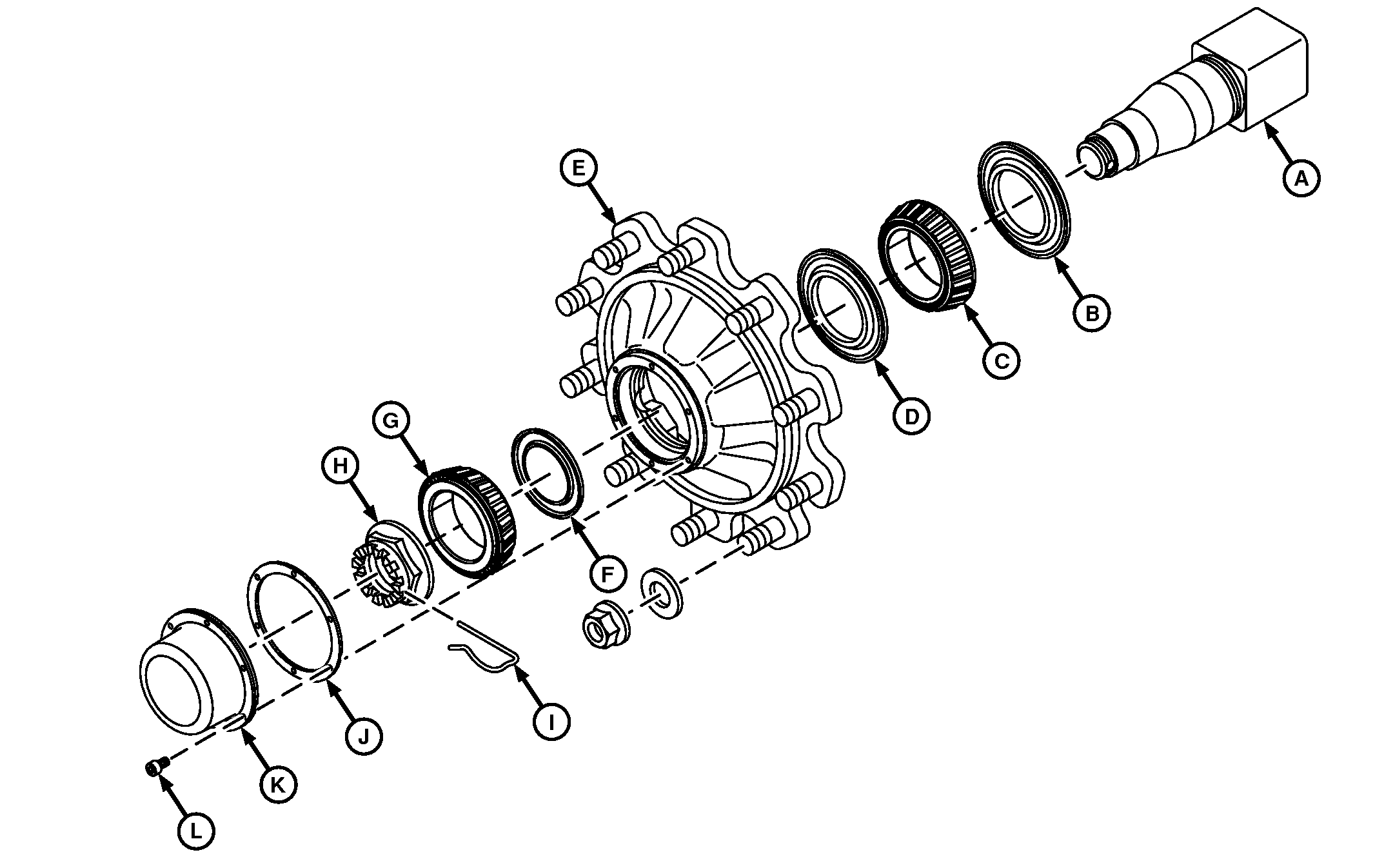
E73118-UN-27FEB14
A - Spindle
B - Seal
C - Bearing Cone
D - Grease Retaining Plate
E - Hub
F - Seal
G - Bearing Cone
H - Castellated Nut
I - Locking Pin
J - Seal
K - Hubcap
L - Socket Head Cap Screws
Wheel bearings are subject to wear and lifetime depends on operating conditions:
- Load
- Speed
- Lubrication
- Adjustment
Check Wheel Bearing Play
-
If bearings are damaged or worn, bearings and seals must be replaced.
Chock wheels and raise wheel off ground using a suitable jack.
-
Rotate wheel at a slow speed in both directions to check for rough points or friction.
-
Rotate wheel at a high speed and check for unusual noises, grating, or grinding.
-
Verify that play does not come from suspension or steering axle kingpin, if equipped.
It may be necessary to use a pry bar for larger wheels between tire and ground to check for play.
Grip wheel at top and bottom and check for play in bearings by tilting wheel.
-
If play is detected, proceed to Adjusting Wheel Bearings.
Adjusting Wheel Bearings
-
After checking for bearing play, lower wheel until tire contacts ground.
-
Loosen wheel nuts.
-
Using a suitable jack, raise machine and support axle using a suitable jack stand on a firm surface.
-
Chock wheels and remove wheel from machine.
-
Remove hubcap (K).
-
Remove locking pin (I) from castellated nut (H).
-
When castellated nut is tightened fully, technician should feel resistance in hub rotation.
Tighten castellated nut until internal play is removed.
-
Loosen castellated nut (B) until there is no longer friction between castellated nut and outer bearing (G).
-
Align notches in castellated nut with hole in spindle and install locking pin (I).
-
Avoid over tightening hub and having too much preload on bearings. It is best to have a hub that is too loose instead of being too tight.
Check that hub rotates more freely with little resistance.
-
Install hubcap (K) and wheel. (See Remove and Install Wheels in this section.)
|
SF04007,0000A2D-19-20160104 |