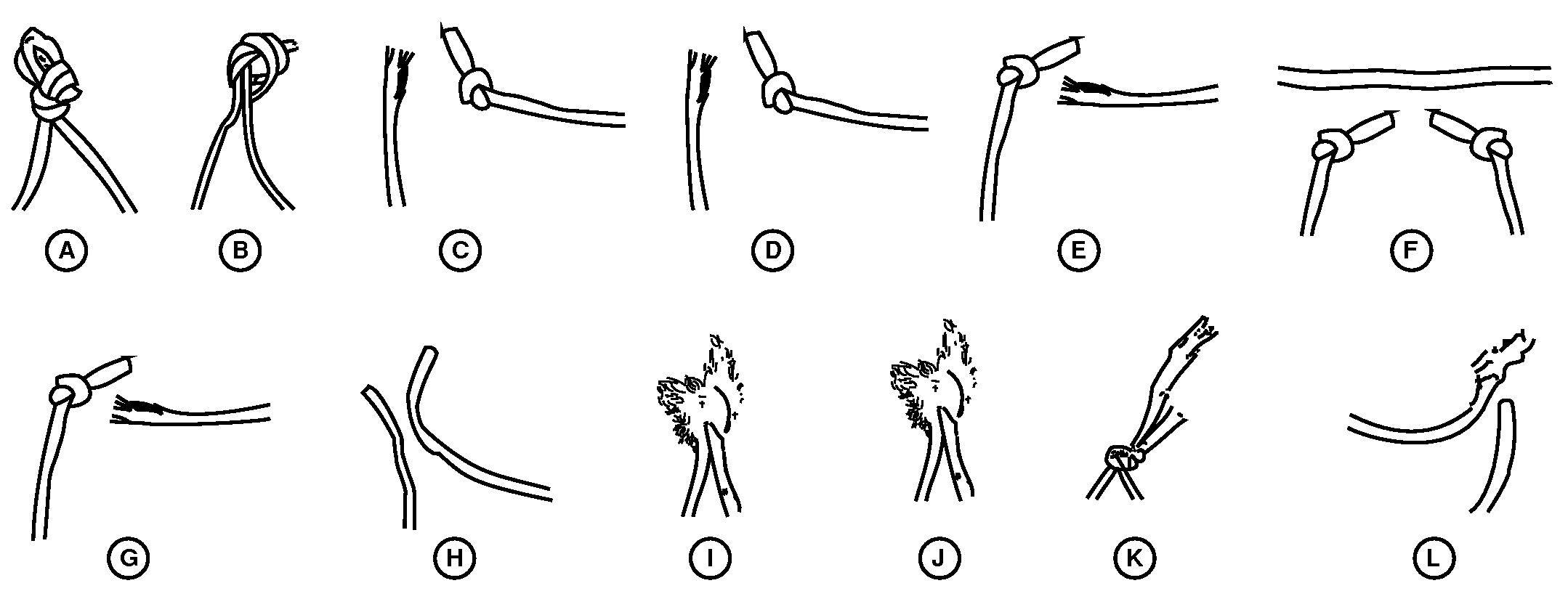
Knotter Difficulties
E77641-UN-18NOV14
A - Both Twine Ends are Doubled Back Through the Knot
B - Short Twine Ends, Knot Pulls Apart (Typically Second Knot)
C - Knot in the Upper Twine, Only the First Knot
D - Knot in the Upper Twine, Only the Second Knot
E - Knot in the Upper Twine, Only the Second Knot
F - Only the Lower Twines Have Knots, the Upper Twine is Not Cut Between Bales (Upper Twine Around Two Bales)
G - Knot at the End of One Twine and No Knot at the End of the Other Twine on all 6 Knotters
H - No Knots in the Twine at all, on all 6 Knotters
I - Frayed Knot
J - Ends of the Twine are Frayed
K - Twine Ends are Not Even
L - Twine is Broken at the Base of the Knot
|
Problem |
Cause |
Solution |
|---|---|---|
|
Knotters |
||
|
Twine breaks. |
Density pressure too high. |
Reduce density pressure. (See Operate the Baler section.) |
|
Twine inserted wrongly. |
Check twine routing. (See Prepare the Baler section.) |
|
|
Bad twine quality. |
Replace by better quality. (See Prepare the Baler section.) |
|
|
Contours along twine path not smooth. |
Smooth and clean. |
|
|
Twine tension set too high. |
Adjust correctly. (See Prepare the Baler section.) |
|
|
Twine tangled in twine box. |
Check and disentangle. |
|
|
Bale chamber cut. |
Sharp surface or points in the bale chamber that cut or catch the twine. |
Remove sharp surfaces and points in the bale chamber. |
|
The knots stay too long on the billhook (billhook hangup). |
The tension of the twine brakes (upper or lower) is too low. |
Adjust the upper and lower twine brake. (See Adjust Twine Tension in Service section.) |
|
Roller of the stripper arm is worn out or missing. |
Replace the roller of the stripper arm. |
|
|
The stripper arm roller cam in the knotter disc is worn out or damaged. |
Replace the knotter disc. |
|
|
The stripper arm is not close enough to the billhook. |
Adjust the stripper arm:
When swinging up the knotter, a slight resistance has to be noticeable when the stripper arm passes over the knotter pen. |
|
|
The stripper arm does not travel far enough beyond the end of the billhook. |
Adjust the stripper arm, see above. |
|
|
Replace the roller on the stripper arm. (See Adjust Knotter in Service section.) |
||
|
A dull or damaged knotter knife. |
Sharpen the knotter knife, replace if necessary. |
|
|
Timing of the twine retainer is out. |
Adjustment twine retainer disc. (See Adjust Knotter in Service section.) |
|
|
Clamping force of the twine retainer is too low. |
Adjust the clamping force. (See Adjust Knotter in Service section.) |
|
|
A rough or worm out billhook. |
Replace the billhook if necessary |
|
|
The tension of the billhook tongue is too high. |
Adjust the tension of the billhook tongue. (See Adjust Knotter in Service section.) |
|
|
(A)—The twine ends of both twines are doubled back through the knot. |
The upper slack arm can not rotate freely. |
Check for any blockage and/or damage, remove the blockage and repair if necessary. |
|
The lower slack arm can not rotate freely |
||
|
The spring or other parts of the upper slack arm are broken or missing. |
Repair and or replace any broken or missing parts. |
|
|
The spring or other parts of the lower slack arm are broken or missing. |
||
|
The stripper arm does not travel far enough beyond the end of the billhook. |
Adjust the stripper arm, see above. |
|
|
Replace the roller on the stripper arm or the knotter disc. |
||
|
A dull or damaged knotter knife. |
Sharpen the knotter knife, replace if necessary |
|
|
Clamping force of the twine retainer is too low. |
Adjust the clamping force. (See Adjust Knotter in Service section.) |
|
|
(B)—Short twine ends, the knot pulls apart (typically second knot) |
The tension of the twine brakes (upper or lower) is too low. |
Adjust the upper and/or lower twine brake. |
|
The tension of the twine brakes (upper or lower) is too high. |
||
|
Clamping force of the twine retainer is too high. |
Adjust the clamping force. (See Adjust Twine Tension in Service section.) |
|
|
The tension of the billhook tongue is too low. |
Adjust the tension of the billhook tongue. (See Adjust Knotter in Service section.) |
|
|
(C)—Knot in the upper twine, only the first knot. |
The tucker finger did not grab the twine from the needle and moved to the correct position for tying. |
Adjust the tucker fingers. |
|
Tucker finger and/or the tucker finger shaft does not rotate freely. |
Check for any blockage and/or damage, remove the blockage and repair if necessary. |
|
|
The spring of the tucker finger cam is broken or does not give enough tension. |
Check the spring of the tucker finger cam and replace if necessary. |
|
|
(D)—Knot in the upper twine, only the second knot |
Lower twine not threaded correctly. |
Check the threading of the lower twine. |
|
The spring or other parts of the lower slack arm are broken or missing. |
Repair and or replace any broken or missing parts. |
|
|
The lower slack arm can not rotate freely |
Check for any blockage and/or damage, remove the blockage and repair if necessary. |
|
|
(E)—Knot in the lower twine, only the second knot |
Upper twine not threaded correctly. |
Check the threading of the upper twine. |
|
The needle is damaged or bend. |
Straighten the needle if possible or replace if necessary |
|
|
The upper slack arm can not rotate freely. |
Check for any blockage and/or damage, remove the blockage and repair if necessary. |
|
|
The spring or other parts of the upper slack arm are broken or missing. |
Repair and or replace any broken or missing parts. |
|
|
The tucker finger is not adjusted correctly to the twine placement arm. |
Adjust the tucker fingers. |
|
|
The tucker finger cam arm roller is broken or does not come in contact with the cam. |
Check the spring of the tucker finger cam and replace if necessary. |
|
|
Check the roller and replace if necessary |
||
|
(F)—Only the lower twines have knots, the upper twine is not cut between bales (upper twine around two bales). |
Needle and twine placement arm are out of alignment, causing the needle to miss the upper twine. |
Align the twine placement arm in respect to the needle. |
|
Twine wrapped on top of the billhook, the first and second knot are connected. |
The needle does not place both twines correctly in the twine disc. |
Adjust the needle. |
|
The twine is running off the right side of the roller of the twine placement arm. |
Check that the twine is on the roller, fix it if necessary. |
|
|
Needle and twine placement arm are out of alignment, causing the needle to miss the upper twine. |
Align the twine placement arm in respect to the needle. |
|
|
Twine wrapped on top of the billook on the second knot. |
The tension of the twine brakes (upper or lower) is too low. |
Adjust the upper and/or lower twine brake. |
|
The lower slack arm can not rotate freely. |
Check for any blockage and/or damage, remove the blockage and repair if necessary. |
|
|
The spring or other parts of the lower slack arm are broken or missing. |
Repair and or replace any broken or missing parts. |
|
|
Needle and twine placement arm are out of alignment, causing the needle to miss the upper twine. |
Align the twine placement arm in respect to the needle. |
|
|
The lower twine is over the roller of the billhook tongue (backside of the billhook) |
Bale density too low. |
Increase the density of the bale |
|
The tension of the twine brakes (upper or lower) is too low. |
Adjust the upper and lower twine brake. |
|
|
The knotter knife is not close enough to the billhook. |
Adjust the stripper arm:
When swinging up the knotter, a slight resistance has to be noticeable when the stripper arm passes over the knotter pen |
|
|
The stripper arm does not travel far enough beyond the end of the billhook. |
Adjust the stripper arm, see above. |
|
|
Replace the roller on the stripper arm. |
||
|
Timing of the twine retainer is out. |
Adjustment twine retainer disc. (See Adjust Knotter in Service section.) |
|
|
A rough or worm out billhook. |
Replace the billhook if necessary. |
|
|
Do a check that the path of the lower twine and correct if necessary. |
||
|
The tension of the billhook tongue is too high. |
Adjust the tension of the billhook tongue. |
|
|
(G)—A knot at the end of one twine and no knot at the end of the other twine on all 6 knotters. |
One or more tucker finger(s) is going over the center, this prevents all the tucker fingers from working correctly. |
Adjust the tucker fingers. |
|
Tucker finger and/or the tucker finger shaft does not rotate freely. |
Check for any blockage and/or damage, remove the blockage and repair if necessary. |
|
|
The spring of the tucker finger cam is broken or does not give enough tension. |
Check the spring of the tucker finger cam and replace if necessary. |
|
|
The tucker finger cam arm roller is broken or does not come in contact with the cam. |
Check the spring of the tucker finger cam and replace if necessary. |
|
|
Check the roller and replace if necessary |
||
|
(H)—No knots in the twine at all, on 6 knotters |
The routing of the twine (upper and lower) is not correct. |
Correct the routing of the twine (upper and lower). (See Install Twine in Prepare the Baler section.) |
|
Tucker finger does not work correctly. |
Check the working of the tucker finger, adjust if necessary. |
|
|
The tucker finger cam arm roller is broken or does not come in contact with the cam. |
Check the spring of the tucker finger cam and replace if necessary. |
|
|
Check the roller and replace if necessary |
||
|
Clamping force of the twine retainer is too high. |
Adjust the clamping force. Clamping force of twine retainer spring, see page 251. |
|
|
Timing of the twine retainer is out. |
Adjustment twine retainer disc. (See Adjust Knotter in Service section.) |
|
|
Twine is broken in the twine retainer. |
Check the twine retainer for twine, remove twine residues. |
|
|
The tension of the billhook tongue is too low. |
Adjust the tension of the billhook tongue. (See Adjust Knotter in Service section.) |
|
|
The billhook is damaged. |
Check the billhook, repair or replace the billhook if necessary. |
|
|
Billhook not rotating. |
Check the billhook gear, repair or replace if necessary. |
|
|
(I)—A frayed knot |
The tension of the twine brakes (upper or lower) is too high. |
Adjust the upper and lower twine brake. (See Adjust Knotter Shaft Brake in Service section.) |
|
A rough or worn stripper arm. |
Check the stripper arm, replace if necessary. |
|
|
A dull or damaged knotter knife. |
Sharpen the knotter knife, replace if necessary. |
|
|
Damaged twine retainer or clamping segment. |
Check the twine retainer and clamping segment, replace if necessary. |
|
|
A rough or worm out billhook. |
Replace the billhook if necessary. |
|
|
Do a check that the path of the lower twine and correct if necessary. |
||
|
(J)—The ends of the twine are frayed. |
The base of the knotter knife is holding the twines. |
Check the knotter knife, replace if necessary. |
|
A dull or damaged knotter knife. |
Sharpen the knotter knife, replace if necessary. |
|
|
(K)—The twine ends are not even |
A dull or damaged knotter knife. |
Sharpen the knotter knife, replace if necessary. |
|
Clamping force of the twine retainer is too low. |
Adjust the clamping force. (See Adjust Knotter in Service section.) |
|
|
(L)—The twine is broken at the base of the knot |
The density of the bale is too high. |
Decrease the density of the bale. |
|
The strength of the twine is not enough. |
Use a better quality of twine. Machine specifications. |
|
|
Twine not caught (although not frayed). |
Retainer discs do not catch the twine. |
Adjust needle height. Adjust groove of retaining discs and removers. |
|
After tying of bale: twine rupture upon ejection of the bale. |
Too high a crop moisture. |
Decrease baling density. (See Operate the Baler section.) |
|
Too high a baling pressure. |
Decrease baling pressure. (See Operate the Baler section.) |
|
|
Twine quality bad. |
Use better quality of twine. (See Prepare the Baler section.) |
|
|
Retaining discs disc tension too high. |
Decrease retaining discs tension. (See Service section.) |
|
|
The twine retainer leaves correct setting. |
The worm wheel slips on conical shaft seat; the hole is too wide. |
Replace worm wheel or shaft. |
|
Stripper arm |
||
|
Twine stays on bill hook. |
Wear of control roller or control comb. |
Exchange stripper arm. |
|
Bend stripper arm. |
||
|
Bearings in pivot point at stripper arm. |
||
|
SF04007,0000A42-19-20160104 |