Adjust Gauge Wheels
Gauge wheels must be positioned so the pickup is as high as possible, but still allow the pickup teeth to clean the field adequately. Operating with pickup teeth contacting the ground causes pickup damage.
Pickup gauge wheels are optional on a regular pickup.
Three factors determine the adjustment for gauge wheels:
- Tractor drawbar height
- Wheel spindle position
- Baler tire size
- See ADJUST BALER HITCH in Preparing the Baler section.
If any one of these factors change, adjust gauge wheels.
Position gauge wheels to operate pickup teeth as high as possible and clean field adequately.
-
Park the baler on a level surface. Baler hitch height must match the drawbar height of the tractor used for baling.
-
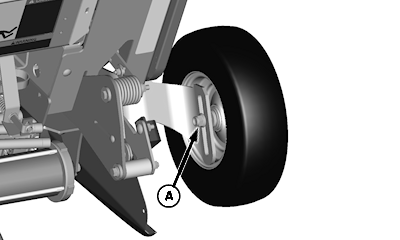
E61044-UN-13MAR12A - Lock Nut
Loosen lock nut (A) and raise wheel to top of slot. Tighten lock nut. Repeat on the opposite side. -
Distance between the gauge wheel and ground must always be equal to or less than the distance between the pickup teeth and the ground. Incorrect distance and the gauge wheels do not protect the pickup.
Adjust pickup until pickup teeth have a minimum of 25 mm (1 in) ground clearance.
-
Loosen lock nut (A) and lower wheel until it contacts the ground. Tighten lock nut (A). Repeat on the opposite side. (The field conditions determine any final adjustments necessary.)
-
Pickup float springs must be adjusted after gauge wheels are installed.
For initial float spring setting with gauge wheels installed, see Adjust Pickup Float in Service—Baler section. If excessive bouncing of the pickup occurs, decrease float spring force as needed.
|
SF04007,0000E88-19-20170420 |