Baling Wet Hay

E32161-UN-12SEP88
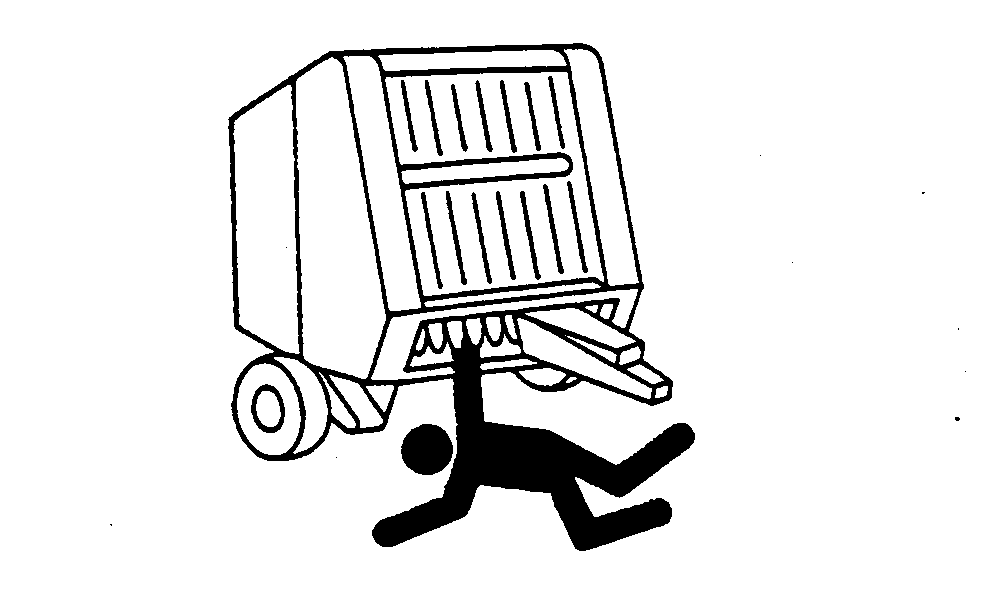
Do not attempt to feed crop or twine into baler or unplug feed area while baler is running. The baler feeds material faster than you can release it.
Disengage PTO and shut off engine.
If bales fail to start rotating due to windrows being wet on the bottom, try the following suggestions:
-
Check pickup belt tension and condition. (See ADJUSTING PICKUP DRIVE BELT IDLER in Service—Baler section.)
-
Increase feed opening by:
- Lowering pickup as low as practical.
- Adjust compressor rack assembly as high as possible without compressor rods interfering with twine arm. (See ADJUSTING COMPRESSOR RACK ASSEMBLY in this section.)
-
Select a gear which will give a 6—8 km/h (4—5 mph) forward travel speed at rated PTO speed.
-
Reduce tractor engine speed to low idle (900—1200 rpm) while starting.
-
Approach windrow with crop centered on pickup to reduce plugging at crop dividers. Do not cut across the windrow.
-
Travel forward at least 3 m (10 ft) without stopping to allow enough crop into the baler to start rolling.
-
Resume rated PTO speed.
-
Be sure the tractor drawbar pin or hitch parts are not dragging and bunching the windrow. Use drawbar shielding as necessary. (See USING DRAWBAR SHIELD in Preparing the Tractor section.)
-
Surface moisture on bottom of windrow causes crop to slip more easily against forming belts. Turn windrows with a rake or tedder to improve bale starts.
|
OUO6078,00000DF-19-20080612 |