Positioning Switch
|
|
|
|
|
|
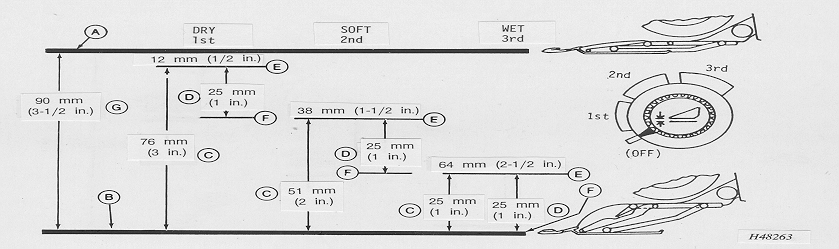
The curved sheet between cutterbar and platform bottom operates as a leaf spring, supporting weight of cutterbar. As cutterbar is raised within its float range, tension is relieved from plate making cutterbar heavier and causing a greater ground force. Dry ground conditions require a heavier ground force while soft or wet conditions require less ground force. The first switch position provides highest ground force and second and third positions provide less and less force. The position of the DIAL-A-MATIC ™ selector switch, determines where in the float range, the raise and lower signals occur. There is a fixed deadband of 25 mm (1-in.) between raise (E) and lower (F) signals in all three positions. The cutterbar can float within this deadband without generating a raise or lower signal. |
If any one of the cutterbar sections is raised above (E) , the system will give a raise signal. All of the cutterbar sections must lower below (F) before the system gives a lower signal. Since the ground is not uniform, some of the cutterbar sections will float to the bottom of range (C) while other sections are operating between (E) and (F). Use first position whenever possible since this position gives the maximum use of the float range (closest cut) and best feeding (sheet is flattest and cutterbar is closer to reel in this position). If platform pushes dirt or material at center or right-hand end, move switch to second or third position. If pushing starts at left-hand end, adjust cutterbar case spring. (See Adjusting Cutterbar Drive Case Support Spring.) |
|
DIAL-A-MATIC is a trademark of Deere & Company. | 900CP,FPA,J -19-18AUG97-1/1 |