Exhaust Filter System
Your machine is equipped with an emission compliant engine that cleans and filters the exhaust. Under normal operation this system is automatic and requires no operator interaction. Please read this entire section to understand where and when operator interaction may be required.
There are things the operator can do to avoid unnecessary buildup of diesel particulates or soot in the exhaust filter system;
- Avoid unnecessary idling
- Operate engine at a higher rpm
- Use proper engine oil. (See Fuels, Lubricants, and Coolants section for recommendations.)
- Use only ultra low sulfur fuel. (See Fuels, Lubricants, and Coolants section for recommendations.)
- Only inhibit (disable) the exhaust filter cleaning system when absolutely necessary. (See Inhibit/Enable Exhaust Filter Cleaning System in this section.)
N88699-UN-18AUG10
N88700-UN-18AUG10
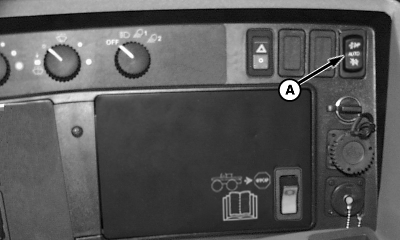
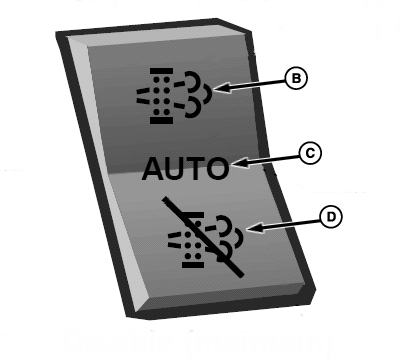
A - Exhaust Aftertreatment (EAT) Switch
B - “Request” Position
C - “Auto” Position
D - “Disable” Position
The cleaning mode for the exhaust filter is controlled by the three position Exhaust Aftertreatment (EAT) switch (A).- The top position (B) is the “Request” position and is used to request a parked filter cleaning.
- The middle position (C) is the “Auto” position which will allow filter cleaning to occur automatically.
- The bottom position (D) is the “Disable” position which will prevent filter cleaning from occurring.
Auto Cleaning Mode
 CAUTION: Servicing machine or attachments during exhaust filter
cleaning can result in serious personal injury. Avoid exposure and
skin contact with hot exhaust gases and components.
CAUTION: Servicing machine or attachments during exhaust filter
cleaning can result in serious personal injury. Avoid exposure and
skin contact with hot exhaust gases and components.
IMPORTANT: During exhaust filter cleaning operation, the engine may operate at elevated idle.
N88704-UN-20AUG10
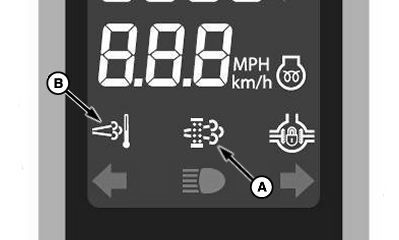
Corner Post Display Indicators
A - Exhaust Filter Indicator
B - High exhaust system temperature (HEST) indicator
“Auto” Mode allows the Exhaust Filter System to intelligently perform exhaust filter cleaning as required. When the system determines that buildup in the exhaust filter requires cleaning during normal operation of the machine, Exhaust Filter indicator (A) will light informing the operator that an active cleaning of the filter is in process. High exhaust system temperature (HEST) indicator (B) will light and the operator may notice a small amount of white smoke from the exhaust pipe. No operator interaction is required during this process, continue operating the machine normally. Once process is completed, indicator lights will go out.Disable Cleaning Mode
CAUTION: To prevent fires, be sure to routinely clear any combustible
materials (crop debris, animal nests, etc.) from the area of the engine
and exhaust filter. Exhaust filter cleaning uses extremely high temperature
that can ignite dry residue.
N88703-UN-20AUG10
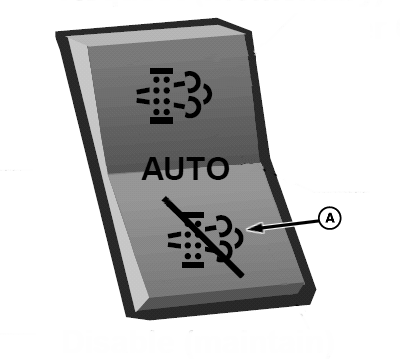
Exhaust Aftertreatment (EAT) Switch
A - “Disable” Position
If your machine must be used for tasks around materials not suited for the higher temperatures created by active filter cleaning, the system can be temporarily inhibited (disabled) by selecting the “Disable” position on the EAT switch.Be sure to enable the system as soon as possible to avoid soot buildup in the filter.
If the system determines there is excessive buildup in the exhaust filter due excessive idling or having the system in “Disable” mode for an extended period, exhaust filter indicator will light informing the operator that an active cleaning is required and to place the system in the “Auto” mode and operate the machine in a normal fashion. High exhaust system temperature (HEST) indicator will light and the operator may notice a small amount of white smoke from the exhaust pipe. No operator interaction is required during this process, continue operating the machine normally. Once filter has returned to an acceptable level indicator lights will go out.
IMPORTANT: If operator disregards indicators and continues to operate machine without allowing an active cleaning, engine performance will be reduced. Immediately allow an active filter cleaning to return engine back to original parameters. If engine will not return to original parameters after performing an active cleaning, a parked exhaust cleaning procedure must be performed.
Request (Parked) Cleaning Mode
CAUTION:
N88704-UN-20AUG10
N88705-UN-20AUG10
High Exhaust System Temperature (HEST) Indicator
A - Exhaust Filter Indicator
B - High exhaust system temperature (HEST) indicator
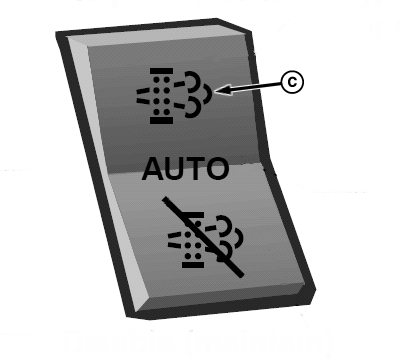
C - “Request” Position
Servicing machine or attachments during exhaust filter cleaning can result in serious personal injury. Avoid exposure and skin contact with hot exhaust gases and components.During Auto or Parked (stationary) exhaust filter cleaning operations, the engine will run at elevated idle and hot temperatures for approximately 30 minutes. Exhaust gases and exhaust filter components reach temperatures hot enough to burn people, ignite, or melt common materials.
Request mode is used if engine will not return to original parameters after performing an “Auto” mode cleaning. Exhaust Filter indicator (A) will flash meaning that the soot level is high and a “Request” (Parked) filter cleaning procedure is required soon.
N91922-UN-05APR11
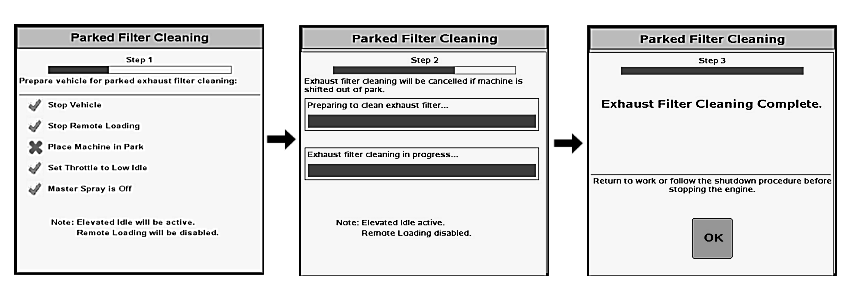
Select the “Request” position (C) on the EAT switch. Follow instructions on display.
Engine rpm will increase and an automatic process for cleaning the filter will begin. At any time during the parked procedure, the process can be canceled by advancing the throttle, engaging transmission, or stopping the engine. Stopping is not recommended.
Once the cleaning process has completed, engine rpm will return to idle and exhaust indicator lights will go out.
Machine can now be returned to normal operation. If you are not returning the machine to service immediately after the procedure, allow engine time to return to normal operating temperature before stopping engine.
|
OUO6092,0000565-19-20110405 |