Solution System
N98845-UN-18JUN13
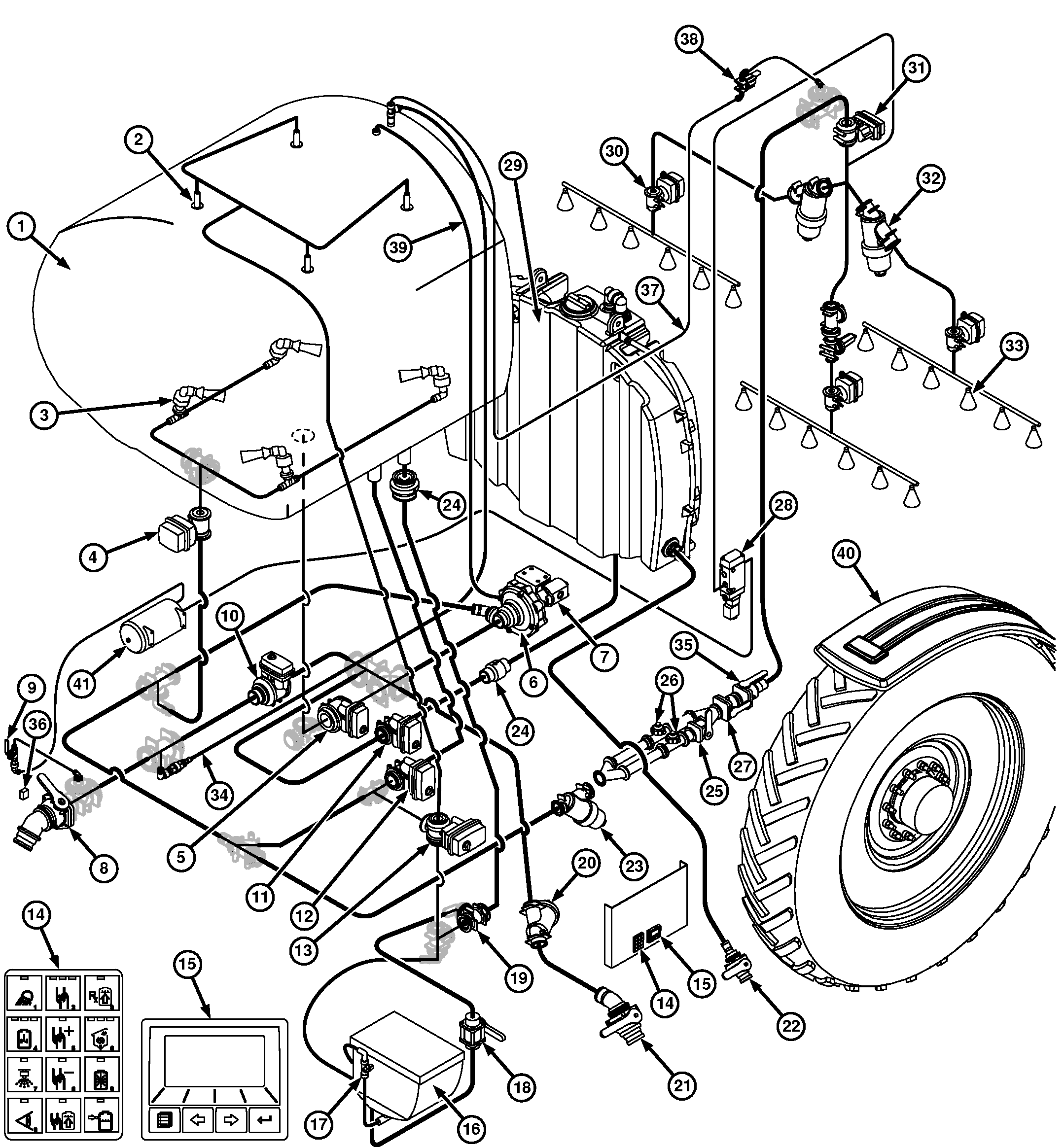
R4030 and R4038 Solution Command System
N107968-UN-17DEC13
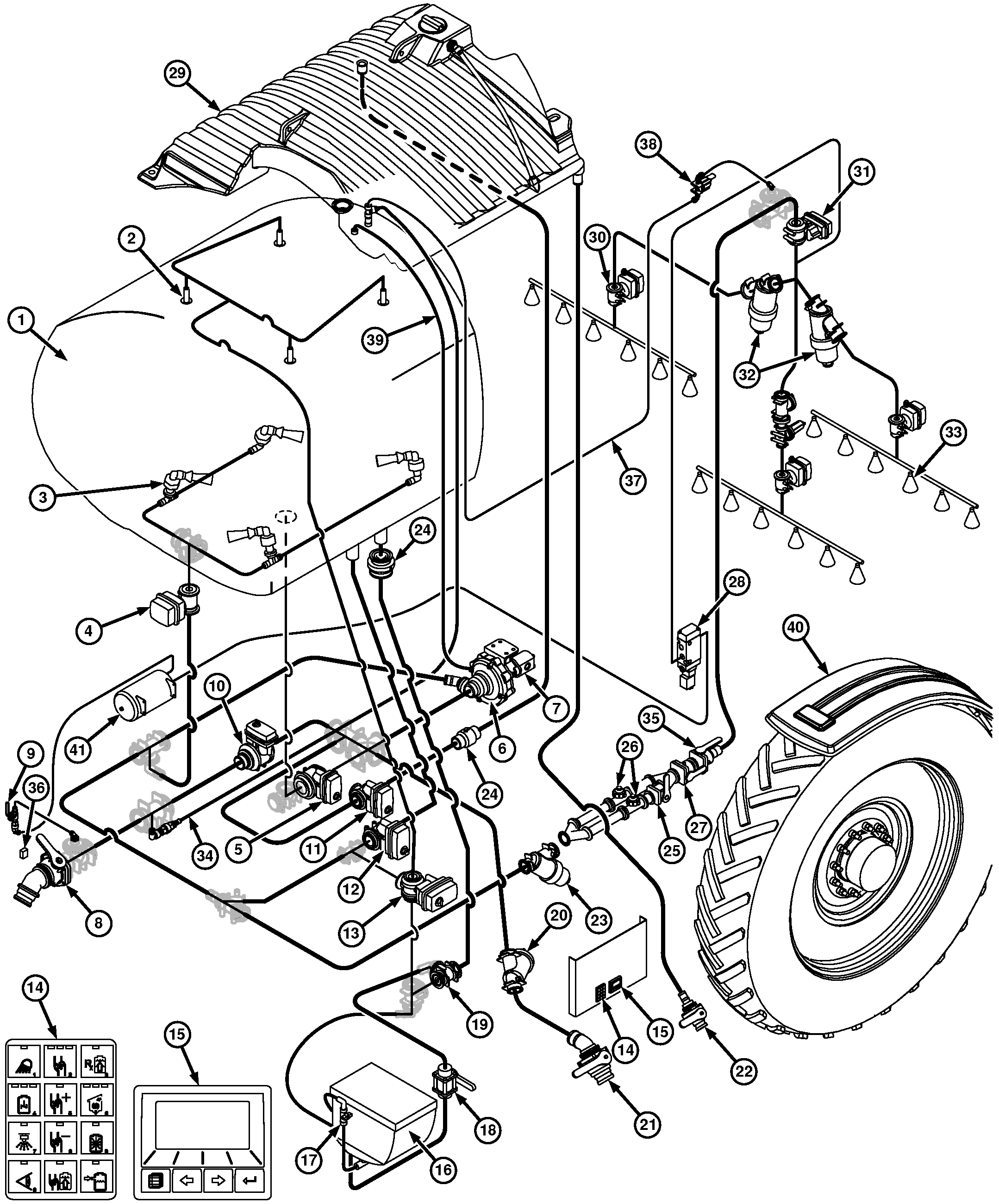
R4045 Solution Command System
1 - Solution Tank
2 - Solution Tank Rinse Nozzle
3 - Solution Tank Agitation Nozzle
4 - Agitation Valve
5 - Solution Tank Sump Valve
6 - Centrifugal Pump
7 - Hydraulic Motor
8 - Front Quik-Fill™ Valve
9 - Front Fill Air Purge Valve
10 - Front Fill Isolation Valve
11 - Rinse Tank Sump Valve
12 - Bypass Valve
13 - Eductor/Tank Rinse Valve
14 - Solution Command Keypad
15 - Solution Command Micro Display
16 - Eductor Hopper
17 - Eductor Hopper Rinse Valve
18 - Eductor Hopper Sump Valve
19 - Eductor Venturi
20 - Suction Strainer (20 Mesh)
21 - Side Quik-Fill™ Valve
22 - Rinse Tank Quik-Fill™ Valve
23 - Pressure Strainer (50 Mesh)
24 - Check Valve
25 - High Flow Valve
26 - Solution Flowmeter
27 - Orifice Valve
28 - Boom Air Purge Valve
29 - Rinse Tank
30 - Spray Section Valve
31 - Boom Isolation Valve
32 - Boom Strainer (80 Mesh)
33 - Spray Nozzle
34 - Front Fill Air Purge Bleed Line
35 - Flowmeter Shutoff Valve
36 - Front Fill Switch
37 - Boom Air Bleed Line
38 - Boom Air Bleed Valve
39 - Solution Pump Bleed Line
40 - Wheel Speed Sensor
41 - Air Tank
System Components
The R4030 solution tank is made from polyethylene or stainless steel (optional), and has a capacity of 3,028 L (800 gal.). The R4038 solution tanks are stainless steel and have a capacity of 3,785 L (1000 gal.). An access/fill cap is located at the top of the tank. The R4045 solution tanks are stainless steel and have a capacity of 4,542 L (1200 gal.). An access/fill cap is located at the top of the tank. On the left-hand side of the machine is a clear tube and graduated scale that indicates solution level in liters and gallons. Located at the bottom of the tank is the solution tank sump valve (5).
The solution tank sump valve allows the solution tank to be drained out the side quick-fill valve (21) and supplies the centrifugal pump (6) with solution fluid. The suction strainer located in the side fill line is constructed of a noncorrosive material that should be cleaned as required. The solution pump (6) is a centrifugal type that is driven by a hydraulic motor (7). Engagement and disengagement of the pump is controlled by a button located on the CommandARM armrest or at the load station key pad (14). Any air trapped in the pump is allowed to escape through the solution pump bleed line (39). This helps prevent pump cavitation.
A pressure strainer (23) is located in the chassis pressure supply line before the solution flowmeter(s) (26). The pressure strainer removes sediment before it reaches flowmeter and boom valves.
An orifice valve (27) is located on the chassis immediately after the flowmeter(s) (26). It is used to improve control of the spray rate control system when smaller nozzles are used. The valve is set in the ON (High flow) position for medium to high flow rates and in the OFF (Low flow) position for lower flow rates. (See decal for settings.) Immediately following the orifice valve (27) is the flowmeter shutoff valve (35) that can be closed to allow servicing of the pressure strainer (23) and flowmeter(s) (26).
A high flow valve (25) (optional) is used with a high flow solution system for flows above 341 Lpm (90 gpm). This system includes a second flowmeter which can be included in the SprayStar rate control through the GS3 display in the operator station cab. For flows less than this, the high flow valve (25) should be shut off and the high flow (dual flowmeter) option should be shut off in the display.
Agitation nozzles (3) are in four locations on the bottom of the tank. The nozzles create a vigorous fan-type agitation throughout the tank to keep chemicals, such as wettable powders, in suspension. The agitation valve (4) controls the agitation flow and has three settings (1- 3). These three settings can be selected by the operator through the display located in the operator station cab. The agitation valve (4) can be opened by a button located on the load station keypad and by a button on the CommandARM armrest in the operator station cab.
The tank rinse nozzle/eductor valve (13) does one of two things:
- Directs solution fluid to the tank rinse nozzles at the top of the solution tank (1).
- Directs solution fluid to the eductor venturi (19).
The eductor venturi (19) creates a vacuum to pull the chemical in the eductor hopper (16) into the solution stream. The eductor hopper rinse valve (17) directs water to the hopper rinse nozzles. The eductor hopper suction valve (18) allows chemical to be drawn from the bottom of the eductor hopper (16) to the solution tank (1).
Tank rinse nozzles (2) in the solution tank (1) are used during a rinse cycle to clean the inside walls of the tank.
Check valves (24) are used in the system to prevent solution from flowing in the wrong direction.
Spray section valves (30) are open/close electric actuated valves that are enabled/disabled by buttons on the CommandARM Side Console.
The spray nozzles (33), located on the center frame and boom, meter, atomize and dispense the solution into specific patterns. Solution flow is metered by the size of the orifice in the nozzle tip. Within limits, solution flow through a nozzle can be increased or decreased by adjusting system pressure.
Most nozzles are designed for optimum performance at specific pressures. However, the range of adjustment is relatively narrow. Line pressures too high or too low will affect atomizing the solution and create variations in the spray pattern. The solution atomizes when the liquid is forced through the orifice in the nozzle. The shape of the spray pattern is determined by the shape of the orifice.
The rinse tank (29) can be loaded with clean water through the rinse tank quick-fill valve (22) for rinsing the solution system.
System Operation
When the pump is activated, solution is drawn from the solution tank (1) through the solution tank sump valve (5). The pump pushes the solution through the pressure strainer (23) and flowmeter(s) (26) to the spray control valves, and to the agitation circuit through the agitation valve (4).
When the spray control valves are open, the solution flows to the nozzles, where it is atomized and sprayed.
The flowmeter(s) (26) on the chassis send the flow rate information to the Spray Rate Controller (SRC), which compares that signal to the operator-programmed application rate. If there is a difference in the signal from the flowmeter(s) and the programmed rate, the compensator in the proportional valve assembly will open or close as needed until the system is stabilized and within the tolerance band of the targeted application rate.
When the compensator opens, more hydraulic oil is sent to the hydraulic motor, causing the solution pump to increase its flow. When the compensator closes, less hydraulic oil is sent to the hydraulic motor, causing the solution pump to decrease its flow.
The Spray Rate Controller (SRC) provides the ability to maintain application within a tolerance range of application rates while changing speeds. Application rate consistency depends on a number of things such as nozzle tip size, target application rate, and rate of speed change. The SRC provides quick response, but some differences in application rates can be observed if the operator makes rapid speed changes or operates at the extremes of the solution system’s capacity.
Key inputs to the SRC used for rate control include wheel speed sensor(s), solution pump speed sensor, solution pump outlet pressure sensor, flowmeter(s), and a boom pressure sensor. The SRC has an internal warning system that alerts the operator if the actual flow varies outside of the tolerance band with the target application rate. The SRC system is a volume-regulating system, so pressures displayed on the secondary user interface display may vary at a given ground speed.
The solution pressure required for a given application rate is determined by speed and nozzle tip size. Before attempting to use the SRC, refer to a nozzle tip calculator or nozzle tip selection charts, and make sure the spray boom is equipped with spray tip nozzles that will provide desired application rates at desired pressures and speeds. Then, make sure to go through the spray setup on the display and input the nozzle tips being used. The display will provide feedback on the tip selected for the application rate targeted.
The master spray ON/OFF button located on the multifunction control handle (MFCH) and the solution command station keypad (14) is an integral part of the SRC system. When “off” is selected, electrical power closes the boom valves and the variable solution pump slows to maintain spray-off pressure (as set by the operator in the spray setup).
Solution may continue to spray from the boom for a short period of time after master “off” is selected. This is due to pressure remaining in the line. Purging air out of boom lines will greatly improve response times. The time interval that spray will continue flowing depends upon pressure in the spray line, boom hose lengths and routings, the volume of air in boom, nozzle tip size, and use of nozzle check valves. In order to compensate for the boom shutoff lag time, master “off” should be selected prior to reaching the end row.
When master “on” has been selected, the variable solution pump will maintain the minimum solution pressure as set by the operator if the machine is moving slowly or is not moving. This may result in an application rate that is higher than the target application rate. Likewise, if the machine is moving too fast, the variable solution pump will maintain the maximum solution pressure. This may result in an application rate that is lower than the target application rate.
|
Quik-Fill is a trademark of Deere & Company Quik-Fill is a trademark of Deere & Company Quik-Fill is a trademark of Deere & Company |
CS12167,00004FB-19-20140320 |