Set Up Nurse Vehicle Plumbing
NOTE: Picture illustrates nurse tank setup example with maximum recommended requirements for optimal performance.
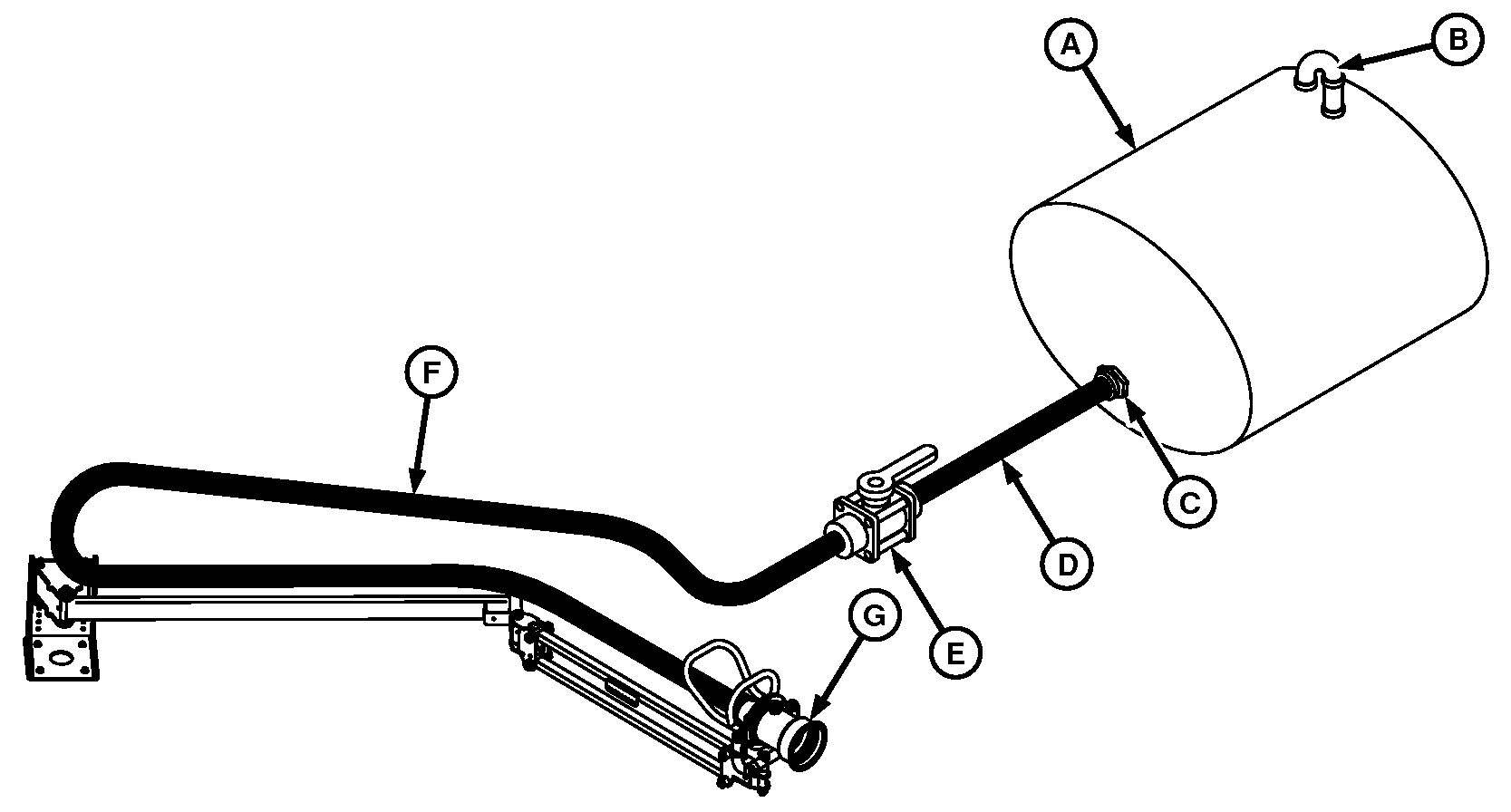
N87548-UN-11JAN10
A - Nurse Tank
B - Nurse Tank Vent
C - Nurse Tank Outlet
D - Hose
E - Shut-off Valve
F - Hose
G - Nurse Arm Coupler
Nurse vehicle plumbing should not include more than one 102 mm (4 in.) full port shut-off (ball) valve, no more than 9.14 m (30 ft) of hose (D and F) between nurse arm coupler (G) and nurse tank outlet (C), and vertical distance between nurse tank fluid level and sprayer coupler should not exceed 914 mm (3 ft). Additional fittings will reduce performance and increase fill times.If customer installs additional plumbing and accepts reduced performance, see GUIDELINES FOR NURSE VEHICLE PLUMBING in following section.
Requirements for tank venting:
Inadequate venting can cause nurse tank collapse or slow fill time.
- Use 51 mm (2 in.) diameter or larger vent (B). 76 mm (3 in.) vent may result in better performance.
- If using a restrictive vent (example: labyrinth or check valve style), consider multiple or larger-size vents.
Requirements for nurse arm hose:
Customer is responsible for purchasing nurse arm hose and clamps. Nurse arm and coupler are designed for 102 mm (4 in.) hose. It is strongly recommended that John Deere-approved hose (PM180HR400) and hose clamps (AN306648) be used as they meet system requirements. Any alternative hose must meet following requirements:
- Minimum bend radius: 152 mm (6 in.)
- Minimum vacuum rating: 29 in./Hg
- Minimum pressure rating: 41.37 kPa (0.41 bar) (30 psi)
- Smooth wall inner bore
- Compatible with agriculture chemicals and fertilizer
IMPORTANT: Debris may cause system damage, leaks, or reduced performance. Filtering sprayer solution with size 16 mesh strainer or finer is recommended. Filter before or while filling nurse tank. Do not filter between nurse tank and nurse arm coupler. Nurse arm filtration will result in debris buildup and reduced performance.
Shut-off valve is recommended in flow path between nurse tank outlet and nurse arm coupler. Shut-off valve MUST be closed when filling nurse tank.
Do NOT pressurize system beyond rating of hose and components or damage could occur.
Guidelines for Nurse Vehicle Plumbing:
IMPORTANT:
N84437-UN-23APR09
N84018-UN-23APR09
N84020-UN-23APR09
N84019-UN-22APR09
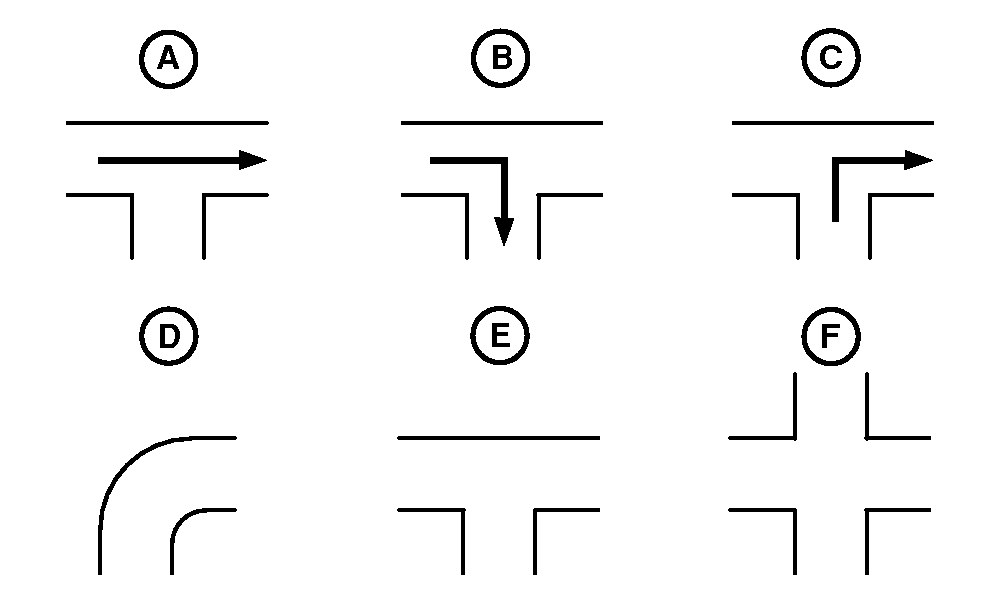
A - Straight Flow Path
B - Turn in Flow Path
C - Turn in Flow Path
D - Elbow Fitting
E - Tee Fitting
F - Cross Fitting
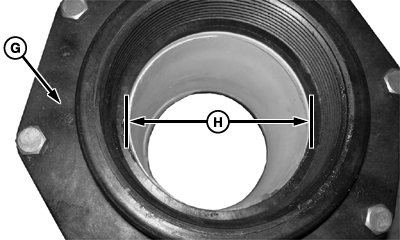
G - 2-Way Ball Valve
H - Diameter
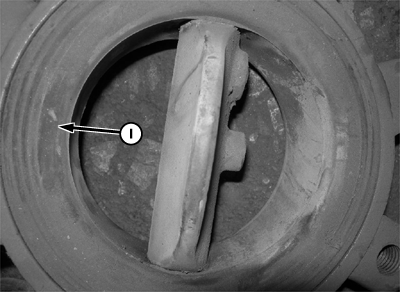
I - Butterfly Valve
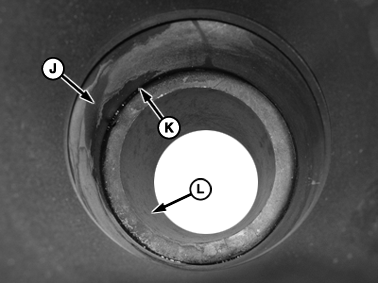
J - Inside of Hose
K - Transition Point
L - Inside of Fitting
Load Command system is sensitive to flow path restrictions between nurse tank and nurse arm coupler. Restrictions could result in slower fill times and reduced performance. Use the following recommendations when plumbing coupler to tank.- Keep straight flow through tee and cross fittings (A). Avoid turns (B and C) in flow path.
- Swept fittings are preferred over fittings with sharp internal corners. Minimize amount of elbow (D), tee (E), and cross (F) fittings used.
- Do not use strainers and check valves.
- Do not use 3-way, angle, or globe shut-off valves or any valves that don’t have a straight flow path through them.
- 2-Way ball valves (G) are recommended as long as they maintain full diameter (H) of plumbing, such as 102 mm (4 in.).
- Butterfly valves (I) are more restrictive than ball valves and should be larger in size than feed line.
- Hose inside (J) should be smooth. Do not use hoses with ribs on inside.
- Minimize number of transition points (K), such as hose barbs, union, nipple, or reducer fittings. Avoid fittings (L) with large wall thickness at transition points. Metal fittings will usually be thinner than plastic.
- Operating multiple supply lines in parallel at the same time can reduce restrictions.
Verify plumbing joints do not leak. Air leaks during filling will result in reduced performance. Coat threads of plumbing joints with PM37397 Pipe Sealant with TEFLON® or equivalent to prevent leaks.
If multiple tanks are plumbed together they must have minimum of 102 mm (4 in.) plumbing and must be open to nurse arm at same time during fill to reduce restrictions. Using 102 mm (4 in.) or larger plumbing will also reduce restrictions and improve performance.
|
TEFLON is a trademark of Du Pont Co. |
OUO6092,000038E-19-20100520 |