Solution System
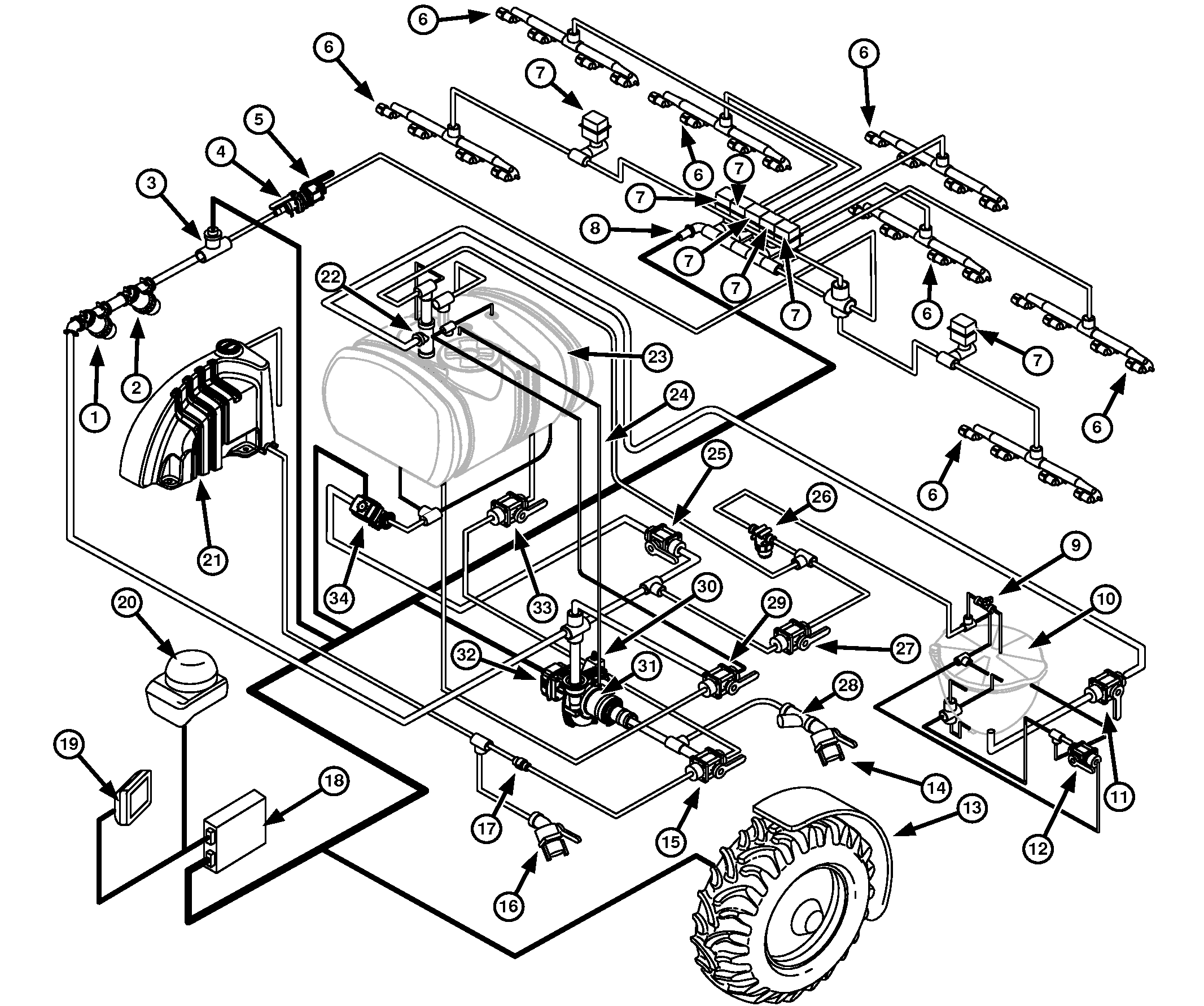
BM018101-UN-24SEP18
1 - Solution Strainer (50 Mesh)
2 - Solution Strainer (80 Mesh)
3 - Solution Flowmeter
4 - Orifice Valve
5 - Spray Boom Shutoff Valve
6 - Spray Nozzles
7 - Spray Boom Section Shutoff Valves
8 - Pressure Transducer
9 - Eductor Cover Valve
10 - Eductor Hopper
11 - Eductor Hopper Valve
12 - Eductor Rinse Valve
13 - Wheel Speed Sensor (Left-hand Rear Wheel)
14 - Solution System Quick Fill™ Valve
15 - Suction Valve
16 - Rinse Tank Quick Fill™ Valve
17 - Check Valve
18 - Cab Control Unit (CCU)/Spray Rate Controller (SRC)
19 - SprayStar™ Display
20 - StarFire™ Receiver
21 - Rinse Tank
22 - Eductor Venturi
23 - Solution Tank
24 - Pump Bleed Line
25 - Agitation Flow Rate Valve
26 - Eductor Filter
27 - Eductor Flow Rate Valve
28 - Fill Strainer (16 Mesh)
29 - Pressure Bypass/Rinse Valve
30 - Proportional Valve
31 - Solution Pump
32 - Hydraulic Motor
33 - Shutoff/Solution Outlet Valve
34 - Agitation Solenoid Valve
System Components
Solution tank (23) is made from polyethylene and has a capacity of 2271 L (600 gal). An access/fill cap is at the top of the tank. At the side of the tank is a clear tube and graduated scale that indicates the solution level in liters and gallons. At the bottom of the tank is the shutoff/solution outlet valve (33).
The suction valve (15) has two functions:
- Directs solution from the solution tank (23) to the solution pump (31).
- Directs clean water from the rinse tank (21) to the solution pump (31).
The fill strainer (28) located in the fill line is constructed of a noncorrosive material that should be cleaned as required. The solution pump is a centrifugal type that is driven by hydraulic motor (32). The engagement and the disengagement of the pump is controlled by a switch on the side console. Any air trapped in the solution pump (31) is allowed to escape through the bleed line (24). This helps prevent pump cavitation.
Solution strainers (1) and (2) are located in the spray boom supply line before the solution flowmeter (3). The strainers remove sediment before it reaches flowmeter (3), orifice valve (4), and spray boom shutoff valve (5).
The spray boom shutoff valve (5) can be closed to aid in cleaning the solution strainers (1) and (2), and the flowmeter (3).
The orifice valve (4) is located in the spray boom supply line. It is used to improve the control of the spray rate control system when smaller nozzles are used. The valve is set in open position for medium to high flow rates and in closed position for a flow rate of 100 L/min (26 gal/min) or less.
Agitation jets are in four locations on the bottom of the tank. The jet creates a vigorous fan type agitation throughout the tank to keep chemicals, such as wettable powders, in suspension. The agitation flow rate valve (25) is located under the left-hand side of the machine near the solution pump and can be adjusted to attain the desired agitation effect. The agitation solenoid valve (34), controlled by a switch on the console, can be used to turn the agitation on and off.
Pressure bypass/rinse valve (29) does one of three things:
- Directs rinse water to the tank rinse nozzles.
- Directs water or solution directly to the tank when filling sprayer with the solution pump.
- Stops solution from flowing to the solution tank (23) or tank rinse balls when spraying.
The eductor flow rate valve (27) directs fill water through an eductor venturi (22) at the top of the solution tank (23) to create a vacuum to pull the chemical into the water stream. The eductor rinse valve (12) directs water to the hopper rinse and to the jug rinse. The eductor hopper valve (11) allows chemical to be drawn from bottom of the eductor to the top of the solution tank (23).
Check valves (17) are used in the system to prevent solution from flowing in wrong direction.
Spray boom section shutoff valves (7) are motorized ball valves that cycle open or closed. The valves switches are on the operator's side console.
The spray nozzles (6) measure, atomize and dispense the solution into specific patterns. Solution flow is metered by the size of the orifice in the nozzle tip. Within limits, solution flow through a nozzle can be increased or decreased by adjusting system pressure.
Most nozzles are designed for optimum performance at specific pressures. However, the range of adjustment is relatively narrow. Line pressures too high or too low effect atomize the solution and create variations in the spray pattern. The solution atomizes when the liquid is forced through the orifice in the nozzle. The shape of the spray pattern is determined by the shape of the orifice.
The rinse tank (21) can be loaded with clean water for rinsing the solution system.
System Operation
When the pump is activated, solution is drawn from the solution tank (23), through the suction valve (15). The pump pushes the solution through the solution strainers (1) and (2), and through the flowmeter (3) to the orifice valve (4) and the spray boom shutoff valves (5), and to the agitation flow rate valve (25) for agitation.
When the spray boom section shutoff valves (7) are open, the solution flows to the spray nozzles (6), where it is atomized and sprayed.
The flowmeter (3) in the spray boom supply line sends an electronic signal to the CCU/SRC (18), which compares that signal with the operator-programmed application rate. If there is a difference in the signal from the flowmeter and the programmed rate, the compensators in the proportional valve (30) open or close as needed until the system is stabilized at the target rate.
When the compensator opens, more hydraulic oil is sent to the hydraulic motor (32), causing the solution pump to increase the flow. When the compensator closes, less hydraulic oil is sent to the hydraulic motor (32), causing the solution pump to decrease the flow.
The Spray Rate Controller (SRC) (18) provides the ability to maintain application within a range of application rates while changing speeds. Application rate consistency depends on a number of things such as nozzle tip size, application rate, and rate of speed change. The Spray Rate Controller (SRC) (18) provides quick response, but some differences in application rates can be observed if the operator makes rapid speed changes or operates at the extremes of the solution pressure range.
Principle part of the Spray Rate Controller (SRC) system are a wheel speed sensor (13) on the left-hand side front wheel motor or a radar speed sensor (if equipped) at the front of the machine, the spray rate control unit (18), a variable speed solution pump (31), flowmeter (3), and a solution pressure transducer (8). The speed sensor and the flowmeter provide speed and flow rate information to the spray rate control unit. The spray rate control unit provides target (programmed by the operator) application rates by analyzing speed and flow data, and then making appropriate adjustments to the variable solution pump.
The StarFire™ receiver (20) is a global satellite navigation system with field compensation that can be used to estimate the speed.
The spray rate control unit is part of the Chassis Computer Unit/Spray Rate Control Unit (CCU/SRC) (18) located under the left-hand side console cover, inside the cab. The spray rate control unit has an internal warning system that alerts the operator if the actual flow rate varies from the programmed flow rate by 20% of actual or more for 10 seconds. The Spray Rate Controller (SRC) system is a volume-regulating system, so pressures displayed on the SprayStar™ display (19) may vary at a given ground speed.
The solution pressure required for a given application rate is determined by speed and nozzle tip size. Before attempting to use the SRC, refer to a nozzle tip calculator or nozzle tip selection charts, and make sure that the spray boom is equipped with spray tip nozzles that provide desired application rates at desired pressures and speeds. Ground speed variation is limited by the operating pressure range of the nozzle tips.
The spray system master button on the multi-function lever is a part of the SRC system. When off, electrical power closes the spray boom section shutoff valves and the variable solution pump slows to maintain spray-off pressure (as set by the operator).
Solution may continue to spray from the spray boom for a short time after spray system master button is activated. This is due to pressure remaining in the line. The time interval that spray continues flowing depends upon the pressure in the spray line, spray boom hose lengths and routings, nozzle tip size, and use of nozzle check valves. In order to compensate for the spray boom shutoff lag time, spray system master button should be pressed to reach the turn row.
Once spray system master button was pressed, if the machine is moving slowly or is not moving, the variable solution pump maintains the minimum solution pressure configured by the operator. This may result in an application rate that is higher than the target rate (programmed by the operator). Likewise, if the machine is moving too fast, the variable solution pump maintains the maximum solution pressure. This may result in an application rate that is lower than the target rate.
|
Quick Fill is a trademark of Deere & Company SprayStar is a trademark of Deere & Company StarFire is a trademark of Deere & Company |
ER40675,0000EBB-19-20191025 |