Operating Drawbar Hitch (If Equipped)
 CAUTION: Avoid Injury! Use only the drawbar that was provided
with the machine. Do not install or use any other type drawbar.
CAUTION: Avoid Injury! Use only the drawbar that was provided
with the machine. Do not install or use any other type drawbar.
To avoid rearward upset, all towed loads must be attached to the drawbar, not just to the center link or draft arms.
IMPORTANT: Avoid damage! Maximum static vertical load on drawbar not to exceed maximum recommendations. Drive slowly with heavy loads.
Maximum Drawbar Loads
Certain heavy equipment such as a loaded single-axle trailer can place excessive strain on the drawbar. Strain is greatly increased by speed and rough ground. Do not exceed the maximum static vertical loads on drawbar, see Specifications section.
Adjusting Drawbar Length
IMPORTANT: Avoid damage! For drawn PTO-driven implements, the drawbar must be in the operating position.
The drawbar is equipped with an adjusting hole for changing drawbar length.
-
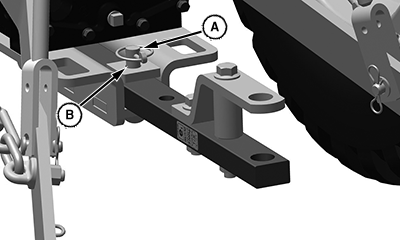
LV25674-UN-30JUN16A - Lock Pin
B - Drilled Pin
Remove lock pin (A) and drilled pin (B). - Adjust drawbar to one of the operating position.
- Install drilled pin (B) up from bottom of tractor. Secure with lock pin (A).
Towing Loads
CAUTION: Avoid injury! Stopping distance increases with speed
and weight of towed load, and on slopes. Towed loads, with or without
brakes, that are too heavy for the machine or are towed too fast can
cause loss of control. Consider the weight of the equipment and its
load.
Ensure that load does not exceed recommended weight. The machine must be heavy, and powerful enough with adequate braking power for the towed load. Use additional caution and reduce speed when towing loads under adverse surface conditions, when turning, and on inclines.
- Refer to the Specification section for towing specifications.
- Hitch the towed load only to the drawbar. Lock the drawbar and pin in place.
- Install a safety chain to the machine drawbar support and to the towed load. Provide only enough slack to permit turning.
- When towing a load and descending a hill, make sure the speed is low enough to control machine without having to use the brake pedal.
Using Safety Chain
CAUTION: Avoid injury! Hitch towed loads only to the drawbar
to avoid rearward upset. Do not use the safety chain for towing loads.
IMPORTANT: Avoid damages! Secure the towed load to the drawbar. The safety chain is designed to help control the towed load in case of separation from the drawbar.
Use a chain with a strength rating greater than the gross weight of the towed load.
Replace the safety chain if one or more links or fittings are broken, stretched, or otherwise damaged or deformed.
Do not use an intermediate support as the primary attaching point.
-
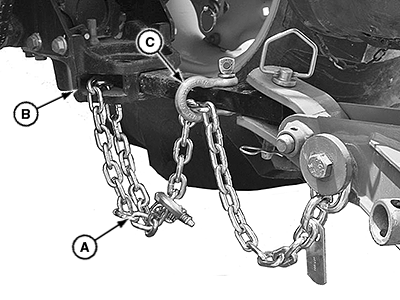
LV17806-UN-15MAY13A - Safety Chain
B - Attachment Point
C - Intermediate Support
Attach safety chain (A) to attachment point (B) and to towed load. Provide only enough slack to permit turning. - Install additional intermediate support point (C) for chain on drawbar to reduce slack in chain when necessary.
- Remove safety chain and store when not in use.
|
UP00731,000025A-19-20160926 |