Using Dual Selective Control Valve Lever—If Equipped
 Avoid injury! Overheated hydraulic oil can cause personal
injury and component malfunctions. To prevent hydraulic oil from overheating,
DO NOT hold multi-function control lever in operating position for
an extended period of time.
Avoid injury! Overheated hydraulic oil can cause personal
injury and component malfunctions. To prevent hydraulic oil from overheating,
DO NOT hold multi-function control lever in operating position for
an extended period of time.
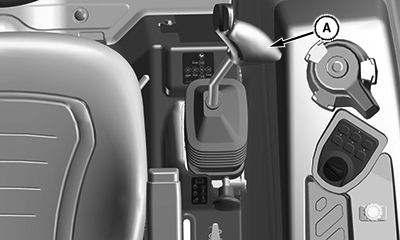
LV28320-UN-11MAY17
Open Operator Station Shown; Cab is Similar
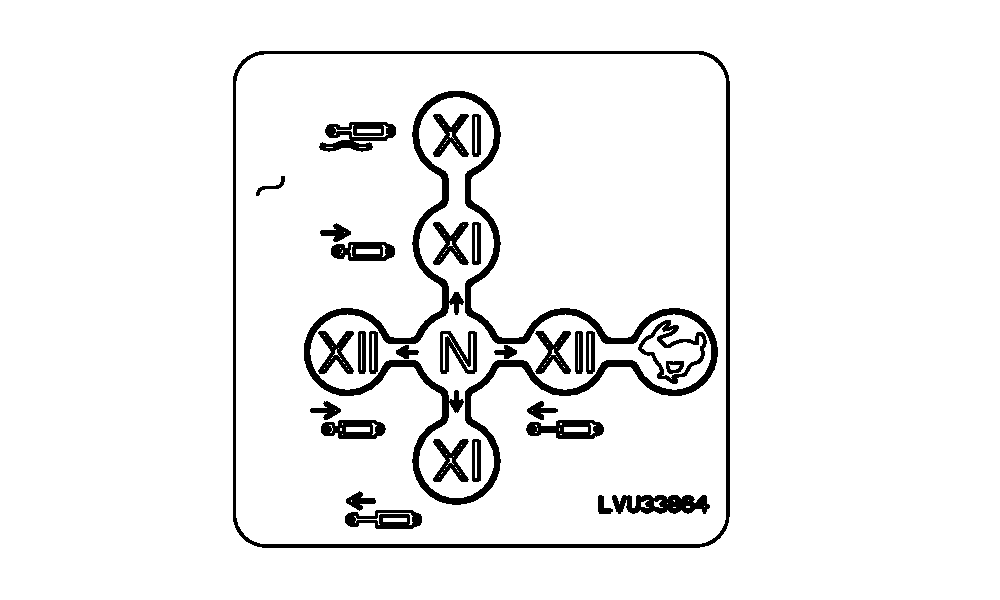
LV28324-UN-11MAY17
Control Valve Label
A - Dual Selective Control Valve (SCV) Lever
Dual selective control valve (SCV) lever (A) controls any hydraulically driven device connected to mid selective control valve (SCV), most commonly a loader.The label installed on the machine next to the dual selective control valve (SCV) lever shows the different lever positions.
Lever positions numbered 1—4 on the label match hydraulic line couplers numbered 1—4 on the label installed on the machine near the couplers. Moving the lever to position 1 will supply fluid to coupler 1 and return fluid through coupler 2 and so forth.
|
Lever Position |
Function |
|---|---|
|
Forward |
Boom Lower |
|
Back |
Boom Raise |
|
Left |
Bucket Roll (Curl) |
|
Right |
Bucket Tilt (Dump) |
Move the lever to the full right or “regen” position for faster loader bucket dumping.
Move the lever to the full forward or “float” position to allow the bucket to follow the contour of the ground. The lever may be left in the “float” position.
Selective Control Valve (SCV) Lever Lock—Open Operator Station
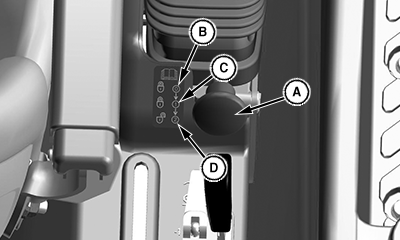
LV28322-UN-11MAY17
A - Selective Control Valve (SCV) Lever Lock
B - 0 Position
C - 1 Position
D - 2 Position
To prevent loader movement, engage selective control
valve (SCV) lever lock (A) before dismounting tractor. Selective control
valve lever must be in center (neutral) position for lock to engage.
Selective control valve (SCV) lever lock does not lock out switch-operated third-function hydraulics, which are active anytime the key is ON.
Selective control valve (SCV) lever lock (A) allows the operator to control the type of dual SCV lever movement needed for a particular operation or situation. Operation of the SCV lever lock is indicated on SCV lever lock label.
• To prohibit movement of SCV lever in all directions, move SCV lever lock in to the 0 position (B). Operation of the SCV is totally locked.
• To prohibit engagement of the REGEN (regeneration) function of the SCV, pull lever lock to the middle or 1 position (C). This will lock out the loader bucket function. REGEN can cannot be used for hydraulic motors, and it will always cause a cylinder to extend regardless of connections. REGEN is intended to increase bucket dump speed and eliminate cavitation in bucket cylinders.
• To allow movement of SCV lever in all directions, move SCV lever lock to the 2 position (D). Operation of the SCV is totally unlocked.
Selective Control Valve (SCV) Lever Lock—Cab
Selective control valve (SCV) lever lock (A) allows the operator to control the type of dual SCV lever movement needed for a particular operation or situation.
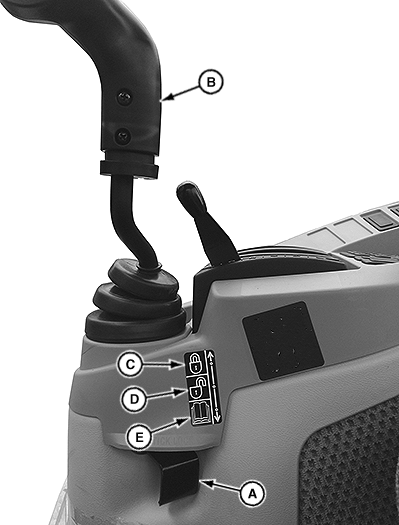
LV25543-UN-03JUN16
A - SCV Lever Lock
B - SCV Lever
C - In Position
D - Center Position
E - Out Position
• To prohibit movement of dual SCV lever in all directions, make sure SCV lever (B) is in center position, and press the SCV lever lock (A) to the in position (C). Operation of the dual SCV is totally locked.
• To allow movement of dual SCV lever in all directions, move SCV lever lock to the center position (D). Operation of the dual SCV is totally unlocked.
To prohibit engagement of the REGEN (regeneration) function of the SCV, pull lever lock to the full out position (E). This will lock out the loader bucket function. REGEN cannot be used for hydraulic motors, and it will always cause a cylinder to extend regardless of connections. REGEN is intended to increase bucket dump speed and eliminate cavitation in bucket cylinders.
After extended use, the dual SCV lever may require cable adjustment to lock out.
|
UP00731,0000304-19-20170511 |