Climbing Or Descending A Hill or Slope
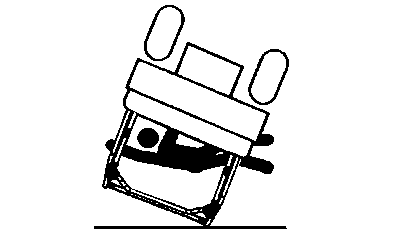
MXAL43279-UN-15MAR13
- Balance loads evenly and secure them. Braking could shift the load and affect vehicle stability.
- Sit on center of seat and keep both feet within foot platform.
- Never drive past the limit of visibility. Slow down near crest of hill until getting a clear view of the other side. Never go over the top of any hill at a high speed. An obstacle, sharp drop, another vehicle or person, could be on the other side of the hill.
- Keep front wheels straight at crest of hill or going over bumps.
- Do not stop or start suddenly when going uphill or downhill. Be especially cautious when changing direction on slopes.
- If vehicle stops or loses power going up a hill, lock park brake to hold vehicle on slope. Maintain direction of travel and release brake slowly. Back straight down hill slowly while maintaining control. Do not turn vehicle sideways. Vehicle is more stable in a straight forward or rearward position.
- Always use the brakes when going down a hill or slope, the utility vehicle can speed up (freewheel) going down a hill or slope.
- Always descend hill or slope at slow speeds and in a controlled manner.
- The vehicle has a limited amount of engine braking that can assist when going down a hill or slope, but it is highly recommended to remove foot from throttle pedal and to use service brakes during descent as well.
- If the vehicle is freewheeling (engine braking is not engaged), use the service brakes to slow vehicle travel. Do not reengage engine braking (do not depress the throttle pedal) when freewheeling as that may cause the vehicle to skid.
|
RH75544,0000169-19-20130408 |