Cleaning Engine Compartment
 CAUTION: Avoid injury! Touching hot surfaces can burn skin.
The engine, components, and fluids are hot if the engine has been
running. Allow the engine to cool before servicing or working near
the engine and components.
CAUTION: Avoid injury! Touching hot surfaces can burn skin.
The engine, components, and fluids are hot if the engine has been
running. Allow the engine to cool before servicing or working near
the engine and components.
-
Park the machine safely. (See Parking Safely in SAFETY.)
-
Raise and secure cargo box with latch support.
Severe Duty Service
If engine has been operated in severe conditions, more frequent engine maintenance is required.
NOTE: Severe Duty Conditions:
- Immersion in water: Results in water contaminating the oil. Inspect and/or change oil as required.
- Extended engine idling: Results in spark plug fouling. Inspect and/or clean plugs as required.
- Short trip cold-weather operation: Results in spark plug fouling. Inspect and/or clean plugs as required.
Engine Compartment Inspection and Cleaning
CAUTION: Avoid injury! Compressed air can cause debris to fly
a long distance.
- Clear work area of bystanders.
- Wear eye protection when using compressed air for cleaning purposes.
- Reduce compressed air pressure to 210 kPa (2.1 bar) (30 psi)
IMPORTANT: Avoid damage! High-pressure water can damage seals, gaskets, and force water into electrical connectors. Use water from a garden hose or pressure washer with pressures less than 420 kPa (4.2 bar) (60 psi).
-
Stop engine and inspect external parts of the engine for sign of debris or mud buildup.
-
If signs of excessive mud or debris are apparent inside of engine compartment (A), under muffler heat shield (B), or around exhaust pipe (C), clean the compartment: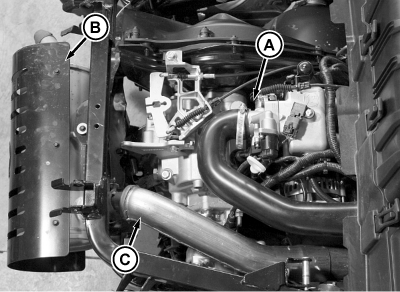
MXT016274-UN-10NOV15-
Stop engine before cleaning.
-
Allow engine to cool approximately 20 minutes before cleaning with water.
-
Remove light debris like grass and chaff buildup with compressed air and soft bristle brush.
-
-
Check and remove any obstructions around the control cables and linkages.
|
OUMX068,0000ECD-19-20151110 |